
Casinos That Accept Mastercard Debit in Australia

Table of Contents
- Australian regulatory landscape for Mastercard debit use
- Why most Australian online casinos accept Mastercard debit
- Online pokies that support Mastercard debit
- How to make a Mastercard debit deposit
- Mastercard debit for casino slot games
- Instant Mastercard withdrawals and real‑money play
- Alternative withdrawal methods when Mastercard isn’t supported
- Top Mastercard‑compatible bonus offers
- Casino sites that accept Mastercard debit
- How to pay with Mastercard debit at Australian casinos
Australian regulatory landscape for Mastercard debit use
The National Consumer Credit Protection Amendment Act 2024 closed the door on credit-card gambling in Australia. No exceptions, no grandfathering. That law is the reason "credit card gambling" isn’t a phrase you’ll see promoted anywhere legitimate anymore.
What it didn’t touch is debit spending. A Mastercard debit card draws from money already sitting in an account, not from borrowed funds, so it sits outside the ban entirely. That distinction is the whole point of this article: debit works, credit doesn’t.
In practice, many local banks now automatically flag or block transactions heading toward offshore gambling operators, credit or debit, as part of their own compliance response to the Act. A debit card being legal doesn’t guarantee a specific transaction clears — the bank still has the final say.
Worth separating from the acceptance question that follows: this section is about what’s permitted, not about who takes the card.
Why most Australian online casinos accept Mastercard debit
I spent years asking payments teams the same question: why does one card get approved instantly while another sits in "pending" for an hour. The answer is almost always the same brand. Mastercard debit.

One industry review put the figure at 90% of Australian-facing online casinos accepting Mastercard debit in some form. I wouldn’t treat that as a fixed market law — the operator list behind that number shifts month to month, and a casino that supports Mastercard today can drop it after a banking partner changes terms. But the direction is consistent with what I’ve seen sitting on the other side of a cashier page: Mastercard is close to a default, not an exception.
There’s a reason it became the default rather than staying one option among many.
The credit-card door closed, the debit door stayed open
The National Consumer Credit Protection Amendment Act 2024 shut down credit-card gambling in Australia. That single change rewired how deposits work industry-wide. Casinos that used to take any card now had to filter transactions by type, and banks started doing the filtering for them — many local banks automatically restrict transactions to offshore gambling sites under that law, regardless of what the casino itself allows.

What survived that filter was debit. Mastercard debit draws from money already sitting in an account, not borrowed money, so it fell outside the ban’s target. Operators didn’t add Mastercard debit support as a favour to players — they kept it because it was the payment rail still legally available to fund a deposit from a bank account. "Convenient" is the word used in marketing copy; the plainer reason is that it was one of the few doors the law left unlocked.
Instant processing did the rest
Legality got Mastercard debit through the door. Speed is why it stayed at the front of the queue.
Deposits typically clear within a minute. For a player who wants to sit down and play, that’s the entire pitch — no waiting screen, no "funds pending" message, no need to plan a session around a bank’s processing window. Compare that to a bank transfer that can take a day to settle, and it’s obvious why a casino’s cashier page lists Mastercard debit first, not third.
Familiarity matters too, in a less obvious way. Almost everyone already has a Mastercard debit card attached to an everyday transaction account — it’s the same card used for groceries, not a separate product someone has to go and set up. Visa debit shares that advantage, and the two brands between them cover most of what Australian banks issue. That’s a large part of why both remain the standard deposit choice: not because they’re marketed harder, but because the card is already in the wallet.
What "accepted" actually means at the casino end
Acceptance isn’t uniform just because a logo appears on a cashier page. A casino licensed offshore chooses its own payment processor, and that processor decides which card types it will route. Mastercard debit clears that bar more often than most alternatives because processors trust the fraud tooling built into the card network — a point that matters more once you look at how deposits are verified, which the next section covers.
Illegal credit‑card gambling
Using a credit card for gambling deposits in Australia breaches the National Consumer Credit Protection Amendment Act 2024 and can lead to account closure or legal penalties.
It also means the "accepted" claim is worth checking per-operator rather than assumed. A casino’s terms page, not a general market figure, is the only place that confirms whether Mastercard debit deposits — and, separately, withdrawals — are actually live on that specific site.
The practical takeaway
Mastercard debit sits where it does in Australian online casinos for three plain reasons: the law still permits it, the money moves in about a minute, and the card is already the one in most people’s wallets. None of that guarantees a specific casino supports it, or that withdrawals work the same way deposits do — those are separate questions, answered further down.
Online pokies that support Mastercard debit
Pokies platforms were the first place I noticed Mastercard debit actually working the way it’s supposed to. Not the deposit page — the game lobby itself. Providers building for offshore-licensed operators serving Australian players had already assumed debit-only funding was the default long before it became the only legal option, so the plumbing between the payment gateway and the reel was never really the weak point.
What matters for a pokies player specifically is different from what matters for someone funding a live blackjack table or a sportsbook account. Pokies sessions are made of dozens or hundreds of small, fast transactions — spins, not single big bets — and the platform underneath has to keep up without asking for re-authentication every few minutes. Mastercard debit fits that pattern because the deposit itself is instant, typically landing within a minute, so the balance is sitting in the account before the first spin loads. There’s no waiting screen between "I paid" and "I can play," which for pokies is most of the appeal.
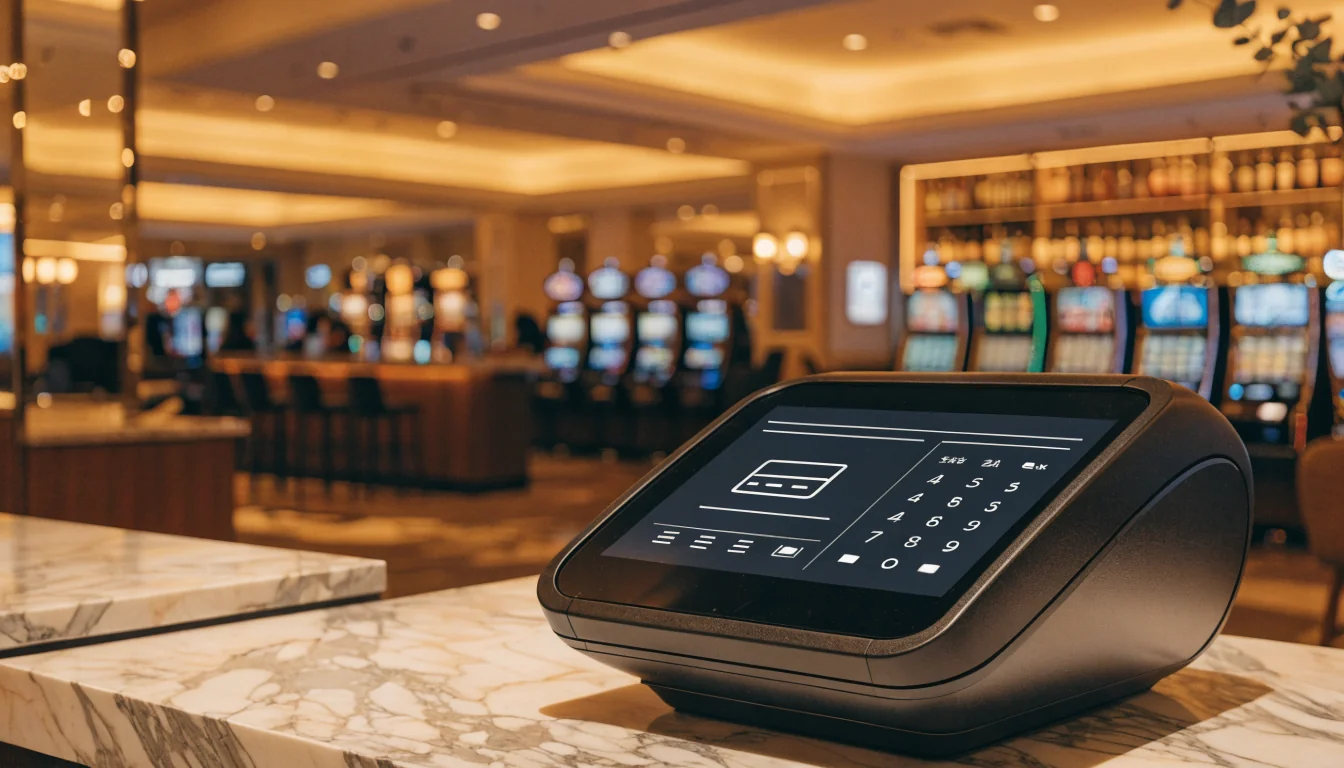
Why the pokies catalogue and the payment method are linked
A large games library only matters if the money to use it clears fast. One operator I looked at closely — Lucky Elf Casino — lists a games library of over 13,000 titles from more than 60 providers, and Mastercard deposits there are processed anywhere from instant to 15 minutes depending on the bank’s own verification step. That range is the honest version of "instant": the payment network clears its side immediately, but the receiving bank’s fraud check can add a few minutes on top. Worth knowing before assuming something’s wrong when a deposit takes longer than a minute.
The reason this pairing — big pokies catalogue plus Mastercard debit — shows up so often isn’t coincidence. Operators that invest in game variety tend to be the same ones that invest in payment infrastructure, because both are competing for the same thing: a player who doesn’t want friction between wanting to play and actually playing.

How the providers behind the games fit in
The pokies themselves come from software providers, not from the casino operator, and the payment method has no direct relationship with any single one of them — Mastercard doesn’t care whether the spin is running on an Evolution, Pragmatic Play, NetEnt, Nolimit City, or Hacksaw Gaming engine. What it does affect is the loading of funds before those engines start pulling from the balance. A platform with wide provider coverage — dozens of studios, thousands of titles — needs a funding method that doesn’t create a bottleneck at the front door, and debit-card rails handle that volume without needing a separate top-up flow for each provider’s game window.
This is worth separating clearly: the game is provider-side, the money is bank-side, and Mastercard debit sits in the second category only. A casino advertising "13,000+ games" is making a claim about its content deals, not about its payment processing — but the two tend to travel together because both are proxies for how seriously an operator has built its platform.

3D Secure at the pokies deposit screen
Anyone who’s deposited before a pokies session recognises the extra step now — a one-time code, a bank app prompt, sometimes a fingerprint on mobile. That’s Mastercard ID Check, the current version of 3D Secure, running in the background of what looks like a simple "confirm payment" button. For pokies specifically, this step happens once per deposit, not per spin, so it doesn’t interrupt play once the balance is loaded. The friction is front-loaded, deliberately, so the actual gaming session runs without interruption.
Behind that verification step sits real-time fraud monitoring and bank-level encryption on the transaction data — the same infrastructure Mastercard uses for a supermarket tap-and-go, applied to a gambling deposit. It’s not pokies-specific engineering. It’s the general-purpose card network doing what it always does, which happens to suit a product built around rapid, repeated small transactions.
What "accepts Mastercard" actually means for a pokies lobby
Worth being precise here, because "the casino accepts Mastercard" and "every pokie in the lobby accepts Mastercard" are the same statement, just phrased at different levels. Mastercard is a funding method for the account balance, not a per-game setting. Once a deposit clears, the balance is available across the entire catalogue — video pokies, classic three-reel titles, progressive jackpot slots, branded games — because the casino’s wallet doesn’t distinguish where the money came from once it’s inside. According to one industry survey of the sector, Mastercard is accepted at roughly nine in ten Australian-facing online casinos, which in practice means the pokies catalogues at those same sites are Mastercard-funded by default rather than as an add-on option.
That’s a different claim from saying every individual game provider has some kind of payment integration — they don’t, and they don’t need one. The wallet-to-game relationship is what makes a 13,000-title catalogue and a single debit card work together without needing 13,000 separate payment checks.

Mobile pokies and card entry
Mobile is where most pokies sessions actually happen now, and Mastercard debit works the same way on a phone browser or app as on desktop — card number, expiry, CVV, then the verification prompt through the bank’s own app rather than a browser pop-up. The advantage on mobile is that most banking apps now handle the 3D Secure step as a push notification rather than an SMS code, which is faster and doesn’t depend on network coverage the way a text message does. For someone playing pokies on transit or between other things, that’s the difference between a deposit that clears before attention wanders and one that doesn’t.
The practical filter for choosing where to play pokies with a debit card
A few things worth checking before assuming a pokies platform will take Mastercard smoothly, rather than after a declined transaction:
- Confirm debit, not credit, is what’s being offered at the cashier. The card networks look identical on the payment screen; the account type behind them isn’t. Only debit cards drawing on actual funds are usable here — credit-card gambling isn’t something any legitimate operator should be facilitating in this market.
- Check whether the operator lists a processing window. Some state “instant,” others give a short range like the instant-to-15-minutes window seen at Lucky Elf Casino. Neither is wrong; the range is just more honest about bank-side variability.
- Look at provider breadth as a proxy for platform investment, not as a guarantee about payments specifically — but as noted above, the two usually correlate.
- Expect the verification step every time, not as a one-off setup hurdle. That’s Mastercard ID Check doing its job, and a platform that skips it is the one worth being suspicious of, not the one that includes it.
None of this replaces reading the specific casino’s own deposit terms — provider names, catalogue size, and processing speed are all things that get updated on the operator’s side without notice. What stays constant is the underlying mechanic: a debit card clears fast, gets verified once, and then gets out of the way of the actual game.
How to make a Mastercard debit deposit
The mechanics haven’t changed much in years, and that’s a good thing. What changed is which casinos let you use them properly — a distinction that matters more than the button labelled "Mastercard" on the cashier page.
The steps
- Log in and open the cashier. Look for a “Deposit” tab rather than “Withdraw” — some cashier interfaces bury the two under the same menu, and picking the wrong one wastes a verification cycle.
- Select Mastercard debit. Not “credit” — most licensed platforms won’t even show a credit-card option now, since credit-card gambling isn’t something they can legally process for Australian residents.
- Enter card details. Number, expiry, CVV. Standard stuff, nothing casino-specific here.
- Confirm through Mastercard ID Check. This is the 3D Secure 2.0 layer — a prompt from the card issuer, not the casino, asking for a one-time code or a biometric tap depending on the banking app. If this step never appears, that’s worth noticing rather than celebrating; it usually means the transaction is being routed differently than advertised.
- Funds land, typically within a minute. No “pending” screen refresh, no waiting on an email confirmation. The balance updates before the confirmation page fully loads.
That’s the whole sequence. Five steps, one authentication prompt, one number that changes on screen.
What the verification step is actually doing
The 3D Secure 2.0 prompt isn’t the casino checking on the player — it’s the bank checking on the transaction. Mastercard runs real-time fraud monitoring underneath that prompt, and the encryption sits at bank level, not casino level. This matters because it means the casino itself never sees or stores the full card number in a form it could leak; the sensitive part of the exchange happens between the card issuer and Mastercard’s own systems.
I’ve had a deposit flagged once — nothing dramatic, just a second SMS code because I was on a different device to usual. Annoying for ten seconds, reassuring for everything after.
Where deposits go wrong
Most failed Mastercard deposits aren’t declines in the dramatic sense — they’re mismatches. A few things worth checking before assuming the card is the problem:
- Billing details don’t match. Address or name entered differently to what the bank has on file.
- The bank itself is blocking the merchant category. Some banks apply blanket restrictions to gambling-coded transactions regardless of the card type, independent of anything the casino does.
- Card type confusion. Debit and credit Mastercards look identical on the plastic. If the casino accepts only debit, a credit card with the same design will simply bounce.
None of these are casino-side failures. They sit with the bank, which is also where any dispute about a declined transaction should go first.
Why this method sits ahead of most alternatives
Among the deposit-only tools available to Australian players, Mastercard debit is frequently treated — by the casinos’ own published cashier data, at least — as the strongest deposit-first option. Not because it’s exotic, but because it’s boring in the right way: instant, familiar, and backed by the same 3D Secure verification layer whether the deposit is small or large.
Small first.
That’s the practical advice buried in all of this. Before trusting a new cashier flow with a serious amount, running a modest deposit through it once — confirming the ID Check prompt appears, confirming the balance lands within the expected minute — tells you more than any amount of reading the terms page. If the small one behaves correctly, the pattern holds. If it doesn’t, no amount had to be at risk to find that out.
The safety case for Mastercard debit — and for Visa Debit alongside it — isn’t marketing language. It’s the SSL layer, the 3D Secure prompt, the one-time code that expires in minutes. Licensed casinos build their cashier around that stack because the alternative is chargebacks and fraud claims, which cost them more than a slightly slower checkout ever would.
Mastercard debit for casino slot games
Once the funds land, the card’s job is done. What happens next — spin count, session length, bet size — is between the player and the game, not the payment rail. But Mastercard still sits quietly in the background for as long as the session runs, and that’s worth explaining.
Every deposit made this way is tied to a real bank account, not a top‑up balance floating somewhere. That matters for slot play specifically, because it’s the one product where sessions can run long and stakes can climb without much friction. A card linked to an actual account means the bank sees the same activity the player does. If it looks unusual, the bank can act on it — set a limit, flag it, block it outright. That’s not a favour the casino grants; it’s a control point that already sits inside the payment network, independent of whichever operator is running the reels.

This is also where "safe and reliable" earns its keep rather than sitting as a slogan. Visa Debit and Mastercard debit hold that reputation at licensed operators for a plain reason: the transaction is verified, encrypted, and tied to a bank that has its own fraud checks running in parallel to the casino’s. None of that changes because the game being funded is a slot rather than a table game or live dealer. The card doesn’t know or care what it’s paying for.
What does change, game to game, is scale. A library running into the thousands of titles from dozens of providers — the kind of range some larger operators advertise — means the payment method has to work identically across an enormous spread of studios, RTP profiles, and volatility levels. Mastercard debit doesn’t get renegotiated per game. It clears the same way whether the title is a three‑reel classic or a high‑volatility video slot with a bonus buy feature. That consistency is the actual value here, not the size of the library itself.
Familiarity plays a role too. Mastercard and Visa remain the go‑to instruments for Australian deposits largely because players already trust the process — same card used for groceries, same verification step, same statement line. Slots are the highest‑frequency product in most casino accounts, so that trust gets tested more often here than anywhere else on the site. It either holds up across hundreds of small transactions or it doesn’t.
It held up, in my experience, because the friction was never in the card. It was in bet sizing, session length, the usual places. The payment method was the boring part. Boring, in this context, is the compliment.
Instant Mastercard withdrawals and real‑money play
Deposits go in fast. Withdrawals are a different story, and no one tells you that until you’ve already clicked "cash out" and started watching a pending status that won’t move.

The mechanics explain why. A deposit is the casino pulling money from a card that’s already verified and sitting in front of it. A withdrawal is the casino pushing money back through the same rails — and card networks were built to move money toward merchants, not away from them. That’s the direction Mastercard debit was designed for. Anything going the other way needs extra plumbing, and not every operator has built it.
So withdrawals to Debit Mastercard aren’t supported everywhere. Some casinos process them without issue. Others accept Mastercard for deposits only and route every payout through bank transfer, cryptocurrency, or an e-wallet instead — regardless of what funded the account in the first place. Checking the cashier’s withdrawal list before signing up saves the argument later.
There’s a second wrinkle worth knowing about. Card transactions from gambling operators get tagged with a specific merchant code — 7995 — and that tag has, in some cases, caused payment failures on both Visa Debit and Debit Mastercard. It’s not a universal block. It’s a classification that occasionally trips a bank’s own filters, and it’s one more reason a withdrawal that should be routine sometimes isn’t.
What "instant" actually means here
Where a casino does support Mastercard debit payouts, the speed advantage over slower methods is real — but it isn’t unconditional. Verification comes first. No operator releases withdrawal funds, by Mastercard or anything else, before identity checks are cleared. Once that’s done, processing time depends on the individual casino’s internal review and the bank’s own settlement window, not on the card network alone.
For comparison, PayID through the New Payments Platform is usually the quicker route where it’s offered, often clearing within half a day. Bank transfers sit at the other end — reliable, but measured in business days rather than hours. Mastercard withdrawals, where supported, tend to land somewhere ahead of a standard bank transfer, though the exact figure isn’t something any operator publishes as a guarantee.
None of this is a deposit conversation. Getting money in is the easy half. Getting it back out on your terms is the half that actually tests whether a casino’s payment setup was built with the player in mind or just with the sign-up funnel in mind.
Check the withdrawal terms, not just the deposit banner. That’s the whole trick.
Alternative withdrawal methods when Mastercard isn’t supported
Not every operator that takes a Mastercard deposit will send money back to the same card. I learned this the annoying way, waiting for a payout that never showed up, before someone at support finally explained the card network only supported one direction. Deposits in, nothing out. That’s the gap this section covers.
According to one industry review, a handful of operators — Wild Tokyo, Goldenbet, Jack.com, Slots Gallery, Boho Casino, Vegas Now among them — route withdrawals back to Visa Debit instead. Worth checking a casino’s payout page before assuming your card works both ways.

PayID
PayID sits on the New Payments Platform (NPP) and, per that same review, moves deposits and withdrawals within about 12 hours. No card numbers involved — just a linked identifier tied to your bank account. For players whose Mastercard debit isn’t accepted for payouts, it’s the closest thing to a direct bank-to-bank swap.
Cryptocurrency
The fastest option going, by that review’s account — often under an hour, with lower fees and none of the paper trail a card leaves. "Enhanced privacy" is the phrase used, and it’s accurate, though it assumes comfort with wallets and exchange rates that not every player has.
E-wallets and bank transfer
Neteller and Skrill fill the same-day gap between instant crypto and slower bank transfers. Bank transfer itself remains the fallback for larger sums — not fast, but dependable, and the one method every casino tends to support regardless of card restrictions.
None of these are "backup" in a lesser sense. They’re simply the rails that exist when the card network’s one-way design doesn’t match what the player needs.
Top Mastercard‑compatible bonus offers
Since Mastercard remains a widely used deposit method at Australian-facing online casinos, it helps to know which platforms actually support it well alongside their licensing and bonus terms before signing up.
License: Curacao – Antillephone N.V. (Versus Odds B.V.) · Bonus: up to EUR 2,000 across 5 deposits + 200 free spins · Min. deposit: EUR 20 Licensed under Curacao’s Antillephone framework, this casino backs new players with a multi-deposit bonus package worth up to EUR 2,000 plus 200 free spins, requiring only a modest EUR 20 minimum deposit to get started.
Bonus: up to A$750 + 50 jackpot spins, 35x wagering · Payout speed: crypto ~90 minutes, fiat 1-5 days · Min. deposit: A$30 This casino offers a welcome package of up to A$750 plus 50 jackpot spins under 35x wagering, with fast crypto payouts around 90 minutes and fiat withdrawals taking a few days, all accessible from a A$30 minimum deposit.
License: Curacao eGaming (Hollycorn N.V., since 2017) · Bonus: 225% up to A$1,540 + 600 free spins across 4 deposits, 20x wagering · Min. deposit: A$20-30 (depends on the offer) Operating under a long-standing Curacao eGaming licence since 2017, this casino spreads a generous 225% bonus worth up to A$1,540 plus 600 free spins across four deposits with reasonable 20x wagering terms.
Bonus: up to A$7,500 + 550 free spins across 10 deposits, 50x wagering · Payout speed: crypto under 1 hour, PayID 1-3 business days · Min. deposit: A$20 (A$30 to qualify for the bonus) With a substantial bonus of up to A$7,500 plus 550 free spins spread over ten deposits, this casino also delivers quick crypto payouts under an hour and PayID withdrawals within a few business days.
License: Curacao Gaming Control Board · Bonus: up to A$5,000 + 400 free spins Licensed by the Curacao Gaming Control Board, this casino stands out for its sizeable welcome offer of up to A$5,000 plus 400 free spins.
License: Curacao Gaming Control Board OGL/2023/174/0082 (Dama N.V.) · Bonus: up to A$5,000 + 300 free spins across 4 deposits Holding a Curacao Gaming Control Board licence under Dama N.V., this casino spreads a bonus of up to A$5,000 plus 300 free spins across four deposits.
License: Curacao · Bonus: 100% up to A$500 + 200 free spins, 10x wagering · Payout speed: crypto 30-60 minutes, fiat 1-5 days · Min. deposit: A$10 This Curacao-licensed casino keeps entry accessible with a A$10 minimum deposit, a 100% bonus up to A$500 plus 200 free spins at low 10x wagering, and quick crypto payouts within an hour.
License: Curacao eGaming OGL/2023/174/0082 (Dama N.V.) · Bonus: up to A$10,000 + 500 free spins across 4 deposits · Min. deposit: A$15 Licensed under Curacao eGaming via Dama N.V., this casino offers one of the larger bonus packages on this list, up to A$10,000 plus 500 free spins across four deposits, with a low A$15 minimum deposit.
License: Curacao OGL/2024/1335/0780 · Bonus: up to A$1,000 + 150 free spins, wager-free · Min. deposit: EUR 20 Licensed under a recent Curacao permit, this casino offers a wager-free bonus of up to A$1,000 plus 150 free spins, a rare feature that removes playthrough hurdles for new players.
License: Curacao Gaming Control Board OGL/2023/176/0095 (Hollycorn N.V.) · Bonus: up to A$11,000 + 300 free spins (code NEO100) Licensed by the Curacao Gaming Control Board through Hollycorn N.V., this casino offers one of the largest welcome bonuses reviewed here, up to A$11,000 plus 300 free spins via a dedicated bonus code.
Bonus terms get written by marketing teams, not by the payments team — which is why the headline number rarely says anything about which card funds it. Mastercard debit qualifies for the same offers as any other debit deposit, so the interesting part is what the offer actually pays out, not whether the card works.
Two examples worth comparing, both drawn from operator-published terms rather than a generic "great bonus" claim:
- Winz — advertises a wagering‑free bonus value up to A$16,000, or 800 free spins, applied on each deposit rather than a single first‑time top-up. Wagering‑free is the detail that matters here: it means the bonus amount behaves closer to cash than to the usual playthrough‑locked credit.
- Lucky Elf Casino — a welcome package of up to A$20,000 plus 500 free spins, spread across the first three deposits instead of loaded onto one. A Mastercard debit deposit at each stage triggers the matching portion.
Spreading a bonus over three deposits, as Lucky Elf does, changes the maths for anyone funding with a debit card that has a bank-set spending limit — smaller, repeated deposits clear more easily than one large one. That’s a practical reason to read the deposit schedule before assuming the biggest headline figure is the best fit.
None of this is an inducement to open an account chasing the number. Wagering conditions, expiry windows and eligible games sit in the operator’s own terms — check them before the deposit, not after the free spins land.
Casino sites that accept Mastercard debit
Two names keep coming up when Mastercard debit deposits are the deciding factor: Fair Go and Ripper Casino. Both accept the card at deposit, and both are worth listing on their own terms rather than folded into a bonus pitch.
Fair Go runs a "no deposit required" offer of 100 free spins on Plentiful Treasure. That’s not a Mastercard perk — it’s a sign-up mechanic that happens to sit on a site where Mastercard deposits work cleanly once you do fund an account. Ripper Casino takes the same approach with its own no-deposit sign-up free spins offer. Neither of these figures comes from Mastercard or from an independent audit — they’re the operators’ own published terms, so treat them as a starting point, not a guarantee that survives unchanged into next year.
What actually matters for a Mastercard debit list isn’t the free spins attached to a site, it’s whether the deposit form accepts the card without a decline at checkout. Both of these operators clear that bar. That’s a lower bar than it sounds — plenty of sites list Mastercard on a payments page and still reject the transaction because of how the bank codes it.
A short, honest list
- Fair Go — Mastercard debit deposits accepted.
- Ripper Casino — Mastercard debit deposits accepted.
Short list. No filler names added just to make it look longer.
How to pay with Mastercard debit at Australian casinos
Paying with a Mastercard debit card comes down to five steps, and none of them are complicated once you’ve done it the first time.
- Open the cashier and select Mastercard debit as the payment method.
- Enter the card number, expiry date, and CVV as usual.
- Confirm the transaction through Mastercard ID Check — the bank sends a one-time code, you type it in, done.
- Wait for the funds to land in your casino balance.
- Start playing.
That’s the whole act of paying. No wire details, no waiting on a third party to approve a wallet.
What sits underneath those five steps is the part worth understanding. Australian players use debit rather than credit specifically to stay within the law — the credit-card route is closed, so funding a bank account first and paying from there is how the transaction stays legitimate. Visa Debit and Mastercard debit are both treated as safe, reliable options at licensed operators, which is a duller sentence than a marketing page would write, but it’s the accurate one.
The verification step isn’t friction for its own sake. It’s the bank confirming it’s actually you, at the moment you’re spending your own money.
Can I use Mastercard at online casinos in Australia?
Yes, but only as a debit card. The National Consumer Credit Protection Amendment Act 2024 banned credit-card gambling, while Mastercard debit draws from money already in your account and is accepted at around 90% of Australian-facing online casinos.
Are Mastercard casino deposits instant?
Yes, deposits typically clear within a minute, though some casinos process them in as little as a few seconds up to 15 minutes.
Can I use my credit card for online casinos?
No. Credit-card gambling is prohibited in Australia under the National Consumer Credit Protection Amendment Act 2024, with no exceptions. You can still fund your account with a Visa debit or Mastercard debit card instead.
What payment methods are available for Australian players at online casinos?
Besides Mastercard and Visa debit, options include PayID (instant deposits, withdrawals usually within 12 hours), cryptocurrency (often under an hour), e-Wallets like Neteller and Skrill (same-day withdrawals), bank transfer (slower but reliable for large withdrawals), and Paysafecard for deposits only.