
Casinos That Accept POLi in Australia
 Available in US
Table of Contents
- Australian online casinos that accept POLi in 2026
- How to deposit with POLi and other Australian payment methods
- Online pokies you can play with POLi
- Top POLi‑compatible slot games and their RTP
- Withdrawing your winnings via POLi and alternatives
- Instant withdrawal options for Australian players
- Best bonus offers when depositing with POLi
- Choosing reputable POLi‑accepting casino sites
- Payment methods supported alongside POLi
- Australian‑specific considerations for POLi usage
Australian online casinos that accept POLi in 2026
No Australian company can legally offer online pokies, roulette or blackjack to residents of this country. That’s not a grey area or a technicality — the Interactive Gambling Act 2001 says so directly, and it has said so for over two decades. What the Act doesn’t do is punish the person sitting at home placing a bet. It targets operators, not players. That gap between "illegal to offer" and "not illegal to use" is the entire reason this niche exists, and it’s worth sitting with for a moment before getting into payment methods.
Offshore casinos accept Australian players because they’re licensed somewhere else, running on infrastructure that answers to a different regulator, taking payments through channels that were never built with Australian gambling law in mind. POLi is a good example. It’s a bank-initiated payment system, not a gambling-specific tool, so a Curaçao-licensed platform can plug it in the same way it would for any other AUD merchant. The casino isn’t asking permission from Canberra. It doesn’t need to.

Why this matters for how you deposit
I spent enough time on the operations side of this industry to know that "accepts POLi" is doing more work in that sentence than it looks like. A local Australian casino can’t exist to accept anything — there’s no licence to get, no domestic operator to build one. So every site claiming POLi support is, by definition, offshore. That’s not a red flag on its own. It’s just the starting fact everything else in this guide sits on top of.
POLi, PayID, BPAY, and the major e-wallets have become the standard banking rail for direct AUD deposits and payouts on these platforms — not because casinos love variety, but because card networks and banks have gotten twitchy about gambling transactions. POLi and e-wallets sidestep that friction entirely; the money moves from your bank account without a merchant category code screaming "casino" at your bank’s fraud system.
What "legal" actually covers here
Worth being precise about this, because vague reassurance is worse than none:
- Operating an online casino aimed at Australians — illegal under federal law, no licence exists to make it legal.
- Playing at an offshore casino as an individual — not a criminal act under Australian law.
- Depositing via POLi to a licensed offshore platform — a banking transaction, not a gambling offence.
None of that changes because the calendar says 2026. The Act hasn’t been rewritten, and there’s no sign it will be before this guide needs its next update.
The catch nobody puts in the marketing copy
Here’s the part that doesn’t make it onto banner ads: the payment method you deposit with often shapes what happens when you try to get money back out. Casinos that take POLi deposits don’t automatically offer POLi withdrawals — POLi was built to push money out of your account, not receive it, so the return trip usually happens through bank transfer, e-wallet, or another channel entirely. Using the same method on both ends, where the platform allows it, tends to avoid the kind of delay that turns a five-minute deposit into a week-long withdrawal.
And before any of that withdrawal conversation matters, there’s KYC. Every legitimate platform will ask for identity verification before releasing your first payout, no matter how you funded the account. That’s not a POLi-specific hurdle — it’s mandatory across the board, and it’s the moment where "reputable" and "not" tend to separate. A platform that skips it isn’t doing you a favour.
None of this is a workaround or a loophole. It’s just how the market is actually structured, once you strip out the language designed to make offshore mean something scarier than it is. Offshore, licensed, and paying out through POLi. That’s the shape of it.
POLI DEPOSIT ONLY
POLi can only be used to move money into a casino account; it cannot be used for withdrawals, so players must plan an alternative payout method in advance.
The sections that follow get into the mechanics — how the deposit itself works, which pokies show up on POLi-friendly platforms, what happens when you want your winnings back. This part was just about the ground you’re standing on.
How to deposit with POLi and other Australian payment methods
POLi works from your online banking login, not a stored card number. You pick your bank, log in through the secure POLi window, confirm the amount, and the money moves straight from your account to the casino’s. No card details sit on file anywhere. That’s the whole appeal, and it’s why banks haven’t found a clean way to block it the way they block credit cards.
The mechanics are simple enough that I’ll lay them out once, because they don’t change much between operators.
Depositing with POLi
- Open the cashier and select POLi.
- Choose your bank from the list and log in via the POLi interface, not the casino’s own page.
- Confirm the deposit amount and authorise the transfer.
- Funds usually clear before you’ve finished reading the confirmation screen.
There’s no card surcharge to worry about and nothing for a bank fraud filter to flag as a gambling merchant code, since the transaction reads as a standard bank-to-bank payment.
Depositing with PayID
PayID rides on the New Payments Platform, the real-time rail Australian banks rolled out in 2018. You link a PayID — usually a phone number or email — to your account once, and after that you’re just sending a payment tagged to that identifier instead of a BSB and account number.
- In the cashier, select PayID and copy the reference code the casino generates.
- Open your banking app, choose PayID transfer, and enter the casino’s PayID along with your deposit amount.
- Paste the reference code into the payment description field — without it, the casino’s system may not match the deposit to your account.
- Send the transfer.

One industry report on payment rails put typical PayID clearing times at one to three minutes, any hour of the day. I’ve seen it land faster, but treat that as the ballpark rather than a promise, since the platforms don’t publish their own numbers. Most Australian-facing casinos treat a PayID deposit the same as a bank transfer for bonus purposes, so wagering offers tied to your first deposit should still apply — worth confirming in the terms before you rely on it.
Depositing with Neosurf
Neosurf sidesteps banking altogether. You buy a voucher with cash at a newsagency, convenience store, or similar outlet, and it comes with a PIN instead of an account number.
- Buy a Neosurf voucher for the amount you want to deposit.
- Select Neosurf in the cashier and enter the 10-digit PIN from the voucher.
- Confirm the deposit.
Funds appear in the casino balance within seconds of the PIN being verified. There’s no bank record of the transaction on your end, no linked account, nothing for a card issuer to decline. For anyone whose bank has a habit of freezing anything that smells like gambling, this is the cleanest workaround going.
Depositing with e-wallets
E-wallets sit somewhere between POLi and Neosurf — you load the wallet from your bank once, then spend from the wallet rather than the bank account directly. The casino sees a wallet transaction, not a bank one, which again keeps it clear of the credit-card blocks major banks apply to gambling merchants.
Where the speed actually matters
The point of all four methods is the same: they clear fast enough that you’re playing within minutes, not waiting on a business day. Bank transfers, by contrast, sit in a queue and take longer to settle — fine if you’re planning ahead, useless if you want to sit down and play now.
"Instant" gets thrown around loosely in casino marketing. What it actually means here is specific: POLi and Neosurf both settle in the time it takes to complete the form, and PayID isn’t far behind. That’s the only claim worth trusting, because it’s the only one I can point to a mechanism for — real-time bank rails, or a voucher PIN that needs no third-party clearing at all.
Keep whichever method you deposit with in mind for later — withdrawals aren’t always mirror images of deposits, and that mismatch causes more support tickets than anything else in this business.
Online pokies you can play with POLi
Once the deposit clears, the actual choice of what to play matters more than most players think. POLi doesn’t restrict which pokies you can open — the payment rail and the game library are unrelated systems. What connects them is the casino itself: if it accepts POLi and carries proper certification from a provider like Pragmatic Play, Microgaming, NetEnt or Aristocrat, the game selection tends to be broad and the RTP figures tend to be published rather than hidden.
That last point isn’t a formality. The Australian Gambling Research Centre recommends sticking to games with an RTP of at least 96%, and that number is only useful if the casino actually discloses it. A site that "features hundreds of exciting pokies" without listing a single RTP figure is telling you something by omission.
What "accepts POLi" actually filters for
POLi works as a bank-verification payment method — it confirms funds through your online banking rather than storing card details. Casinos that integrate it are, almost by necessity, operators serious enough to have gone through a banking-side integration process rather than relying purely on crypto or voucher payments. That doesn’t guarantee quality, but it does narrow the field toward platforms running licensed software rather than unregulated white-label shells.
Once you’re inside one of these sites, the pokies split roughly into a few practical categories worth knowing before you start clicking.
High-RTP pokies worth prioritising
Among the pokies commonly available on POLi-friendly platforms, two titles stand out for RTP that’s been independently certified and consistently published:
- Sweet Bonanza — RTP of 96.51%, a Pragmatic Play title built around cluster pays rather than traditional paylines. It clears the 96% threshold the Gambling Research Centre sets as a baseline, comfortably.
- Book of Dead — RTP of 96.21%, one of the most recognisable Play’n GO-style Egyptian-themed pokies in the Australian market. Same story: certified, published, above the recommended floor.
Both sit close to what one industry review clocked as a combined average of 97.1% across the top-rated platforms it tested — a figure worth treating as a benchmark from a single study, not as an industry-wide standard. The broader Australian online casino market runs cooler than that, with average RTP hovering in the 95–96% range across the board. Sweet Bonanza and Book of Dead sit right at the edge of "above average," not deep into it. Worth knowing before you assume every pokie on the platform performs the same.
Reading a pokie’s RTP page properly
Every legitimate pokie has its RTP listed either in the in-game information panel or on the provider’s certification page — usually verified by testing labs such as eCOGRA, iTech Labs or GLI. The number that matters is the "theoretical RTP," which reflects long-run statistical averages tested across millions of simulated spins, not the extremely long-run realistic. It’s not a promise about your session, it’s a description of the machine.
I’ve had operators tell me, informally, that most players never open that panel. Which is a shame, because it’s the only genuinely useful piece of information a pokie gives you before you commit a cent.
Categories of pokies you’ll find
Classic-style reels. Simple three or five reel titles with straightforward paylines. These tend to run on older but well-tested engines from providers like Microgaming, and they’re the type most likely to publish RTP prominently because there’s less marketing noise around them.
Video pokies with bonus features. Sweet Bonanza falls here — tumbling reels, multipliers, free spin triggers. These are the titles most heavily promoted on casino homepages, which is exactly why it’s worth checking the certified RTP rather than trusting the promotional copy around the feature set.
Themed narrative pokies. Book of Dead belongs in this bracket — strong visual branding, adventure or mythology themes, a "story" wrapped around the reels. The theme sells the game; the RTP still determines the long-run mathematics regardless of how good the artwork looks.
Jackpot pokies. Progressive jackpot titles trade a lower base RTP for the chance at a life-changing prize pool, and they’re structured differently from the categories above — that trade-off gets covered properly in the RTP breakdown that follows this section, since it deserves its own numbers rather than a passing mention here.
Why legal status shapes the library, not the odds
Because the Interactive Gambling Act 2001 blocks any operator from offering online casino games to Australian residents domestically, every platform accepting POLi deposits for pokies is, by definition, licensed offshore — typically under Curaçao’s Gaming Control Board or Malta’s MGA. That’s not a loophole being exploited quietly; it’s the only legal structure under which any of this exists. Playing at these offshore sites isn’t illegal for the individual — the law targets operators, not players — but it does mean there’s no local regulator to complain to if a game’s advertised RTP doesn’t match what’s certified.
Which is exactly why certification matters more here than it would in a market with a domestic regulator backing every licence. The testing labs — eCOGRA, iTech Labs, GLI — are doing the job an Australian regulator would otherwise do. A pokie without their mark, on a platform that won’t show the number, is a pokie you’re trusting on faith alone.

Mobile play and POLi deposits
Nothing about POLi changes on mobile — it’s a browser-based redirect to your bank login, so it works identically on a phone as on a desktop, assuming the casino’s mobile site or app carries the same integration. Most pokies built by the major providers listed above are HTML5-native at this point, meaning the RTP and feature set are identical across devices. The deposit method doesn’t touch the math of the game; it only touches how the money gets into the account before you start spinning.
A practical shortlist approach
Rather than browsing a lobby of hundreds of pokies hoping to stumble onto something decent, the more efficient method:
- Filter by provider first — Pragmatic Play, NetEnt, Microgaming and Aristocrat all have consistent certification practices.
- Open the game info panel before the first spin, not after.
- Compare the published RTP against the 96% floor the Gambling Research Centre sets, and treat anything below that as a title you’re playing for entertainment rather than value.
- Note that a platform’s marketing language — “premium,” “exclusive,” “high-payout” — means nothing without a number attached. Rewrite that claim in your head as “unverified” until the RTP panel proves otherwise.
That last habit is the one that actually saves money over time. Not a system, not a strategy — just refusing to take a marketing adjective at face value when a certified number was sitting one click away.
Where POLi fits in the decision, and where it doesn’t
It’s worth being blunt about the boundary here: POLi gets your money into the account quickly and without exposing card details, which is genuinely useful. It has no bearing whatsoever on which pokie pays back more over time. Players sometimes conflate "trustworthy payment method" with "trustworthy game," and the two are unrelated. A casino can run a flawless POLi integration and still stock a lobby full of titles with RTPs that sit below what the Research Centre recommends. The payment rail is the door. The RTP figure is what’s actually in the room.
Sweet Bonanza and Book of Dead earn a mention here specifically because their numbers are public, certified and above the 96% line — not because they’re flashier than anything else on offer. That’s the standard worth applying to every other pokie in the lobby before spinning it with real money.
Top POLi‑compatible slot games and their RTP
Since POLi has wound down in Australia, it pays to check which casinos still offer solid deposit options and terms before you commit real money in 2026.
License: Curacao – Antillephone N.V. (Versus Odds B.V.) · Bonus: up to EUR 2,000 across 5 deposits + 200 free spins · Min. deposit: EUR 20 Licensed under Curacao (Antillephone N.V.), Thor Casino offers a multi-deposit welcome package worth up to EUR 2,000 plus 200 free spins, with a modest EUR 20 minimum deposit to get started.
Bonus: up to A$750 + 50 jackpot spins, 35x wagering · Payout speed: crypto ~90 minutes, fiat 1-5 days · Min. deposit: A$30 Kingmaker pairs a bonus of up to A$750 with 50 jackpot spins at 35x wagering, and stands out for fast crypto payouts around 90 minutes, alongside a low A$30 minimum deposit.
License: Curacao eGaming (Hollycorn N.V., since 2017) · Bonus: 225% up to A$1,540 + 600 free spins across 4 deposits, 20x wagering · Min. deposit: A$20-30 (depends on the offer) Backed by a Curacao eGaming licence held since 2017 under Hollycorn N.V., Playfina offers a sizeable 225% bonus up to A$1,540 with 600 free spins spread across four deposits at 20x wagering.
Bonus: up to A$7,500 + 550 free spins across 10 deposits, 50x wagering · Payout speed: crypto under 1 hour, PayID 1-3 business days · Min. deposit: A$20 (A$30 to qualify for the bonus) Ricky Casino brings one of the larger bonus packages here, up to A$7,500 plus 550 free spins over ten deposits, and offers quick crypto withdrawals under an hour alongside PayID processing within a few business days.
License: Curacao Gaming Control Board · Bonus: up to A$5,000 + 400 free spins Operating under a Curacao Gaming Control Board licence, JustCasino offers a generous welcome bonus of up to A$5,000 with 400 free spins.
License: Curacao Gaming Control Board OGL/2023/174/0082 (Dama N.V.) · Bonus: up to A$5,000 + 300 free spins across 4 deposits Licensed by the Curacao Gaming Control Board under Dama N.V., SpinsUp offers a bonus package of up to A$5,000 with 300 free spins spread across four deposits.
License: Curacao · Bonus: 100% up to A$500 + 200 free spins, 10x wagering · Payout speed: crypto 30-60 minutes, fiat 1-5 days · Min. deposit: A$10 Wild Tokyo is Curacao-licensed and keeps entry accessible with a low A$10 minimum deposit, offering a 100% bonus up to A$500 with 200 free spins at a comparatively low 10x wagering requirement, plus fast crypto withdrawals.
License: Curacao eGaming OGL/2023/174/0082 (Dama N.V.) · Bonus: up to A$10,000 + 500 free spins across 4 deposits · Min. deposit: A$15 LevelUp Casino, licensed under Curacao eGaming via Dama N.V., offers a substantial bonus of up to A$10,000 with 500 free spins across four deposits, with a low A$15 minimum deposit.
License: Curacao OGL/2024/1335/0780 · Bonus: up to A$1,000 + 150 free spins, wager-free · Min. deposit: EUR 20 Licensed in Curacao, Vegaz Casino offers a wager-free bonus of up to A$1,000 with 150 free spins, a rare perk that removes the usual playthrough hurdle.
License: Curacao Gaming Control Board OGL/2023/176/0095 (Hollycorn N.V.) · Bonus: up to A$11,000 + 300 free spins (code NEO100) Neospin, licensed by the Curacao Gaming Control Board under Hollycorn N.V., offers a large welcome bonus of up to A$11,000 with 300 free spins via a dedicated bonus code.
POLi itself doesn’t touch the game math — it just moves money into the account. But once the deposit clears, the return figure on each title is what actually decides how far that money goes. RTP tells you the theoretical percentage returned to players over the long run. Higher isn’t a promise, it’s a slope in your favour.
A handful of certified titles turn up consistently on the payout tables of POLi‑friendly platforms:
- Mega Joker — certified RTP of 99%. About as high as licensed slots get, and it’s the number affiliates rarely lead with because it doesn’t come with a flashy theme to sell.
- Blood Suckers — certified RTP of 98%. Low volatility, which means the 98% shows up in smaller, steadier wins rather than one big spike.
- Mega Moolah — RTP of 88.12%. On paper that’s a weak number. What it’s actually selling is the jackpot, which one industry review reported exceeding AUD $10 million. The trade‑off is real: you’re paying for the shot at the jackpot with a lower baseline return.
Three titles, three different deals. "High RTP" isn’t a single category — it’s a spectrum from grind‑it‑out consistency to lottery‑ticket odds, and the marketing rarely says which one you’re getting.
Reading the number correctly
RTP is calculated across millions of spins, not your session. A 99% RTP slot can still take your deposit in ten spins — the certification describes the machine, not the night. What it does tell you is the house edge baked into the game by the provider, independent of any bonus or promotion layered on top by the casino.
The Australian Gambling Research Centre recommends sticking to games at 96% RTP or above. Mega Joker and Blood Suckers clear that bar comfortably. Mega Moolah doesn’t — its appeal sits entirely in the jackpot pool, not the base game.
Where to check before depositing
Reputable providers publish certified RTP figures per title, usually in the game’s info screen. If a platform won’t show that number, or the figure changes depending on which page you read it from, that’s a platform to skip regardless of how fast the POLi deposit goes through. The payment method gets your money in the door in minutes. What happens to it after that is entirely a function of the game’s certified math — not the banking rail you used to fund it.
Short version: pick the game by its number, not its theme.
Withdrawing your winnings via POLi and alternatives
Here’s the part nobody explains before you deposit: POLi moves money in one direction. It’s built for pushing funds from a bank account into a casino, not for pulling them back out. So the moment a win needs to be paid, the platform switches you onto a different rail entirely — bank transfer, e-wallet, or crypto — whatever it happens to support.

PayID looks like the obvious fallback, since it’s already tied to the same bank account. It isn’t guaranteed to work that way. A casino that takes PayID deposits without hesitation may not process PayID withdrawals at all — the deposit and payout sides of an operator’s banking setup are configured separately, and one being open says nothing about the other. Worth checking before assuming the loop closes cleanly.
This is where the "same method both ways" advice actually pays off. It’s not a formality — matching your deposit and withdrawal method tends to mean fewer verification hoops, because the casino is releasing funds through a channel it already trusts with your identity. Mixing methods often triggers extra checks, sometimes a request for proof the withdrawal account belongs to you.
Crypto sits at the other end of the spectrum. Where it’s supported, payouts have been reported to land within an hour on some platforms. Others describe a broader window, under two hours, as their standing guarantee. The gap between those figures isn’t a typo — it reflects how differently operators define "fast," and it’s worth reading the actual payout terms rather than trusting the marketing page.
Bank transfer remains the default when nothing faster is offered, and it’s the one to expect delays from.
Practical order of preference once a deposit is in and a win is sitting in the balance:
- Same method as the deposit, where the casino allows it
- Crypto, if already set up and verified
- E-wallet, if linked and verified
- Bank transfer, as the fallback
None of this replaces verification. Every route above assumes the account is already confirmed — skip that step and no payout method matters.
Instant withdrawal options for Australian players
Speed isn’t equal across payout methods, and casinos rarely advertise the gap up front. Once KYC is done and a withdrawal request is approved, what happens next depends entirely on which rail the money travels through.
PayID sits on top of the New Payments Platform, and it’s built for real-time settlement — transfers move 24/7, typically landing within one to three minutes. No business hours, no batch processing overnight. If a casino supports PayID payouts (not all that accept PayID deposits do), this is the fastest way to see cash sitting in an actual bank account.
Crypto is the other contender. One industry review puts crypto withdrawals at under an hour; a different operator, Fastpay Casino, advertises a sub-two-hour guarantee. Those numbers don’t agree, and no honest comparison should pretend they do — treat "under an hour" as optimistic and "under two hours" as the safer expectation, since it depends on network congestion and the casino’s own processing queue before the transaction even reaches the blockchain.

Bank transfers are the outlier, and not in a good way. They’re consistently the slowest option for AUD payouts. The reasons are mostly outside the casino’s control — intermediary bank checks, batch settlement windows, weekend delays — but the practical effect is the same regardless of cause: money that could’ve arrived in minutes takes days instead.
Why matching methods matters
There’s a recurring theme in how casinos handle payouts: they’d rather send winnings back the way they came in. Deposit with PayID, get paid via PayID. Deposit with crypto, get paid in crypto. This isn’t just a preference — it’s the path with the fewest verification hurdles and the shortest processing time. Using the same method to deposit and withdraw is the recommended approach, and it’s worth building a deposit habit around whichever payout speed actually matters.
POLi itself doesn’t withdraw. It’s deposit-only, which means the withdrawal side of the equation always runs through something else — PayID, e-wallet, bank transfer, or crypto. The choice made there decides whether the wait is measured in minutes or days.
Quick comparison
| Method | Typical speed | Notes |
|---|---|---|
| PayID | 1–3 minutes | Real-time, 24/7, no banking hours |
| Crypto | Under 1 hour to under 2 hours | Sources disagree; network load affects timing |
| Bank transfer | Slowest of the group | Subject to intermediary processing |
Fast money in. Fast money out — if the method’s right.
Best bonus offers when depositing with POLi
"Welcome package" is the phrase every operator prints in bold, and what it actually means is a match on your first deposit, credited once the deposit itself has cleared. POLi deposits clear fast, which is the whole appeal, and most sites that list POLi as a payment option also list it as bonus-eligible — same treatment as PayID transfers, which Australian casinos generally class as standard bank deposits rather than something requiring separate rules.
What doesn’t change, no matter how the bonus is worded, is the sequence: fund the account, then claim, not the other way around. A code typed in after the money’s already sitting there does nothing — it either applies automatically at deposit or it doesn’t apply at all. I’ve seen players assume they can retrofit a promotion onto a transaction that’s already settled. They can’t.
The other fixed point is identity verification. No casino pays out a bonus, or anything else, before KYC is done — that’s not a house policy someone chose to be strict about, it’s the checkpoint that exists before any first withdrawal, bonus-funded or not. Upload the documents early, ideally the same day as the deposit, and the bonus terms stop being the bottleneck.
Reading the offer itself matters more than the headline number. Wagering requirements, game restrictions, maximum bet size while a bonus is active — these sit in the small print, and reputable operators show them before you opt in, not after. If a site makes that page hard to find, treat it as the answer to a question you hadn’t asked yet.
Choosing reputable POLi‑accepting casino sites
None of these platforms sit under an Australian licence, because none can. That’s not a red flag by itself — it’s just the shape of the market. What matters is where the licence actually sits, and whether the site is honest about it. No offshore regulator’s approval means the casino is beyond scrutiny; it means the scrutiny happens somewhere else, and a reputable site tells you where.
A footer with nothing in it is the first thing I check. No licence number, no regulator named, no way to trace who’s actually running the show — that’s not an oversight, it’s a choice. The second thing is whether RTP figures are published at all. A platform that hides them isn’t protecting a trade secret; there’s no secret to protect, just a number they’d rather you didn’t compare against the game next door.
Age verification is the other line I won’t move past. The legal minimum here is 18, and a site that lets you skip past that gate before asking is telling you something about how it treats every other rule too.
None of this is illegal for the player. Australian law doesn’t go after individuals for using offshore sites — the restriction sits entirely on the operator’s side. That gap is exactly why the choice of which offshore site matters more here than it would somewhere with a local regulator doing the filtering for you. Nobody’s doing that here.
So the filtering is yours.
Payment methods supported alongside POLi
POLi rarely works alone on a banking page. Sit next to it, usually, are PayID, BPAY and a handful of major e‑wallets — the standard set that lets Australian players move AUD in and out without touching a credit card.
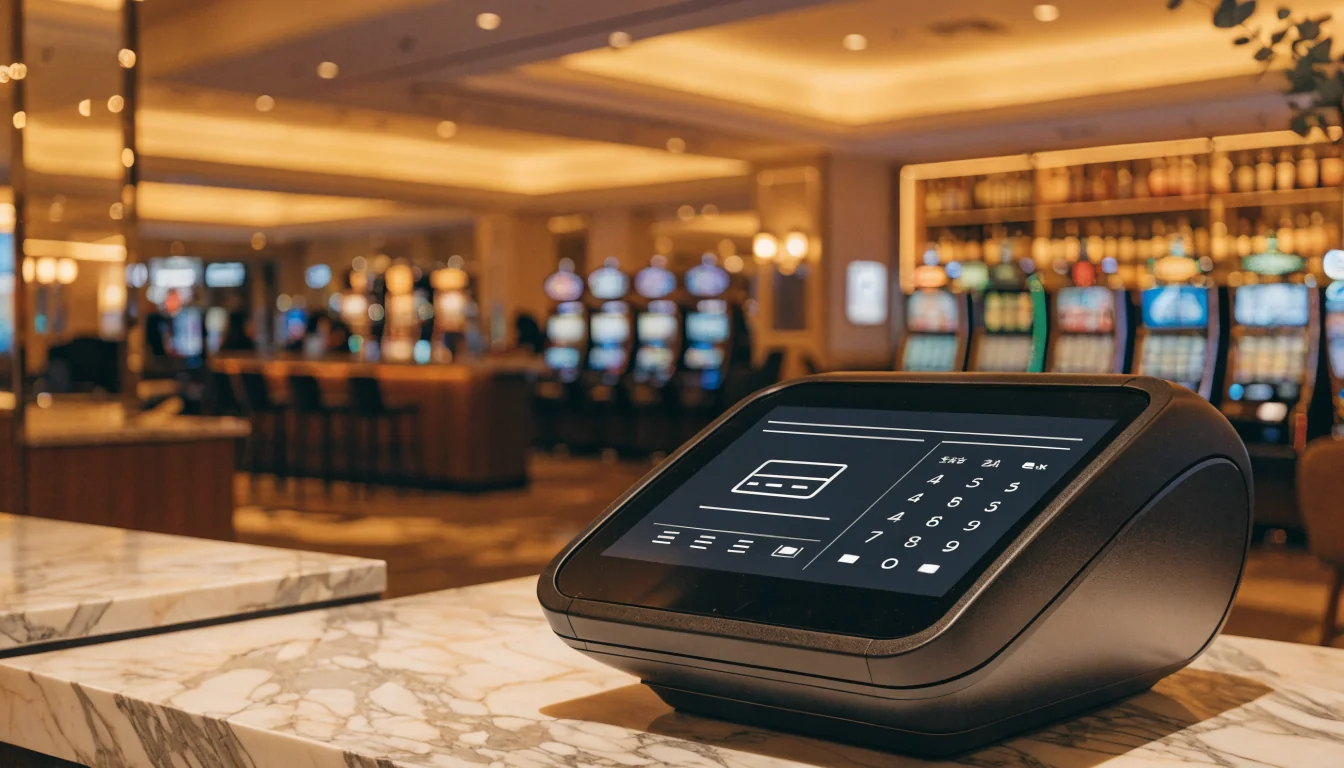
The logic behind that lineup is simple. Banks that flag transactions heading toward gambling merchants tend to look at the payment rail, not the amount. POLi and e‑wallets sidestep that scrutiny because the transaction reads as a transfer to a payment provider, not a casino. That’s the whole appeal — not speed, not convenience, just a route that doesn’t get blocked halfway through.
BPAY sits in the same family: a biller code and reference number instead of card details, which keeps the bank’s fraud filters quiet. PayID works differently again — tied to a phone number or email rather than BSB and account digits, though it’s worth treating as its own method rather than a POLi substitute.
None of these need to replace POLi. They exist to cover the gaps: a casino that caps POLi deposits, a bank that’s tightened its rules this month, a player who’d rather not link a second bank login. Having two or three working methods on file means one blocked transaction doesn’t end the session.
Australian‑specific considerations for POLi usage
Credit cards keep coming up as the workaround everyone tries first, and it keeps failing the same way. One operator’s compliance notes I’ve seen put it plainly: major banks block card transactions headed to gambling merchants. The transaction doesn’t get "declined for insufficient funds" — it gets stopped at the bank’s end, before the casino ever sees it. POLi sidesteps this because it works through your regular online banking login, not a card network, so there’s no merchant category code for a bank to flag.
The part players get wrong more often is mixing methods. Deposit with POLi, then try to withdraw somewhere else entirely, and the request stalls while the casino asks for matching account details. Same method in, same method out — that’s the recommendation, and it’s not casino bureaucracy for its own sake. It’s how the payout actually clears without a second identity check.
One login. One trail. Fewer excuses for delay.
What payment methods are available for Australian players at online casinos?
POLi, PayID, BPAY, major e-wallets, Neosurf prepaid vouchers, bank transfers and cryptocurrencies are the standard options for direct AUD deposits and payouts on offshore platforms. Major Australian banks block credit card transactions to gambling sites, which is why these alternatives dominate.
What are the top payment methods for AUD transactions in Australian online casinos?
POLi, PayID and e-wallets lead the way because they avoid the gambling transaction blocks banks apply to cards. PayID is particularly fast — transfers ride the New Payments Platform and typically arrive within one to three minutes, 24/7 — while Neosurf vouchers suit players who don’t want to expose bank or card details.
Is PayID one of the safer deposit methods available to Australian casino players?
Yes — PayID payments are treated as standard bank transfers through the New Payments Platform, so no card details are shared with the casino and nothing is flagged as a gambling merchant code. Just remember to include the casino’s reference code in the payment description, or the deposit may not be matched to your account.
What is the recommended minimum RTP for games in Australian online casinos?
The Australian Gambling Research Centre recommends choosing games with an RTP of at least 96%. The industry average sits around 95–96%, while top-rated platforms average 97.1% across their games.
Written by the editors at Casino iPad Info.