
Casinos That Accept Visa in Australia: 2026 Guide
 Available in US
Table of Contents
- Online Pokies and Visa Payments in Australia
- Australian Online Casinos That Accept Visa
- Visa Deposit Mechanics for Australian Players
- Instant Visa Withdrawals: What’s Realistic?
- Playing Slots with Visa: Security and Authentication
- Online Visa Withdrawal Options and Limits
- Top Visa Deposit Bonuses for Australian Casinos
- Australian Casinos That Accept Visa
- Paying with Visa: Common Issues and How to Avoid Them
- Using Visa in the Australian Gambling Market: Regulations and Practices
Online Pokies and Visa Payments in Australia
Every online casino operating for Australians sits offshore. That’s not a footnote — it’s the starting condition for everything that follows, including how a Visa card ends up funding a pokies session. The Interactive Gambling Act 2001 makes it illegal for anyone to offer online casino games to Australian residents from inside Australia, and no domestic licence for that exists. Playing itself isn’t illegal for the individual — the law targets operators, not players — but it means the platform processing your card details is licensed somewhere else entirely, often Malta or a jurisdiction the UK Gambling Commission has no say over. Worth knowing before you type in a card number.
Visa itself doesn’t care what game you’re playing. It routes a payment from your bank to a merchant account, and pokies are just another merchant category as far as the card network is concerned. What matters for the player is what happens on either side of that transaction: how fast the money moves, what checks happen before it clears, and which card type you’re using to do it.

Why Visa Debit, Not Visa Credit
There are two ways to hand over a card number, and only one of them is actually workable now. Visa debit draws from money already sitting in a linked bank account. Visa credit draws from a line of credit the bank extends. Since the 2023 amendment to the Interactive Gambling Act banned credit cards for wagering outright, that second option isn’t something operators can offer, and it isn’t something worth chasing even where a site technically still asks for a card type at checkout.
This is why debit has become the default recommendation for pokies deposits, not because of some marketing preference but because it’s the only route that reflects money you actually have. It also happens to move faster through the systems banks use to flag gambling transactions, since there’s no credit-risk check layered on top. If a deposit form on a pokies site defaults to asking for a debit card first, that’s the regulation showing up in the interface design, not a coincidence.

How Fast the Money Actually Moves
Deposits made with Visa land close to instantly. There’s no waiting period baked into the card network’s side of things — the authorisation happens, the funds show as available, and the balance on the casino account updates before you’ve finished reading the confirmation screen. That’s the entire appeal of using a card over, say, a bank transfer initiated manually: the friction is almost gone.
What’s less visible is what happens in the milliseconds before that confirmation appears. The transaction passes through 3D-Secure authentication, a verification layer that checks the card details against the issuing bank in real time. It’s the same system used for any online retail purchase — you might see a one-time code sent to your phone, or a redirect to your bank’s own login page, depending on how the issuer has set it up. For pokies specifically, this step matters more than it does for a routine purchase, because gambling transactions get flagged more aggressively by fraud-detection systems on the bank’s end. A payment that would sail through for a pair of shoes might get held up for a second glance when the merchant category is gambling.
None of this is a flaw in the process. It’s the system working as intended — fast when the bank has no reason to object, slower or blocked outright when it does. The player rarely sees the distinction; the deposit either goes through in seconds or it doesn’t go through at all.
What a Visa Deposit Actually Costs
Here’s the part that’s easy to miss because it’s not advertised as a feature: Visa deposits are typically free of any charge from the casino’s side. No percentage skimmed off the top, no flat processing fee tacked onto the amount you’re putting in. What you deposit is what lands in your account. That’s not universal across all payment methods — some e-wallets and crypto options carry their own cut — but Visa, as a rule, doesn’t.
Minimum deposit varies
The exact minimum Visa deposit amount is not fixed across the market – each operator sets its own floor, so always check the cashier page of the specific casino before depositing.
The one number worth having in mind before starting a session is the minimum deposit. According to one industry review, many Australian online casinos set the floor for a Visa deposit at around A$20, though this isn’t a fixed rule across the market and each operator sets its own terms. Boho Casino, for instance, lists a minimum Visa deposit of AU$30 in its own terms — a figure that sits above that general range and is worth checking directly on the cashier page rather than assumed from what similar sites do. Minimums move around by operator, and the only reliable source for the number that applies to you is the casino you’re actually signed into.
Playing Pokies With a Card in Hand
The mechanics of feeding a pokies balance with Visa are the same regardless of which slot title is loaded on screen. You pick the deposit option, enter card details once (most platforms store them securely for repeat use, subject to re-authentication), confirm through 3D-Secure, and the balance updates. From there the money behaves like any other casino credit — it doesn’t matter to the game engine whether it arrived via card, e-wallet, or bank transfer.
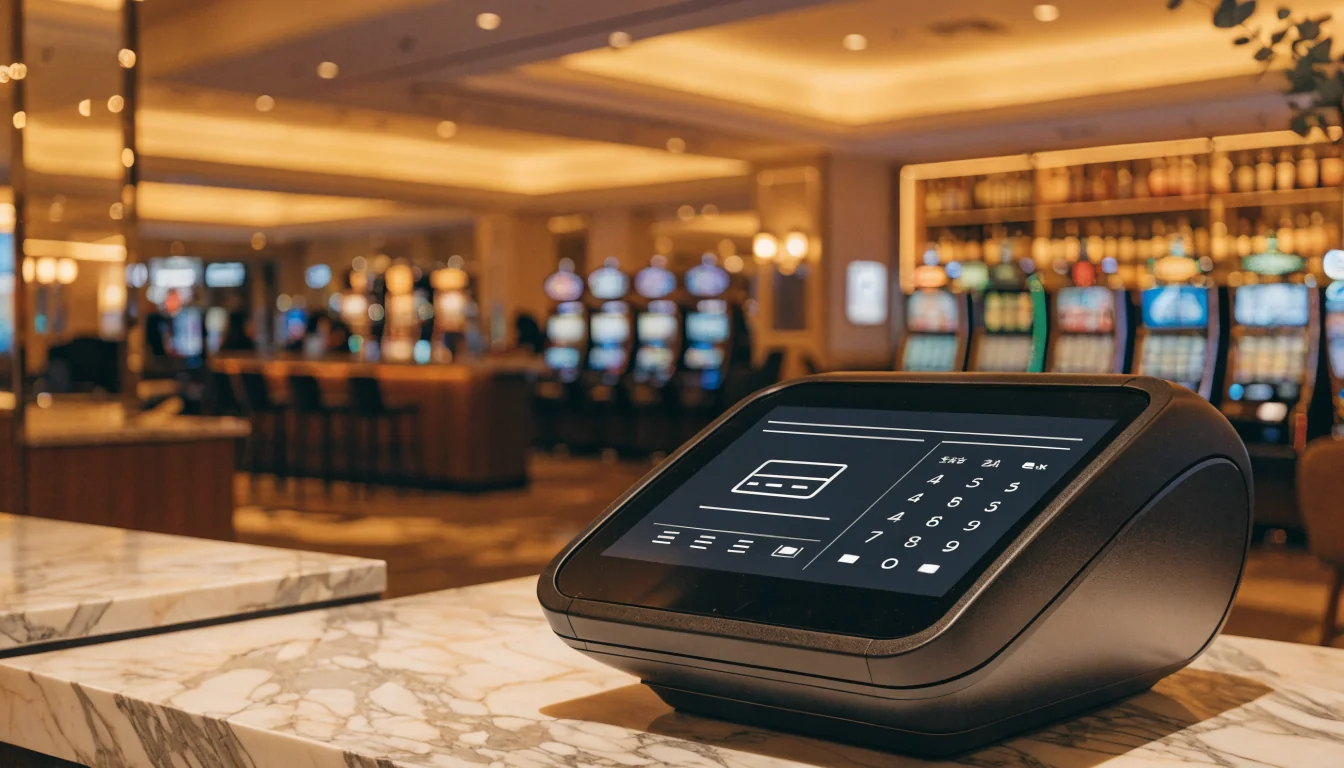
What does matter, from a player’s perspective, is that the speed of getting money in creates a temptation the speed of getting money out doesn’t match. Deposits are near-instant. Withdrawals are a separate process entirely, governed by verification steps and processing windows that have nothing to do with how quickly the initial deposit cleared — a distinction I’ve seen catch people off guard more than once, usually right after a win, when the instinct is to expect the same speed in reverse.
Security Layers Worth Understanding
The 3D-Secure check isn’t decoration. It exists because card fraud in online gambling has historically been a real problem, and Visa’s response was to push authentication back onto the issuing bank rather than leaving it entirely to the merchant. In practice, this means the casino site itself never actually "sees" your full card credentials in a way that could be intercepted mid-transaction — the authentication happens in a handshake between your bank and Visa’s network, with the casino acting as the initiating party rather than the custodian of your details.

For a player choosing where to deposit, this is one of the few genuinely useful things to check before typing in card numbers: does the deposit flow include a 3D-Secure step, or does it skip straight to "payment accepted"? A skipped step isn’t necessarily proof of a scam, but it’s the kind of shortcut a legitimate, well-integrated Visa merchant relationship doesn’t usually need to take.
A Practical Note on Where This Fits
None of the above changes the underlying legal picture. Australian residents playing pokies at an offshore casino are operating in a space where the platform can’t be domestically licensed, because that licence doesn’t exist. Visa’s processing infrastructure is agnostic to that — the card network will authorise a legitimate transaction regardless of where the merchant is incorporated, provided the bank on the other end doesn’t block it first. Some banks do exactly that, flagging or rejecting transactions tied to gambling merchant codes regardless of which casino is involved. That’s a bank-level decision, not something the casino or Visa controls, and it’s the most common reason a deposit that should work in theory doesn’t work in practice.
"Instant" and "secure" are the two words that show up on every deposit page. Usually true. Worth checking anyway.
Australian Online Casinos That Accept Visa
The Interactive Gambling Act 2001 bans online casino games for Australian players — no domestic operator can legally offer slots, blackjack or roulette to anyone with an Australian address. That’s the part most payment pages skip over before jumping straight to "how to deposit." Worth stating plainly, because it changes what "accepting Visa" actually means in this market. Every casino that takes an Australian Visa card is licensed somewhere else — Curaçao, Malta, sometimes the UK — and operates offshore while accepting Australian customers. Nothing about the card network changes that arrangement; Visa just moves money, it doesn’t decide who’s allowed to hold the account on the other end.

That gap between "legal to play" and "legal to operate" is where most of the confusion about Visa acceptance comes from. Players aren’t breaking any law by using a Visa debit card at an offshore site — the Act targets operators, not the person depositing $30 on a Friday night. But the bank sitting between the player and the casino doesn’t always see it that way.
Why the card still gets flagged
Australian banks and card issuers can restrict gambling-related transactions even when the casino itself accepts Visa without issue. The card network approving a merchant category doesn’t bind the issuing bank to process every transaction that comes through it. I’ve seen deposits bounce for no reason the player could see — the casino’s payment page showed Visa as available, the card had funds, and it still got declined. That’s not the casino’s fault and it’s not really the player’s either. It’s the issuer applying its own risk rules on top of what Visa allows.
This is also where credit and debit diverge sharply. Visa credit cards face more friction for casino deposits in Australia than debit cards do. Some of that comes from the 2023 amendment banning credit cards for online wagering outright — an issuer that once processed a credit transaction to a gambling merchant now has to block it or risk being out of step with the rule. Debit cards sit outside that ban because they draw from money the player already has, not borrowed funds, so they’re the version that actually clears reliably.
What "accepts Visa" looks like in practice
On the casino side, accepting Visa usually means one of two setups:
- Direct card processing — the casino’s payment gateway takes the Visa number directly, similar to any online retailer.
- Card-funded e-wallet or NPP route — the Visa card loads a linked account, and the linked account moves the funds through the New Payments Platform.
Both count as "Visa acceptance" from the player’s side, but they behave differently when something goes wrong. A declined direct-processing transaction usually throws an error immediately. A card-funded wallet can accept the load and then get stuck at the second step, which looks like a casino problem but is really a bank problem wearing a casino’s UI.
None of this is disclosed anywhere obvious. Casinos advertise "Visa accepted" as a badge, not a process, and the badge doesn’t say which of the two setups is running underneath, or which Australian issuers are more likely to wave the transaction through. That detail sits with the bank, not the operator, and no operator has much reason to explain it — it’s not a selling point, it’s friction they’d rather the player didn’t think about.
What this means practically: a Visa debit card is the more dependable option, both because it clears the credit-card ban cleanly and because issuers treat debit transactions with less suspicion. Credit cards, even where a casino technically lists Visa credit as accepted, run a higher chance of getting stopped somewhere between the card and the account — not by the casino, but by the bank that issued the card in the first place.
The rest of this comes down to mechanics — minimums, processing speed, what happens on the way out — which is where the practical differences between operators actually show up.
Visa Deposit Mechanics for Australian Players
A Visa deposit at an offshore casino is, mechanically, no different from paying for anything else online. Card number, expiry, CVV, confirm — the money moves. What’s different is what happens on the bank’s side of that transaction, and that’s where most of the actual friction lives.
Since the 2023 amendment to the Interactive Gambling Act banned credit cards for wagering, Visa debit has become the default — not because operators prefer it, but because there isn’t really an alternative left on the table. A debit card draws from money already sitting in an account. No credit line, no interest, no chasing a balance that isn’t there. That distinction used to be a preference. Now it’s the only door that’s open.

Why debit, specifically
The logic behind debit-first deposits isn’t complicated once you’ve seen it from the operator’s side. Credit transactions carry chargeback risk and, after the ban, outright non-compliance risk. Debit transactions settle against real funds, which makes them cleaner for everyone — the bank, the processor, the casino, and arguably the player, who isn’t spending money they don’t have.
I’ve watched this shift play out in real time: cardholders who used to split deposits between a credit and a debit card now just use the one that still works. It simplifies the bookkeeping, if nothing else.
Processing speed and cost
Visa deposits process almost instantly. There’s no waiting period, no pending status that lingers for hours — funds typically appear in the casino balance fast enough that you can start playing before the confirmation email lands. That immediacy is one of the few genuine conveniences in this whole payment chain, and it hasn’t changed with the credit-card restrictions.
Deposits are also fee-free from the player’s side. Whatever margin exists in that transaction is absorbed elsewhere — by the operator, by the processor — not passed on as a line-item charge at the point of deposit. Worth checking your own bank statement occasionally anyway; the casino not charging a fee doesn’t guarantee your card issuer won’t.

Minimum amounts
Deposit minimums vary by operator, and I’d be cautious about anyone who tells you there’s a standard figure across the market. According to one industry review of operator terms, a threshold around A$20 shows up often enough to be a reasonable starting expectation — but that’s one source describing a moving target, not a rule. The actual minimum on any given site is whatever that site’s terms say it is, and those terms change. Check the cashier page before assuming.
When a deposit gets declined
A declined card doesn’t necessarily mean the casino is doing something wrong. In practice, the block usually sits upstream of the operator entirely. The common causes:
- Issuer restrictions — the bank itself flags or blocks the transaction category before it reaches the casino.
- Insufficient funds — self-explanatory, but worth ruling out first since it’s the easiest fix.
- Payment-processor limitations — the intermediary handling the transaction has its own rules, separate from both the bank’s and the casino’s.
- Verification issues — mismatched details, an unverified account, or a card that hasn’t cleared the casino’s own checks yet.
None of these on their own says anything about whether the site is legitimate or well-run. A declined deposit is frustrating, but it’s rarely a red flag about the operator — more often it’s a bank being cautious about a merchant category it doesn’t fully trust, or a processor enforcing a rule nobody bothered to publish.
That’s the part rarely spelled out on a cashier page: "declined" is a decision made by several parties, and the casino you’re trying to pay is often the last one in that chain, not the first.
Instant Visa Withdrawals: What’s Realistic?
"Instant withdrawal" is the phrase every casino puts on its banner, and it’s the one that needs the most unpacking. Deposits land in seconds. Withdrawals never do — not with Visa, not anywhere. What’s actually being sold as "instant" is casino-side approval, not the money hitting the account.
Once that approval happens, the card network still has to move the funds. Here the picture gets messy, because the sources disagree with each other and I’m not going to pretend they don’t. One line of reporting puts Visa withdrawal processing at 1 to 3 business days after the casino signs off. Another puts the same process at 5 to 10 business days. Both numbers circulate as if they’re the standard, and neither operator explains why the gap exists — different banks, different verification queues, different card issuers all play a part, and nobody publishes which factor dominates. Treat any "instant" withdrawal claim as marketing shorthand for "fast approval," not a promise about when the balance actually moves.
Where Visa withdrawals aren’t an option at all
The other thing worth saying plainly: not every casino that takes a Visa deposit will send a Visa withdrawal back. Boho Casino is the clearest example. It accepts Visa on the way in, but on the way out, Visa isn’t listed as a method at all — players get bank transfer only. No card option, regardless of how the deposit was made.
That’s a structural gap, not a delay. A slow withdrawal is annoying. A missing one means budgeting for a different process entirely — usually slower, sometimes requiring extra bank details the player hasn’t had to hand over before.
What limits look like in practice
Minimums matter too, and they vary by operator rather than following any market-wide rule. One industry review lists Boho Casino’s minimum Visa withdrawal at AU$75 — a figure that comes from the operator’s own published terms at the time, not from a regulation that applies everywhere. Except, of course, Boho doesn’t pay out via Visa at all, so that minimum only ever applied to deposits — a detail worth flagging because it’s easy to see the number and assume it describes the missing withdrawal option too.
The realistic approach: check the cashier page before playing, not after requesting a payout. "Instant" gets a casino’s attention. The processing window and the method actually offered get the money back.
Playing Slots with Visa: Security and Authentication
Every card payment carries a moment of exposure — the second between entering the number and the transaction clearing. What happens in that second is the part operators rarely explain, and it’s the part worth understanding before any deposit hits an offshore slot library.
3D‑Secure is the layer that does most of the work. It’s the step where the issuing bank confirms that the person typing the card details is actually the cardholder, usually through a one‑time code or an approval prompt inside a banking app. Casinos don’t control this step — the bank does — which is exactly the point. It moves the verification away from the merchant and back to the institution that issued the card in the first place. If that prompt never appears, or the payment page skips straight to "processing," that’s worth noticing rather than ignoring.
Behind that check sits Visa’s own zero‑liability protection. If a card gets used for a transaction that wasn’t authorised, the cardholder isn’t on the hook for it. That’s a Visa network guarantee, not something a casino grants or can take away — it applies regardless of which site the card was used on. Worth knowing, and worth not confusing with a casino’s own terms, which can still restrict disputes over gameplay outcomes even where the payment itself was legitimate.
Then there’s encryption, which is the less glamorous half of the equation but the one doing the constant, invisible work. The better‑run Visa‑accepting casinos run 128‑bit or 256‑bit SSL encryption on their banking pages, scrambling card numbers and account details in transit so they’re unreadable if intercepted. It’s the same standard used by banking apps — not a casino invention, just borrowed correctly.
None of this is visible in the interface, which is exactly why it gets skipped in most reviews. Nobody screenshots encryption. What you can check:
- a padlock icon and “https” on the payment page — the baseline sign SSL is active
- a 3D‑Secure prompt from the bank at the point of payment, not from the casino
- a privacy or security page mentioning encryption standards, rather than vague “bank‑level security” language with nothing behind it
If a site skips the bank prompt entirely and just accepts a card number with no further check, that’s not efficiency. That’s a missing layer.
None of this replaces judgement about the operator itself. A well‑encrypted deposit page says nothing about payout speed or how a site handles a dispute later. It only says the number typed into the box stayed private on the way in.
Security, not trust.
Online Visa Withdrawal Options and Limits
Withdrawal limits are where the real difference between operators shows up. Deposit minimums tend to sit close together across the market; withdrawal floors and ceilings don’t.
Lucky7Even sets its minimum Visa withdrawal at AU$20 — low enough that a small win doesn’t get trapped behind a threshold. The maximum sits at AU$50,000, which covers most recreational play comfortably, though anyone clearing that kind of balance is usually dealing with a VIP manager rather than a standard support queue.
These figures come from the operator’s own published terms, not from an independent market survey, and terms like these get revised without much notice. Treat any specific number as a snapshot, not a guarantee that it’ll be there next time you log in.
What sits between the floor and the ceiling matters as much as the numbers themselves. A few things worth checking before relying on a withdrawal limit:
- Per-transaction cap vs. account cap — some limits apply to a single withdrawal, others to a rolling period. The wording on the cashier page usually clarifies which.
- Verification thresholds — larger withdrawals typically trigger additional identity checks, independent of the stated maximum.
- Currency conversion — limits quoted in AU$ don’t always match what lands after conversion if the account runs in another currency.
None of this is unique to Lucky7Even. It’s the standard shape of a Visa withdrawal schedule: a low floor to keep small cashouts practical, a high ceiling to keep the terms from looking restrictive, and a verification layer that decides how fast the number in between actually matters.
"Instant" withdrawal limits, incidentally, aren’t the same conversation as instant processing — a casino can have a generous cap and still take days to release funds. That’s a separate question from what’s covered here.
The takeaway is narrower than it looks. A withdrawal limit tells you what the operator will pay out, not what you’ll actually receive on time.
Top Visa Deposit Bonuses for Australian Casinos
Since Visa remains one of the most widely accepted deposit methods at Australian-friendly casinos, it helps to see how leading sites structure their licensing, bonuses, and minimum deposit requirements before you commit any funds.
License: Curacao – Antillephone N.V. (Versus Odds B.V.) · Bonus: up to EUR 2,000 across 5 deposits + 200 free spins · Min. deposit: EUR 20 Licensed under Curacao’s Antillephone framework, this operator offers a sizeable multi-deposit welcome package with free spins attached, and keeps its minimum deposit modest for those testing the waters.
Bonus: up to A$750 + 50 jackpot spins, 35x wagering · Payout speed: crypto ~90 minutes, fiat 1-5 days · Min. deposit: A$30 This site pairs a jackpot-spin bonus with a low minimum deposit, and its fast crypto payout window stands out for players who prioritise quick withdrawals alongside standard fiat options.
License: Curacao eGaming (Hollycorn N.V., since 2017) · Bonus: 225% up to A$1,540 + 600 free spins across 4 deposits, 20x wagering · Min. deposit: A$20-30 (depends on the offer) Backed by a long-standing Curacao eGaming license held since 2017, this casino spreads a substantial percentage-match bonus with free spins across several deposits, with reasonable entry requirements.
Bonus: up to A$7,500 + 550 free spins across 10 deposits, 50x wagering · Payout speed: crypto under 1 hour, PayID 1-3 business days · Min. deposit: A$20 (A$30 to qualify for the bonus) A large multi-deposit bonus with hundreds of free spins is the headline here, complemented by quick crypto payouts and a PayID option for those who prefer local banking rails.
License: Curacao Gaming Control Board · Bonus: up to A$5,000 + 400 free spins Operating under a Curacao Gaming Control Board license, this casino offers a generous bonus package combining cash match and free spins for new players.
License: Curacao Gaming Control Board OGL/2023/174/0082 (Dama N.V.) · Bonus: up to A$5,000 + 300 free spins across 4 deposits Licensed via the Curacao Gaming Control Board under the Dama N.V. umbrella, this site spreads a solid welcome bonus with free spins across multiple deposits.
License: Curacao · Bonus: 100% up to A$500 + 200 free spins, 10x wagering · Payout speed: crypto 30-60 minutes, fiat 1-5 days · Min. deposit: A$10 With a low minimum deposit and a wagering requirement on the lighter side, this casino also offers fast crypto payouts alongside standard fiat processing times.
License: Curacao eGaming OGL/2023/174/0082 (Dama N.V.) · Bonus: up to A$10,000 + 500 free spins across 4 deposits · Min. deposit: A$15 Licensed under Curacao’s regulatory framework via Dama N.V., this operator stands out for a particularly large bonus ceiling spread over multiple deposits, with an accessible minimum deposit.
License: Curacao OGL/2024/1335/0780 · Bonus: up to A$1,000 + 150 free spins, wager-free · Min. deposit: EUR 20 This casino’s Curacao license and wager-free bonus structure make it notable for players who want to avoid heavy playthrough conditions, alongside a straightforward minimum deposit.
License: Curacao Gaming Control Board OGL/2023/176/0095 (Hollycorn N.V.) · Bonus: up to A$11,000 + 300 free spins (code NEO100) Licensed by the Curacao Gaming Control Board under Hollycorn N.V., this site offers one of the higher bonus ceilings on the list, activated via a dedicated promo code.
Not every welcome package is worth the Visa deposit that unlocks it. Wagering requirements buried three pages into the terms tend to matter more than the headline number, so what follows is a short list rather than a ranking — two offers where the deposit mechanics and the bonus terms are both stated up front.
Lucky7Even’s welcome package pairs a AU$2,000 bonus with 200 free spins, unlocked from a AU$30 Visa deposit. That’s a sizeable ceiling for a first deposit, and the entry cost sits at the lower end of what Australian casinos typically ask for. Whether the bonus suits a given player depends entirely on the wagering conditions attached to it — those need reading before the card details go in, not after.
Goldenbet takes a different route: instead of chasing headline bonus size, it lowers the barrier to entry. A AU$10 minimum Visa deposit is about as accessible as it gets, which makes it a reasonable option for someone testing a new operator without committing much upfront.
Two operators, two different pitches. One leads with the size of the reward, the other with how little you need to risk to see it. Neither approach is inherently better — it depends on whether the goal is maximising bonus value or minimising initial outlay.
Any bonus, regardless of size, must display its wagering requirements clearly before the deposit is made. If that information isn’t visible upfront, treat it as a red flag rather than an oversight.
Australian Casinos That Accept Visa
Three names come up consistently when the search narrows to Visa specifically, as opposed to "accepts most cards": Boho Casino, Lucky7Even and Goldenbet. None of them are licensed onshore — nothing offering slots and roulette to Australian players is — but all three take Visa debit at the cashier, which is the part most comparison lists get vague about.
Boho Casino accepts Visa for deposits. It does not accept Visa for withdrawals — money out goes via bank transfer only, no exceptions, and any page telling you otherwise is behind on its own homework.
Lucky7Even runs Visa both ways. According to the operator’s own published terms, the minimum deposit sits at AU$30, low enough that a first-time player can test the account without committing much. Withdrawals go back to the same card, which is the arrangement most Australians expect and the one banks are least likely to flag.
Goldenbet also takes Visa on both ends. Per its own cashier terms, the minimum Visa withdrawal is AU$20 — worth knowing before you request a payout, since anything under that threshold simply won’t process.
What ties these three together isn’t a welcome offer or a game catalogue — it’s that Visa debit clears at the cashier without a support ticket. A site can list "Visa" in its footer and still decline half the transactions at the issuer’s end. These three don’t, at least not on a first pass. Whether the wagering conditions attached are worth the deposit is a separate question, answered elsewhere.
Paying with Visa: Common Issues and How to Avoid Them
A Visa payment gets declined more often than the checkout page admits. The card is fine, the balance is fine, and the transaction still bounces back. That’s when players assume the casino is broken. Usually it isn’t.
Australian banks tag gambling transactions with a merchant code — 7995 — and some issuers block anything carrying that code by default, regardless of which operator is on the other end. The block sits on the bank’s side, not the casino’s. No amount of retrying the same card changes that.
A declined payment, on its own, says nothing about whether the casino is reputable. It says the bank’s filter caught the merchant category.
What actually helps:
- Check with the card issuer whether gambling transactions are restricted before assuming the site is at fault.
- Confirm the card is debit, not credit — credit cards face extra friction under current rules.
- Try a smaller amount first; some blocks trigger on value, not just category.
- Keep a second funding method ready, since a single declined attempt rarely gets resolved by contacting the casino itself.
The fix, when there is one, usually lives with the bank.
Using Visa in the Australian Gambling Market: Regulations and Practices
The legal picture is narrower than most payment pages let on. The Interactive Gambling Act 2001 bans online casino games for Australian residents outright — there’s no domestic licence for slots, roulette or live tables, and none is coming. What the law goes after is the operator, not the person clicking "deposit," which is why offshore-licensed sites keep operating and Australians keep playing on them without breaking any law themselves.
Visa’s role in that picture changed in 2023. A federal amendment stripped credit cards out of online wagering entirely, leaving debit as the only Visa product still welcome at the till. That single rule change did more to shape how Australians fund these accounts than any casino’s own terms did.
Processing times still vary by operator rather than by regulation. One operator’s own terms put its Visa withdrawal at roughly two days; another sets a weekly cap of AU$7,500 and a monthly one of AU$15,000. No regulator standardises either figure.
Are Visa withdrawals common at Australian casinos?
Yes, but availability varies by operator — for example, Boho Casino offers only bank transfer for withdrawals, while Lucky7Even and Goldenbet do process Visa withdrawals. Expect them to take 1 to 10 business days after casino approval, which is far slower than deposits.
Should players assume that a Visa logo guarantees a perfect all-round banking setup?
No. A casino accepting Visa deposits doesn’t mean it offers Visa withdrawals, and minimums, limits and processing times differ — Boho Casino requires a AU$30 deposit but only allows bank transfer withdrawals, while Goldenbet’s minimum deposit is AU$10. Always check the specific casino’s cashier page.
How can I verify if a gambling operator is legal?
No online casino can legally offer casino games to Australian residents from inside Australia under the Interactive Gambling Act 2001, so every site serving Australians is licensed offshore (often in jurisdictions like Malta). Check the licence information displayed on the casino’s website and confirm it with the regulator that issued it.
Published by the Casino iPad Info team.