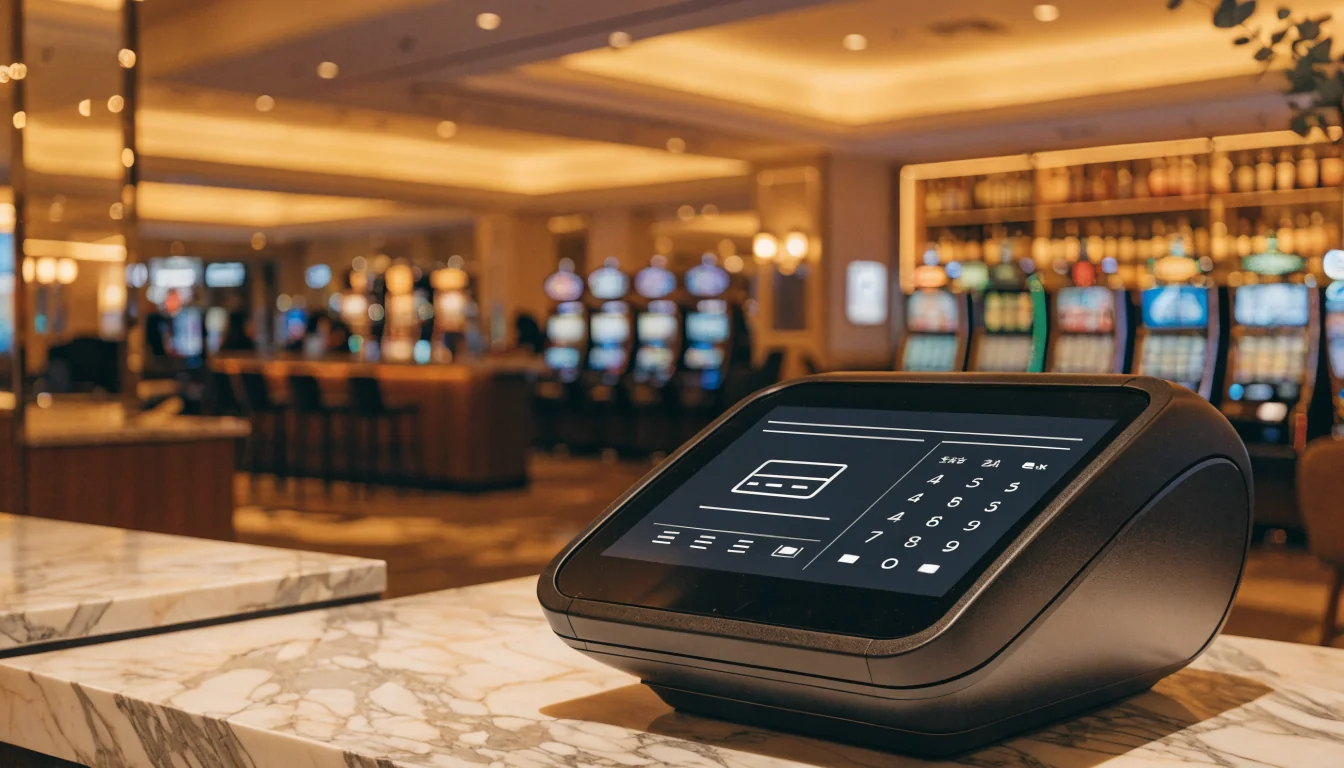
Instant PayID Withdrawals for Real-Money Play in Australia
 Available in US
How Instant PayID Withdrawals Work for Real‑Money Australian Players in 2026
18+. This page discusses offshore-licensed gambling platforms. Online casino games cannot be legally offered by Australian-licensed operators — there is no domestic licence for slots, roulette, or blackjack under the Interactive Gambling Act 2001. Playing at an offshore-licensed casino is not illegal for an individual, but you’re operating outside any Australian consumer protection framework. This article contains affiliate links; we may earn a commission at no extra cost to you. If gambling is affecting you or someone close to you, contact Gambling Help Online on 1800 858 858.
I spent a chunk of my working life on the other side of the cashier screen, watching withdrawal requests queue up and learning exactly why some cleared in minutes and others sat for a day. The mechanics haven’t changed much by 2026 — what changed is that PayID became the thing everyone asks for by name, without necessarily knowing what happens between clicking "withdraw" and seeing the balance in their bank app.
There are two separate clocks running on every withdrawal, and almost every complaint I ever saw traced back to someone confusing one for the other.
The two clocks: casino time and bank time
The first clock belongs to the casino. Industry terminology calls this Stage 1 — the internal review the operator runs before it releases funds at all. This is the part the casino controls, and it’s also the part that varies the most between operators.

A look at deposit and withdrawal options at Australian casino sites, from cards and e-wallets…


The second clock belongs to the payment rail. Once the casino approves the payout and pushes it out, PayID takes over, and that leg is no longer the casino’s problem — it’s Australia’s payments infrastructure doing what it was built to do.
PayID settles through the New Payments Platform (NPP), and a transfer typically lands in under 60 seconds. That’s not a casino promise — it’s how the NPP works for any PayID transfer, casino or otherwise. Once money leaves the operator’s account, it’s essentially instant on the banking side.
Which means the entire "instant" reputation of PayID withdrawals rests almost entirely on Stage 1. If a casino says PayID and still takes half a day to pay out, the delay isn’t PayID — it’s the review sitting in front of it.
What Stage 1 actually looks like
According to one industry review of operator conditions, Stage-1 processing runs on two tracks:
- Automated approval — the system checks the request against pre-set rules (account verified, amount within limits, no flags) and releases it, typically inside 5 to 30 minutes.
- Manual approval — a staff member has to look at it. That review window runs from roughly 2 to 24 hours, and can stretch further for a player’s first withdrawal or for a larger-than-usual amount.
Neither track is "the standard." Which track a request falls into depends on rules the operator sets and rarely publishes in full — account age, verification status, deposit history, and the size of the request relative to what that player usually moves. A returning player asking for a small, verified withdrawal is a very different case, from the system’s point of view, than a brand-new account asking for a large one.
Why size changes everything
One pattern held true across pretty much every operator I’ve seen work: the bigger the withdrawal, the more human eyes it attracts.
According to the same review, first withdrawals above roughly AU$2,000 to AU$5,000 often trigger a manual security review even at casinos that otherwise run fully automated payouts. This isn’t arbitrary caution. It’s the point where a casino’s risk team decides the cost of a five-minute manual check is worth it against the cost of paying out on a compromised account or a bonus abuse pattern.
For amounts under AU$1,000, PayID is generally treated as the default, recommended path — fast rail, low friction, nothing unusual about the request. Above that, some of that friction comes back, not because PayID gets slower, but because the casino’s own review gets more careful before it lets Stage 1 finish.
Practical shape this takes:
| Withdrawal size | What typically happens at Stage 1 | PayID leg once approved |
|---|---|---|
| Small, verified account | Automated check, released quickly | Under 60 seconds |
| First withdrawal, any size | More likely to be manually reviewed | Under 60 seconds once released |
| Large amount (above roughly AU$2,000–5,000) | Manual review common even for established accounts | Under 60 seconds once released |
The right column barely moves. The left column is where the actual wait lives.
Weekends are not a technical problem — they’re a staffing one
This is the part that surprises people who assume "instant withdrawal casino" means the same thing at 3am Sunday as it does at 2pm Tuesday.
Manual review isn’t a script running in the background. It’s a person, or a small team, working through a queue in batches. According to industry reporting on how these operators actually run, a withdrawal requested at 11pm on a Sunday can sit until Monday simply because nobody on the review team is rostered on at that hour.
This has nothing to do with PayID, NPP, or the casino’s stated processing times being false. The rail is still instant. The queue in front of it just isn’t staffed around the clock everywhere. Anyone timing a withdrawal against a Monday deadline should probably not be initiating it Sunday night and hoping for the best.
Weekend staffing
Requests made late on a Sunday may sit idle until Monday because the manual review team is not rostered 24/7. This can add a full day to the withdrawal timeline even though the PayID rail itself is instant.
KYC: the delay hiding behind every other delay
If I had to name the single biggest cause of a withdrawal taking longer than a player expected, it isn’t the payment rail, it isn’t the bonus terms, it isn’t even the size of the withdrawal. It’s incomplete identity verification — commonly shortened to KYC on this market.
Every legitimate operator requires government-issued ID before releasing funds. That’s not an optional extra step some casinos skip — it’s a standing requirement across the market, and for good reason: it’s also a regulatory baseline these platforms have to meet regardless of licence jurisdiction. What varies is when the casino asks for it.
Some ask upfront, before the first deposit even goes through. Others let a player deposit and play first, and only ask for documents when a withdrawal request lands on the desk. The second approach feels smoother at signup — nobody likes uploading a driver’s licence before they’ve even spun a reel — but it’s the exact mechanism that turns a same-day payout into a multi-day one, because now the withdrawal is stuck behind a verification step that could have been cleared days earlier.
Identity verification itself is usually completed within 24 hours once the documents are actually submitted and reviewed. The delay people experience isn’t usually the verification taking long — it’s the gap between requesting a withdrawal and realising verification hadn’t happened yet, then waiting on a support queue to process documents that could have gone in at signup.
Completing verification before the first deposit is the single most effective way to avoid this entirely. It costs ten minutes upfront. The alternative costs a withdrawal sitting in limbo while a support inbox works through a backlog.
What verification typically involves:
- A government-issued photo ID (driver’s licence or passport)
- Proof of address, if requested
- Confirmation that the payment method belongs to the account holder
That last point deserves its own space, because it trips up more people than it should.
The name on the account has to match — exactly
This is one of those rules that sounds bureaucratic until you understand what it’s actually preventing, and it applies whether the payout method is a bank account, a card, or a crypto exchange.
The name on the casino account must exactly match the name on the receiving bank account, card, or crypto exchange account. Not "close enough." Not a shared account with a partner. Not a maiden name still sitting on one document and a married name on the other. Exactly.
From the operator’s side, this is an anti-fraud control, not pedantry — it’s the same logic banks use to stop money moving between accounts that don’t belong to the same verified person. A mismatch here doesn’t just slow a withdrawal down, it can stop it outright until the discrepancy is resolved, which usually means more documents and more time.
For PayID specifically, this matters in a very concrete way: a PayID is linked to a bank account under a registered name, and the casino account should carry that same name from day one. Setting up a casino account under a nickname, a business name, or a shared household name creates exactly the mismatch that manual review exists to catch.
Worth doing before the first deposit, not after the first withdrawal request:
- Confirm the exact legal name shown on the casino account matches the ID being used for verification.
- Confirm the PayID being used for withdrawal is linked to a bank account under that same name.
- If a card or crypto exchange will also be used, confirm the name there matches too — mixed methods with mismatched names are a common, avoidable snag.
Where PayID fits against the alternatives, without repeating what’s coming
This section isn’t the place to run through which casinos support what — that’s the next part. But it’s worth being clear about why PayID earns the "instant" language it gets, because the reasoning explains a lot of the recommendations that follow it.
PayID’s advantage is structural: it rides on the NPP, a payments rail built for real-time transfers, not on the older BECS clearing system that underpins standard bank transfers. That’s why PayID is treated as the default recommendation for smaller, everyday withdrawal amounts — the rail itself removes the multi-day wait that a standard bank transfer would otherwise involve. It doesn’t remove Stage 1. It just means that once Stage 1 clears, the money moves about as fast as a transfer between two Australian bank accounts can move.
What "instant" actually promises, honestly
According to one industry review covering operators active in this market, all of the instant-withdrawal casinos it assessed are licensed out of Curaçao or an equivalent jurisdiction and don’t appear on the ACMA’s blocked register as of 2026 — and each supports at least one fast withdrawal rail for Australian players, whether that’s PayID, crypto, or both. That’s a reasonable floor to expect. It is not a guarantee about how long Stage 1 will take at any specific operator, because that’s set by internal policy that isn’t standardised across the market and isn’t something a single review — including this one — can fully verify for every operator, every time.
The honest version: "instant" describes what happens after a casino approves a withdrawal. It says very little, on its own, about how long that approval takes to arrive. A player who understands that distinction — automated review versus manual, verified account versus unverified, small amount versus first-time large one — has a far more accurate sense of what to expect than one chasing the word "instant" as if it were a fixed number.
None of this is complicated once it’s laid out. It’s just rarely laid out, because "instant" sells better as a headline than "instant, once our review is done" does.
Get verification out of the way early. Match the name on every account exactly. Know that a weekend request meets a Monday queue at some operators. Everything else is the NPP doing, in under a minute, the one part of this process that was never actually the bottleneck.
Top Australian Casinos Offering Instant PayID Withdrawals in 2026
If you’re after fast PayID withdrawals for real money play in 2026, it helps to check licensing, deposit minimums and payout speeds before signing up, since these details shape how quickly you can actually access your winnings.
License: Curacao – Antillephone N.V. (Versus Odds B.V.) · Bonus: up to EUR 2,000 across 5 deposits + 200 free spins · Min. deposit: EUR 20 Licensed by Curacao’s Antillephone N.V. under the Versus Odds B.V. brand, this casino offers a multi-deposit bonus package worth up to EUR 2,000 plus 200 free spins, with a modest EUR 20 minimum deposit to get started.
Bonus: up to A$750 + 50 jackpot spins, 35x wagering · Payout speed: crypto ~90 minutes, fiat 1-5 days · Min. deposit: A$30 This operator pairs a bonus of up to A$750 plus 50 jackpot spins with notably quick crypto payouts of around 90 minutes, while fiat withdrawals take a few days; a low A$30 minimum deposit keeps entry accessible.
License: Curacao eGaming (Hollycorn N.V., since 2017) · Bonus: 225% up to A$1,540 + 600 free spins across 4 deposits, 20x wagering · Min. deposit: A$20-30 (depends on the offer) Backed by a Curacao eGaming license held by Hollycorn N.V. since 2017, this casino spreads a 225% bonus worth up to A$1,540 plus 600 free spins across four deposits, with wagering set at 20x and a low entry deposit.
Bonus: up to A$7,500 + 550 free spins across 10 deposits, 50x wagering · Payout speed: crypto under 1 hour, PayID 1-3 business days · Min. deposit: A$20 (A$30 to qualify for the bonus) A generous bonus package of up to A$7,500 plus 550 free spins spans ten deposits here, and while crypto withdrawals clear in under an hour, PayID payouts take a few business days to process.
License: Curacao Gaming Control Board · Bonus: up to A$5,000 + 400 free spins Operating under a Curacao Gaming Control Board license, this casino offers a straightforward bonus of up to A$5,000 plus 400 free spins for new players.
License: Curacao Gaming Control Board OGL/2023/174/0082 (Dama N.V.) · Bonus: up to A$5,000 + 300 free spins across 4 deposits Licensed by the Curacao Gaming Control Board under Dama N.V., this casino spreads a bonus of up to A$5,000 plus 300 free spins across four deposits.
License: Curacao · Bonus: 100% up to A$500 + 200 free spins, 10x wagering · Payout speed: crypto 30-60 minutes, fiat 1-5 days · Min. deposit: A$10 This Curacao-licensed casino keeps the entry bar low with a A$10 minimum deposit, offering a 100% bonus up to A$500 plus 200 free spins with light 10x wagering, and crypto withdrawals land in roughly half an hour to an hour.
License: Curacao eGaming OGL/2023/174/0082 (Dama N.V.) · Bonus: up to A$10,000 + 500 free spins across 4 deposits · Min. deposit: A$15 Licensed under Curacao eGaming via Dama N.V., this casino stands out for a sizeable bonus of up to A$10,000 plus 500 free spins spread over four deposits, with a low A$15 minimum deposit.
License: Curacao OGL/2024/1335/0780 · Bonus: up to A$1,000 + 150 free spins, wager-free · Min. deposit: EUR 20 Licensed under a recent Curacao permit, this casino offers a wager-free bonus of up to A$1,000 plus 150 free spins, a rare perk that removes the usual playthrough requirement.
License: Curacao Gaming Control Board OGL/2023/176/0095 (Hollycorn N.V.) · Bonus: up to A$11,000 + 300 free spins (code NEO100) Holding a Curacao Gaming Control Board license through Hollycorn N.V., this casino offers one of the larger bonus packages on the list at up to A$11,000 plus 300 free spins via a dedicated bonus code.
Every casino named below is Curaçao‑licensed (or the local equivalent) and, as of 2026, absent from the ACMA blocked register. That’s the baseline, not a distinction — none of these platforms hold an Australian gambling licence, because no such licence exists for online casino games. What separates them is what happens after you click "withdraw."
I’ve pulled the numbers I could actually verify. Where a figure comes from a single test run or one operator’s own disclosure, I’ve said so — because a median time from one review isn’t a promise, and I’m not going to dress it up as one.
Wild Tokyo
Wild Tokyo runs on crypto rails primarily, and one industry review measured its Bitcoin withdrawal at a median of 13 minutes. "Median" matters here — half the withdrawals in that sample were faster, half slower, and your own result depends on network congestion and how quickly the casino’s own Stage 1 review clears. Still, 13 minutes puts it near the front of the pack for players who hold BTC already and don’t want to convert.
The catch, covered properly in the bonus section that follows, is that any bonus funds sitting in the account will need their wagering cleared first — the withdrawal speed only kicks in once the balance is actually yours to take.
GoldenCrown
GoldenCrown posted a very similar result in the same review — a 14‑minute median for Bitcoin withdrawals. Practically indistinguishable from Wild Tokyo’s number, and I wouldn’t pick one over the other on a one‑minute gap measured in a single test window. What I would say: both sit in the same tier, and if you’re choosing between them, the deciding factor is more likely to be game library or bonus terms than payout speed.
Skycrown
Skycrown is the widest crypto door on this list. According to the same industry testing, it supports ten cryptocurrencies, and the review reported no stated maximum on deposits or withdrawals — worth noting as "no stated limit," not "no limit," since the absence of a published cap isn’t the same as a guarantee. In practice, the same source clocked a Litecoin withdrawal median of 22 minutes and a separate test run where a crypto payout reached the player’s wallet in under 15 minutes.
Those two numbers looking different isn’t a contradiction — one is a median across many withdrawals, the other a single timed test. Real experience will land somewhere in that range depending on the coin and the network at the time.
Neospin
Neospin’s numbers come from the same round of testing published by esports.gg. Crypto withdrawals cleared in 5–10 minutes after approval, which is fast by any measure — but "after approval" is the operative phrase. That’s the Stage 1 clock, the casino’s own manual or automated check, running separately from the blockchain settlement time. The same testing noted a A$7,500 per‑transaction withdrawal limit, which matters if you’re cashing out a large session in one go rather than in stages.
Casinonic
Casinonic is the closest thing on this list to a genuine PayID‑and‑crypto hybrid, per esports.gg’s coverage. It supports PayID, MiFinity, and crypto withdrawals side by side, and the reported clearing times split accordingly: crypto payouts landing in 30–60 minutes, MiFinity withdrawals clearing in under four hours. That’s a wider spread than the pure‑crypto operators above, which tracks — MiFinity is an e‑wallet layer, not a blockchain settlement, and it runs on its own processing schedule rather than the sub‑minute NPP rail that PayID itself uses.
If PayID is your preferred method and you want a backup that isn’t crypto, Casinonic’s MiFinity option is the more realistic fallback of the two.
Kingmaker
Kingmaker takes a different approach entirely: breadth over speed claims. Per esports.gg, it offers more than 15 withdrawal methods, spanning crypto, e‑wallets including Jeton and Sticpay, and selected fiat options. No single processing time was reported for the platform as a whole, which is honestly more believable than a blanket number would be — a casino running fifteen-plus rails isn’t going to have one uniform speed, because each method clears on its own infrastructure.
What this means for a player: if PayID isn’t available on your account tier, or you’d rather route a withdrawal through an e‑wallet you already use for other things, Kingmaker gives you more doors to try. It doesn’t mean any one of those doors is the fastest on this list.
Reading the comparison honestly
A table can make six casinos look like a spec sheet. It isn’t one — most of these figures are self-reported or drawn from a single testing pass, not an average taken across thousands of live withdrawals.
| Casino | Reported method & speed | Source type |
|---|---|---|
| Wild Tokyo | Bitcoin, 13‑minute median | Single industry review |
| GoldenCrown | Bitcoin, 14‑minute median | Single industry review |
| Skycrown | Litecoin, 22‑minute median; crypto under 15 min in one test; 10 cryptocurrencies, no stated max | Single industry review |
| Neospin | Crypto, 5–10 min after approval; A$7,500 per‑transaction limit | esports.gg testing |
| Casinonic | Crypto 30–60 min; MiFinity under 4 hours; also supports PayID | esports.gg |
| Kingmaker | 15+ methods incl. crypto, Jeton, Sticpay | esports.gg |
What’s genuinely different between these operators — how each one structures its own Stage 1 review, what triggers a manual hold, why one accepts fifteen methods and another sticks to three — isn’t something any public source has broken down consistently. Operators don’t publish their internal approval logic, and no independent body audits it across the board. So rather than guess at a pattern that isn’t there, it’s worth saying plainly: nobody outside these companies has published a reliable account of what actually varies in how they process a withdrawal versus what’s just marketing language wearing different words.
Fee structures, minimum first-withdrawal thresholds, and the exact point at which "automated" hands off to "manual" are decisions each casino makes internally, and none of them explain the logic publicly. Treat any of the times above as a starting expectation, not a service-level guarantee — and remember that Stage 1, the casino’s own processing window, sits in front of every number quoted here, crypto or PayID alike.
18+. Gambling involves financial risk. If gambling is affecting your life, free and confidential support is available through your state’s gambling helpline. This section contains affiliate links; Casino iPad Info may earn a commission at no extra cost to you.
No‑Deposit Bonus Options with Instant PayID Withdrawals in Australian Casinos
A no-deposit bonus sounds like the cleanest offer in the business: sign up, get credit, play, withdraw. No card details, no risk. In practice, the bonus itself is the easy part. What decides whether the win ever reaches a bank account is everything attached to it — the wagering multiplier, the clearing window, the maximum bet size, and whether verification was finished before or after the person tried to cash out.
I’ve watched players lose a no-deposit win not because the casino refused to pay, but because they broke a rule they never read. Bet above the cap on the last spin, and the whole balance can be voided. That’s not a scam. It’s a condition, printed somewhere, that nobody scrolled to.
What "no wagering" actually means
Bonus wagering must be cleared before a withdrawal request goes anywhere — that’s the default across the market. One cash bonus stands apart: Goldenbet runs a zero-wagering cash offer, meaning the amount credited behaves like real money from the moment it lands, no playthrough attached. That structure is unusual enough that it’s worth naming directly, because most operators still require a multiplier before a single dollar of bonus funds becomes withdrawable.
Where wagering does apply, the number attached to it matters less than the conditions wrapped around the number. Wild Tokyo’s bonus terms illustrate this well: a 50x wagering requirement, a five-day window to clear it, and a maximum bet of AU$8 while the requirement is active. Miss the five days and the bonus expires with whatever balance remains. Bet above AU$8 on a single spin and that spin — sometimes the whole session — can be disqualified from counting toward clearance. None of this is hidden maliciously. It’s in the terms. But terms are exactly what a no-deposit offer trains people to skip, because the word "free" makes the f
Prepared by the Casino iPad Info editorial staff.