Online Pokies E-Wallet Australia: What the Law Actually Says
 Available in US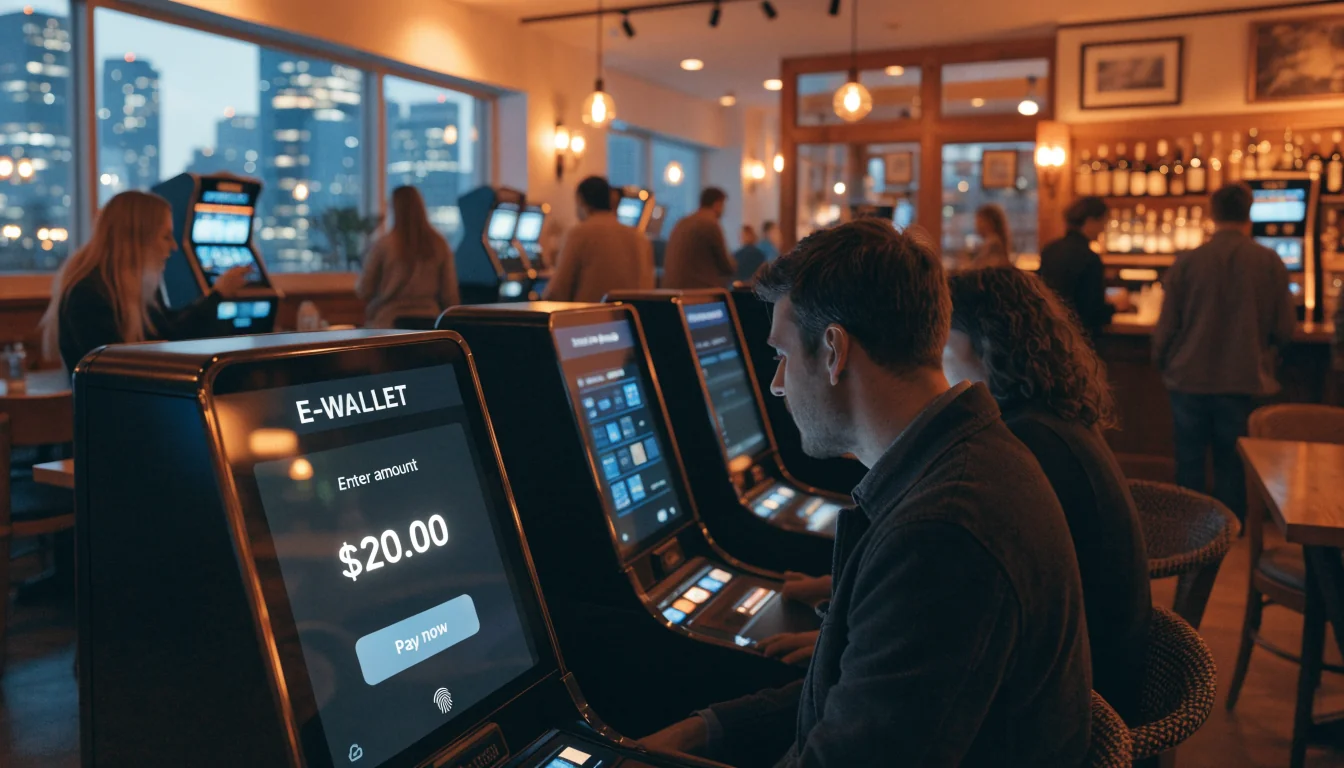
Australian Pokies: market scale, regulatory framework and the shift to cashless e‑wallets
I spent enough time around venue operators and compliance teams to know that the word "pokies" means something specific in Australia that outsiders miss. It’s not a slot machine in the Las Vegas sense, and it’s not an online casino slot either, no matter how many offshore sites try to blur that line. Pokies are the electronic gaming machines sitting in pubs, clubs and casinos — a fixture of the physical venue, licensed and taxed at state level, and legally distinct from anything offered "real money" over the internet. That distinction matters more in 2026 than it did a decade ago, because the industry is quietly rebuilding itself around cashless, account‑based systems, and the word "e‑wallet" now gets attached to pokies in ways that require some unpacking before anyone hands over a card number.
What pokies actually are, and where they sit in the gambling landscape
Electronic gaming machines are operated in every state, in the Australian Capital Territory, and in the Northern Territory. There’s no jurisdiction where they’re absent — they’re as embedded in the licensed club and pub circuit as the bar itself. That ubiquity is the first thing to understand: pokies aren’t a niche product tucked away in casinos, they’re the default gambling product most Australians encounter, because they’re physically everywhere.
If you’re planning to fund your account through an e-wallet, it helps to know upfront how each casino handles licensing, deposits, and bonus terms before you commit any cash.
License: Curacao – Antillephone N.V. (Versus Odds B.V.) · Bonus: up to EUR 2,000 across 5 deposits + 200 free spins · Min. deposit: EUR 20 Licensed by Antillephone N.V. under the Curacao framework, it offers a multi-deposit bonus package worth up to EUR 2,000 plus 200 free spins, with a modest EUR 20 minimum deposit.
Bonus: up to A$750 + 50 jackpot spins, 35x wagering · Payout speed: crypto ~90 minutes, fiat 1-5 days · Min. deposit: A$30 Backs its A$750 plus 50 jackpot spins bonus (35x wagering) with fast crypto payouts around 90 minutes, while fiat withdrawals take 1-5 days; entry starts at a A$30 minimum deposit.
License: Curacao eGaming (Hollycorn N.V., since 2017) · Bonus: 225% up to A$1,540 + 600 free spins across 4 deposits, 20x wagering · Min. deposit: A$20-30 (depends on the offer) Operating under Curacao eGaming via Hollycorn N.V. since 2017, it spreads a 225% bonus up to A$1,540 plus 600 free spins across four deposits with 20x wagering, and a low A$20-30 entry point depending on the offer.
Bonus: up to A$7,500 + 550 free spins across 10 deposits, 50x wagering · Payout speed: crypto under 1 hour, PayID 1-3 business days · Min. deposit: A$20 (A$30 to qualify for the bonus) A sizeable welcome package of up to A$7,500 plus 550 free spins spread over ten deposits (50x wagering) is paired with quick crypto payouts under an hour and PayID withdrawals in 1-3 business days.
License: Curacao Gaming Control Board · Bonus: up to A$5,000 + 400 free spins Holding a Curacao Gaming Control Board license, it stands out for a generous bonus offer of up to A$5,000 plus 400 free spins.
License: Curacao Gaming Control Board OGL/2023/174/0082 (Dama N.V.) · Bonus: up to A$5,000 + 300 free spins across 4 deposits Licensed under the Curacao Gaming Control Board through Dama N.V., it offers up to A$5,000 plus 300 free spins spread across four deposits.
License: Curacao · Bonus: 100% up to A$500 + 200 free spins, 10x wagering · Payout speed: crypto 30-60 minutes, fiat 1-5 days · Min. deposit: A$10 Curacao-licensed with a low A$10 minimum deposit, it gives a 100% bonus up to A$500 plus 200 free spins at just 10x wagering, and crypto payouts land in 30-60 minutes while fiat takes 1-5 days.
License: Curacao eGaming OGL/2023/174/0082 (Dama N.V.) · Bonus: up to A$10,000 + 500 free spins across 4 deposits · Min. deposit: A$15 Licensed under Curacao eGaming through Dama N.V., it features one of the larger bonus packages at up to A$10,000 plus 500 free spins across four deposits, with a low A$15 minimum deposit.
License: Curacao OGL/2024/1335/0780 · Bonus: up to A$1,000 + 150 free spins, wager-free · Min. deposit: EUR 20 Licensed under a specific Curacao registration, it offers a wager-free bonus of up to A$1,000 plus 150 free spins, with a EUR 20 minimum deposit.
License: Curacao Gaming Control Board OGL/2023/176/0095 (Hollycorn N.V.) · Bonus: up to A$11,000 + 300 free spins (code NEO100) Licensed by the Curacao Gaming Control Board via Hollycorn N.V., it offers a substantial bonus of up to A$11,000 plus 300 free spins redeemable with a dedicated code.
The scale is genuinely hard to grasp until you see the numbers side by side. In the financial year 2020‑2021, Australians placed bets worth almost AUD 150 billion on electronic gaming machines. Turnover, in gambling terms, isn’t the same as loss — it’s the total value wagered, much of which gets recycled through repeated bets within a single session. But even accounting for that, the total player loss for the same period sat at about AUD 12 billion. That’s the actual money that left players’ pockets and didn’t come back, across a single financial year, from machines alone.
Broken down per person, the FY 2020‑2021 per‑capita loss from electronic gaming machines was AUD 608. That figure is calculated across the adult population, which means it absorbs the reality that a large share of people don’t play pokies at all — the number for people who do play regularly is necessarily higher, though I won’t put a figure on that because it isn’t in the data I’m working from. What the AUD 608 figure tells you honestly is the scale of the drain relative to the whole population, not the experience of an individual player.

There’s a genuine discrepancy in how Australia’s share of the world’s poker machine stock gets reported, and I’d rather flag it than pretend one number is right. One line of reporting puts Australia at 3% of the world’s pub and club poker machines. Another puts the figure at around 18%. These aren’t close enough to be a rounding difference — they’re describing something different, possibly different machine categories, different counting methodologies, or different reference years, and neither source I’ve seen resolves the gap. Treat any claim about Australia’s global share of poker machines with that in mind; the honest answer is that the two commonly cited figures don’t agree, and I haven’t found a reconciliation.
More recent turnover figures push the scale even higher. According to a report published by complyadvantage.com, pokies generated AUD 191.2 billion in gambling turnover in 2023. I’m naming the source deliberately, because this is a single data point from a compliance‑focused publisher looking at money‑laundering risk in gambling, not a cross‑checked industry consensus figure. It shouldn’t be read as "the" market size for pokies in the way a national statistics office would define it — it’s one organisation’s number, cited for a specific argument about how much money moves through these machines.
The legal line: pokies in venues versus "online pokies"
This is where the phrase "online pokies e‑wallet Australia" gets slippery, and where I think a lot of comparison sites either get it wrong or get it right by accident.
Illegal Online Pokies
Offering real‑money pokies to Australian residents is an offence under the Interactive Gambling Act 2001. Operators can be prosecuted, while players are not criminalised.
The Interactive Gambling Act 2001 is the primary Commonwealth law governing online gambling in Australia. It was introduced with a harm‑minimisation focus, and its practical effect is blunt: it makes it an offence for online operators to offer real‑money gambling, including online casino games — slots, poker, blackjack, roulette — to Australian residents. There is no domestic licence that authorises an online casino to operate in Australia, and no path currently exists to obtain one. If a website is showing you a spinning reel, calling it a "pokie", and asking for a deposit, and it’s not a state‑licensed sports or race betting operator, it is not doing so under any Australian licence, because that licence does not exist.
What the law does not do is criminalise the player. It’s not illegal for an individual Australian to play at an offshore‑licensed online casino — the Act targets operators, not the people using their sites. That’s a distinction worth sitting with, because it explains why offshore "e‑wallet pokies" sites keep operating in plain sight without players facing prosecution, while the operators themselves are offering an illegal service under Australian law. Nobody is coming after the player. But nobody is protecting the player either, and that’s the trade‑off that "playing pokies online" via an offshore platform actually involves.
Online sports betting is a different animal entirely — it’s legal under state and territory licences, and that licensing structure is real, with real regulators behind it. Lotteries are licensed too. Online casino products, poker, and in‑play (live) betting are prohibited federally, though live betting conducted by phone is treated differently and is legal. It’s a genuinely uneven landscape: one part of online gambling is properly regulated and licensed in Australia, and the part that includes pokies is not, and can’t be.
I’d also flag, because it belongs here rather than being softened into vague caution: there’s no point telling anyone to "check the licence" of an online pokies site operating for Australian players, because there’s no domestic public register of licensed online casino operators to check against. The advice to verify a licence only makes sense where a licence could exist. For online pokies aimed at Australian players, it doesn’t, so that advice — however well‑intentioned it sounds elsewhere — doesn’t apply here and I’m not going to pretend otherwise.
Age and exposure
The minimum legal gambling age in Australia is 18, applied uniformly. What’s less comfortable to sit with is how much gambling activity happens below and right at that threshold: almost one in three — 30% — of 12‑to‑17‑year‑olds in Australia gamble in some form, and 46% of 18‑year‑olds gamble. Those numbers describe gambling broadly, not pokies specifically, but they’re the backdrop against which every advertising restriction and access control in this industry gets written. When a venue or platform is required to check ID before letting someone through the door, that’s not administrative box‑ticking — it’s responding to a population where underage exposure is already measurably high before anyone turns 18 legally.
Under‑age Exposure
Around 30 % of 12‑to‑17‑year‑olds and 46 % of 18‑year‑olds gamble in Australia, creating a high risk of early problem gambling.
Taxation: the split that surprises people
Here’s something I had to explain more than once to people convinced the tax office is somewhere in the loop when they cash out a win. It isn’t. Gamblers’ winnings in Australia are not taxed. There’s no return to file, no threshold to worry about, no distinction between a small win and a life‑changing one — the player’s side of the ledger is simply untaxed.
The revenue authorities are interested in the other side of the machine. Taxation of gambling operators varies by state and by the type of gambling service being offered — there’s no single national pokies tax rate, because each state sets its own regime for venues operating within its borders. This is one of those facts that rarely makes it into promotional material, for an obvious reason: it’s the operators, not the players, who carry the tax burden, and the operators would rather that conversation stayed quiet.
Why pokies became a money‑laundering target — and what regulators did about it
This is the part of the pokies story that doesn’t get told in glossy venue marketing, and it’s worth being direct about it rather than gesturing vaguely at "risks".
Pokies are widely used across pubs, clubs and casinos in Australia, and that everyday ubiquity, combined with high cash volumes and limited transaction traceability, is exactly what makes them attractive for laundering money. The mechanics aren’t subtle once you see them laid out. Criminals insert large sums of cash into machines, play minimally, and then cash out — creating what looks, on paper, like a winnings record rather than what it actually is: cash that’s been given a legitimate‑looking origin story. In some cases offenders go further and purchase winning tickets directly from other players, converting dirty cash into a clean, traceable payout that came from someone else’s legitimate win. There’s also "structuring" — spreading smaller cash deposits across multiple venues specifically to stay under reporting thresholds that would otherwise trigger scrutiny at any single location.
According to reporting from complyadvantage.com, money mules are recruited specifically to launder funds through pokies — again, I’m naming that source because it’s one organisation’s characterisation of the recruitment pattern, not a documented AUSTRAC finding I can point to independently.
Money‑Laundering via Pokies
Criminals often insert large cash amounts, play minimally and cash out, turning illicit cash into a seemingly legitimate win. This “wash” pattern is a key red flag for AUSTRAC.
AUSTRAC, Australia’s financial intelligence and regulatory agency, issued a guide in 2024 specifically to help venues and operators recognise the red flags associated with this activity. The indicators it lists are concrete rather than abstract: unusually high cash access relative to a person’s apparent means, large deposits, cash transfers, disbursement cheques from casinos, and certain occupational profiles that correlate with laundering risk in the data AUSTRAC has gathered. On the venue floor, the tell‑tale patterns are:
- Large or repeated cash insertions followed by minimal play and an immediate cash‑out — the classic “wash” pattern, where the machine is a conduit rather than genuinely being played.
- Frequent small redemptions spread across different venues within a short window — a structuring pattern designed to keep each individual transaction below a reporting threshold.
- Refusal to provide identification, or the use of multiple player cards by the same individual — a basic evasion tactic that becomes a flag precisely because legitimate players have no reason to avoid identifying themselves.
The compliance obligations that sit behind these red flags scale with the size of the operator. Venues running up to 15 pokies must register with AUSTRAC, retain identification records for their patrons, and submit suspicious matter reports when the red flags appear. Operators running more than 15 machines carry a heavier load: they need a designated compliance officer, documented risk assessments, a working AML/CFT program, customer due diligence procedures, and mandatory reporting of any cash transaction over AUD 10,000. AML/CFT — anti‑money‑laundering and countering the financing of terrorism — is the standard shorthand used across this regulatory material, and it’s worth knowing the abbreviation because it turns up constantly in both compliance documentation and, increasingly, in the marketing language operators use to reassure regulators and players alike that they take it seriously.
Failure to comply isn’t a paperwork inconvenience. Non‑compliant operators can face remedial directions, infringement notices, civil fines, and the kind of reputational damage that follows a venue once it’s publicly named in this context. In New South Wales specifically, an amendment to the Casino Control Act 1992 raised the stakes considerably: casino operators there can now be fined up to AUD 100 million for compliance failures. That’s not a threshold designed to be absorbed as a cost of doing business — it’s designed to force structural change.
The cashless shift: why account‑based pokies are the direction of travel
All of this — the laundering patterns, the AUSTRAC guidance, the escalating fines — points toward the same structural fix, and it’s the reason "e‑wallet" and "cashless" have become the words attached to pokies reform conversations across the country.
The 2022 NSW Islington Report is the clearest single policy marker here: it recommended making all NSW pokies cashless by the end of 2028. I’d flag this the same way I flagged the turnover figure — this is one report’s recommendation, not a law that’s already in force, and treating it as a settled national timeline would overstate what’s actually been legislated. It’s a direction regulators have been pointed toward, not a fait accompli.
The logic behind the recommendation is straightforward once you’ve seen how the laundering patterns work. Cash is anonymous by design — a note doesn’t carry an identity, and a machine that accepts cash and pays out cash has no inherent way to link a transaction to a person unless separate ID checks are layered on top. Account‑based, cashless systems change that structurally: deposits, gameplay and withdrawals all pass through an identified account, which means the transaction trail exists by default rather than needing to be reconstructed after the fact.
Account‑based pokies record every deposit, play and withdrawal, eliminating anonymous cash transactions.
With a player‑linked account, large cash insertions are flagged automatically, deterring structuring and wash‑out schemes.
Cashless systems satisfy AUSTRAC’s AML/CFT expectations and state licensing requirements, lowering the chance of heavy fines.
According to facctum.com, adoption of cashless, account‑based pokies improves traceability and reduces anonymity in the system generally — again, worth naming as one industry commentator’s framing rather than a formally adopted regulatory finding, even though it lines up with the direction AUSTRAC’s own guidance is pushing. What’s more solidly established is the underlying mechanical claim: transparent, account‑based pokies provide full traceability of deposits, gameplay, and withdrawals, because every step of the transaction chain runs through the same identified account rather than through cash that changes hands anonymously at a machine.
This is also where the regulatory advice converges. Regulators are recommending tighter customer due diligence, more active transaction monitoring, and — as the structural centrepiece of all of it — the adoption of cashless gaming systems across venues. A handful of names come up repeatedly in the compliance‑technology space that supports this shift: FacctView, FacctShield and FacctGuard are providers building tools aimed at exactly this kind of monitoring and identity verification layer sitting behind gaming transactions. Whether a given venue uses these specific tools or a competitor’s isn’t something I can verify machine by machine, but the category of technology they represent — transaction monitoring and customer screening bolted onto gaming systems — is the practical, unglamorous engine room behind every "cashless pokies" headline.
Where "online pokies e‑wallet" enters this picture
It’s worth being precise here, because the phrase gets used to mean two genuinely different things, and conflating them is where a lot of misleading marketing lives.
The first meaning is the one this section has been describing: physical, venue‑based pokies moving toward cashless, account‑linked payment rails, sometimes described loosely as "e‑wallet" systems, as a regulatory response to money‑laundering risk. This is a domestic, licensed, state‑regulated evolution of a legal product. AUSTRAC, the NSW Crime Commission’s findings, the Islington Report, the Casino Control Act amendment — all of that regulatory machinery is aimed at this version of the pokies industry, the one that exists inside licensed Australian venues.
The second meaning is an offshore online casino advertising "pokies" — meaning slot‑style games — and offering to let Australian players fund an account through an e‑wallet service. That version sits entirely outside the regulatory structure just described, because, as covered above, no domestic licence exists for online casino‑style pokies at all. Nothing about the venue‑based cashless transition legitimises that second category. They share a name and, increasingly, a payment method category, and that’s essentially where the resemblance ends.
The Interactive Gambling Act 2001 doesn’t distinguish between "modern e‑wallet‑based" offshore pokies sites and old‑fashioned credit‑card‑based ones — the offence is in offering the real‑money product to Australian residents at all, regardless of how the money moves. A slicker deposit method doesn’t change the legal status of what’s on the other end of it.
e‑wallet pokies
Electronic gaming machines that use a linked electronic wallet or account for deposits and payouts instead of cash, enabling full transaction traceability.
Where the regulatory bodies fit
Several organisations sit around the edges of this system, each with a distinct role. AUSTRAC is the financial intelligence regulator driving the AML/CFT compliance framework described above — it’s the body issuing red‑flag guidance and setting reporting thresholds. NSW itself, along with bodies like the NSW Crime Commission, has been the jurisdiction producing the most visible reform activity, from the Islington Report to the Casino Control Act fine increase. The ACT Gambling and Racing Commission and the Office of Liquor and Gaming Regulation are examples of the state‑and‑territory‑level licensing and oversight bodies that actually issue and police venue‑based gaming licences — a structure that, again, has no online‑casino equivalent for pokies specifically. The Australian Institute of Criminology has published research feeding into the broader understanding of gambling‑related harm and crime that underpins a lot of this policy direction. Nationally, the Australian Communications and Media Authority (ACMA) sits alongside these bodies with responsibility touching on how gambling services are promoted and accessed online, part of the enforcement apparatus around the Interactive Gambling Act.
For anyone whose gambling — on pokies or otherwise — has stopped feeling like entertainment, BetStop is the national self‑exclusion register, and Gambling Help Online is the standing referral service. Both exist specifically because the scale of numbers in this section — the AUD 12 billion in annual losses, the 46% of 18‑year‑olds gambling — isn’t an abstraction. It’s distributed across a lot of individual households, and the support infrastructure exists because the industry’s own economics depend on a meaningful share of players losing more than they intend to.
The shape of 2026
Nothing about the legal architecture described here is new for 2026 specifically — the Interactive Gambling Act dates to 2001, AUSTRAC’s obligations have been building for years, and the Islington Report’s cashless recommendation was published in 2022 with an end point years out. What’s changed by 2026 is the visibility of the cashless conversation: venues, regulators and technology providers are all further along in treating account‑based, traceable pokies as the default direction rather than a future proposal. That shift is real and it’s happening inside the licensed, state‑regulated side of the industry — the pubs, clubs and casinos where pokies have always physically lived. It has not created, and doesn’t imply, any new legal pathway for online casino‑style pokies aimed at Australian residents. Those remain two separate stories that happen to share some vocabulary, and mixing them up is the single most common way this topic gets misrepresented.

e‑Wallet Pokies with No‑Deposit Bonuses: legal reality and practical considerations
Search results promising a no-deposit bonus on e-wallet pokies for Australian players are worth reading twice. The Interactive Gambling Act 2001 makes it an offence for an online operator to offer real-money gambling to Australian residents. That’s the whole picture, stated plainly rather than dressed up as a "welcome offer." Any site running such a promotion at Australians isn’t operating in some grey zone — it’s operating outside the law that governs this market.
The Act targets operators, not the person clicking the button. Nobody gets prosecuted for accepting a free spin. But that’s a fact about enforcement, not an endorsement, and it doesn’t turn an illegal offer into a legitimate one.
On tax, there’s an actual answer worth having: gambling winnings in Australia aren’t taxed. If money does land in an e-wallet from a pokies win, the tax office isn’t waiting for a cut. That’s the one part of this topic where the law is generous and unambiguous.
Everything else about who’s making the offer, and why, deserves more scrutiny than the word "bonus" usually gets.
Is online gambling legal in Australia?
Partly. The Interactive Gambling Act 2001 makes it an offence for operators to offer real-money online casino games, poker and in-play betting to Australians, and no domestic online casino licence exists. Online sports and race betting and lotteries are legal under state and territory licences, and individual players are not criminalised for using offshore sites.
What are the red flags for pokies-related money laundering?
Large or repeated cash insertions followed by minimal play and immediate cash-out, frequent small redemptions across different venues in a short period, unusually high cash access, large deposits and cash transfers, and customers refusing identification or using multiple player cards. AUSTRAC issued a 2024 guide to help firms recognise these indicators.
Why are transparent pokies systems important for AML?
Because pokies handle huge volumes of cash with limited traceability, making them attractive for laundering — criminals insert dirty cash, play minimally, and cash out to create a false record of winnings. Account-based cashless systems record every deposit, bet and withdrawal, which removes anonymity and makes structuring across venues far easier to detect.
How did Covid-19 lockdowns affect land-based casinos and boost online gambling?
Venue closures during lockdowns cut off access to physical pokies and pushed players toward online options, accelerating the industry’s shift toward digital and cashless, account-based systems.
Written by the editors at Casino iPad Info.