
Best Online Pokies for Real Money in Australia
 Available in US
Understanding Online Pokies in Australia: Technology, RTP and Licensing
Nobody who has sat in on a product meeting at a gaming company believes the word "pokie" is neutral. It carries a history — pubs, clubs, coin trays — that the online version inherited without asking for it. What changed is the delivery mechanism, not the appetite behind it. Understanding that mechanism, and the paperwork that legally has to sit underneath it, matters more than most reviews let on.
Why "no local licence" doesn’t mean "no rules"
Start with the part most sites bury in a footnote because it’s inconvenient for business: no company can legally offer online casino games — pokies included — to someone living in Australia. The Interactive Gambling Act 2001, tightened further in 2017, makes that the operator’s problem, not the player’s. If you’re in Australia and you open an account at an offshore site, you’re not the one breaking the law. The company accepting your signup, in the strict legal sense, is.
That distinction gets flattened constantly, usually by people who want to sound cautious without actually explaining anything. "Only play at licensed operators" is the standard line, and on most gambling markets it’s sound advice — check the register, confirm the licence, move on. Australia doesn’t have that register. There is no domestic body issuing online casino licences here, because issuing one would itself be illegal. So when a site tells an Australian player to "verify the operator’s licence," what it actually means, if it’s being honest, is: verify that the licence was issued somewhere else — Curaçao, Malta, Gibraltar, the Isle of Man — because that’s the only kind of licence that exists in this picture. There’s no local checkbox to tick.
Choosing where to play real money pokies in 2026 comes down to licensing, deposit requirements and how generous the welcome offer actually is, so it helps to see these details laid out clearly before signing up.
License: Curacao – Antillephone N.V. (Versus Odds B.V.) · Bonus: up to EUR 2,000 across 5 deposits + 200 free spins · Min. deposit: EUR 20 Licensed under Curacao’s Antillephone framework, this casino spreads a sizeable welcome package of up to EUR 2,000 plus 200 free spins across five deposits, with a modest EUR 20 minimum to get started.
Bonus: up to A$750 + 50 jackpot spins, 35x wagering · Payout speed: crypto ~90 minutes, fiat 1-5 days · Min. deposit: A$30 Offers up to A$750 plus 50 jackpot spins with 35x wagering, and stands out for fast crypto payouts of around 90 minutes alongside a low A$30 minimum deposit.
License: Curacao eGaming (Hollycorn N.V., since 2017) · Bonus: 225% up to A$1,540 + 600 free spins across 4 deposits, 20x wagering · Min. deposit: A$20-30 (depends on the offer) A long-running operator licensed under Curacao eGaming since 2017, offering a 225% match up to A$1,540 plus 600 free spins spread over four deposits with 20x wagering and an accessible entry deposit.
Bonus: up to A$7,500 + 550 free spins across 10 deposits, 50x wagering · Payout speed: crypto under 1 hour, PayID 1-3 business days · Min. deposit: A$20 (A$30 to qualify for the bonus) Provides one of the larger bonus packages here, up to A$7,500 plus 550 free spins across ten deposits, backed by fast crypto withdrawals and PayID processing within a few business days.
License: Curacao Gaming Control Board · Bonus: up to A$5,000 + 400 free spins Licensed by the Curacao Gaming Control Board, this casino backs its offering with a bonus of up to A$5,000 plus 400 free spins.
License: Curacao Gaming Control Board OGL/2023/174/0082 (Dama N.V.) · Bonus: up to A$5,000 + 300 free spins across 4 deposits Holding a Curacao Gaming Control Board license under Dama N.V., it offers up to A$5,000 plus 300 free spins spread across four deposits.
License: Curacao · Bonus: 100% up to A$500 + 200 free spins, 10x wagering · Payout speed: crypto 30-60 minutes, fiat 1-5 days · Min. deposit: A$10 A Curacao-licensed casino with a low A$10 minimum deposit, offering a 100% bonus up to A$500 plus 200 free spins at just 10x wagering, and fast crypto payouts within an hour.
License: Curacao eGaming OGL/2023/174/0082 (Dama N.V.) · Bonus: up to A$10,000 + 500 free spins across 4 deposits · Min. deposit: A$15 Licensed under Curacao eGaming via Dama N.V., this casino offers a substantial bonus of up to A$10,000 plus 500 free spins across four deposits, with a low A$15 minimum deposit.
License: Curacao OGL/2024/1335/0780 · Bonus: up to A$1,000 + 150 free spins, wager-free · Min. deposit: EUR 20 Operating under a Curacao license, it features a wager-free bonus of up to A$1,000 plus 150 free spins, a notable perk for players wary of wagering conditions.
License: Curacao Gaming Control Board OGL/2023/176/0095 (Hollycorn N.V.) · Bonus: up to A$11,000 + 300 free spins (code NEO100) Licensed by the Curacao Gaming Control Board under Hollycorn N.V., this casino offers a large bonus of up to A$11,000 plus 300 free spins via a dedicated promo code.
That’s not a loophole, it’s the structure. Offshore-licensed operators serve the Australian market from outside it, and the licences that carry actual regulatory weight — the ones worth anything when a dispute arises — tend to come from a short list: the Malta Gaming Authority, the UK Gambling Commission, Curaçao eGaming, the Gibraltar Regulatory Authority, and the Isle of Man Gambling Supervision Commission. Each has its own audit cadence, its own dispute process, its own appetite for enforcement. None of them is Australian, and none of them pretends to be.
Meanwhile, on the enforcement side, Australia isn’t passive. Since the 2017 amendments, the Australian Communications and Media Authority has had the power to direct internet service providers to block access to offshore sites that don’t play by the rules laid out for them — advertising standards, harm-minimisation messaging, that sort of thing. ACMA keeps a public Gambling Prohibition Register, and the number of sites that have been added to it and blocked since 2017 has passed two hundred. That’s worth sitting with for a second: this isn’t a symbolic law nobody enforces. Sites do get cut off. The ones still standing after years of operation have usually made a calculated decision to stay inside whatever lines keep them off that list — geo-targeting their marketing carefully, keeping responsible-gambling messaging visible, not chasing Australian traffic through channels that would draw attention.
None of this means the individual player is doing something illegal by signing up. It means the landscape they’re signing up into is built entirely offshore, by design, and any site claiming otherwise is either confused or lying.

The engine under the reels: HTML5 and what it actually changed
Older pokies — the download-a-client, Flash-plugin generation — assumed you were sitting at a desktop with a stable connection and the patience to wait for assets to load. That assumption is dead. Every pokie built in the last several years runs on HTML5, which means the game logic, the graphics, the sound — all of it — loads through the browser itself, no separate software required. That’s the whole reason "mobile pokies" stopped being a compromised, stripped-down version of the desktop game and became, in most cases, identical to it. Same math, same reel set, same bonus features, running on a phone screen instead of a monitor because the underlying code doesn’t care which screen it’s on.
This matters more than it sounds like it should, because it changes what "real money mode" actually looks like day to day. It’s not a separate product tier — it’s the same HTML5 build, switched from demo credits to an account balance. Nothing about the graphics engine changes when money enters the picture. What changes is the accounting behind the scenes: real bets, real payouts, and — critically — the mathematical model that determines how much of that money theoretically comes back.
RTP: the number that actually tells you something
Return to Player is the one figure in this whole industry that isn’t marketing copy, even though it gets used like marketing copy constantly. RTP is a theoretical percentage — calculated over the game’s full mathematical cycle, not over your Tuesday night session — that tells you what proportion of all money wagered on a given pokie is designed to be paid back to players over time. A pokie sitting at 96% RTP, to put a number on it, returns $96 for every $100 wagered across that full cycle. Not to you specifically, not tonight — across the entire population of spins the game will ever see, which could be millions.
That distinction gets lost constantly, usually because it’s convenient for it to get lost. A high RTP figure doesn’t smooth out your individual results. It doesn’t mean you’ll walk away with 96 cents on the dollar after an hour of play. Short sessions are dominated by variance — a separate concept entirely, describing how bumpy the ride is on the way to that long-run average, not how generous the destination is. A high-RTP, high-volatility pokie can still take your balance to zero in ten spins. The RTP figure was never a promise about your night. It’s a statement about the machine’s design, verified — or supposed to be verified — independently of the operator’s say-so.
That verification is where "provably fair" and RTP-certified start to mean something concrete instead of decorative. Independent testing bodies exist specifically to check that a game’s actual output matches its stated math over large sample sizes, and to certify the random number generator isn’t quietly favouring the house beyond what the published RTP already accounts for. When a pokie carries that kind of certification, the number on the paytable isn’t the provider’s word for it — it’s been checked by someone with no stake in the outcome. That’s a meaningfully different claim than "trust us," even though both get printed in the same small font at the bottom of the game info screen.
RTP is a long‑term theoretical return percentage; it tells you what proportion of all wagers on a game is expected to be paid back over time, not what you will win in a single session.
Where this connects back to licensing: a Curaçao or Malta licence doesn’t itself certify individual game RTPs — that’s a separate layer, usually handled by independent testing labs the provider contracts directly. But a jurisdiction with a functioning regulatory apparatus is more likely to require operators to only stock games from providers who submit to that kind of testing in the first place. It’s not a guarantee stacked on a guarantee. It’s one weak signal reinforcing another, which is about as good as this market gets without a domestic regulator to lean on.
What "provider" actually tells you before you’ve spun a single reel
Names like Pragmatic Play, NetEnt, Microgaming, Big Time Gaming, Blueprint Gaming, Aristocrat, and BGaming show up across dozens of sites, and that repetition is the point — these studios build the game engine and the math model once, then license it out to any operator willing to pay for the catalogue. Aristocrat in particular carries specific weight in Australia, given its roots in the land-based pokie floor here; a lot of the mechanical DNA — the way bonus rounds trigger, the reel structures, the general feel — traces back to machines that were sitting in pubs and clubs long before anyone built a browser version.

What that licensing arrangement means practically: the operator running the website didn’t write the game code and can’t quietly adjust the RTP on a whim. That number is baked into the game build by the studio and certified at that level. So when comparing two pokies from the same provider across two different sites, the underlying math should be identical — what differs is the wrapper around it: the site’s payment processing, its support, its bonus terms, none of which touches the actual odds on the reels.
Payment rails: what actually moves money for Australian players
The payment landscape splits into a few recognisable categories, and each carries different trade-offs that rarely get spelled out honestly.
Bank transfer remains the most straightforward option procedurally — funds move directly from an Australian bank account — but it’s also the slowest on the way out. Withdrawal processing through this rail typically runs two to five business days, which is an eternity compared to the alternatives and the main reason serious players tend to avoid it for anything beyond deposits.
Straightforward but slow; withdrawals typically take 2–5 business days.
Direct bank‑payment method popular in Australia; faster than traditional transfers.
Mid‑speed option; requires funding the wallet before casino use.
Fastest withdrawals, often within minutes, bypassing traditional banking restrictions.
POLi operates as a direct bank-payment method, pulling from an existing account without needing a card or a new wallet setup. It’s been a fixture on Australian-facing gambling sites for years precisely because it works with the banking infrastructure already in place here, rather than requiring a third-party intermediary.
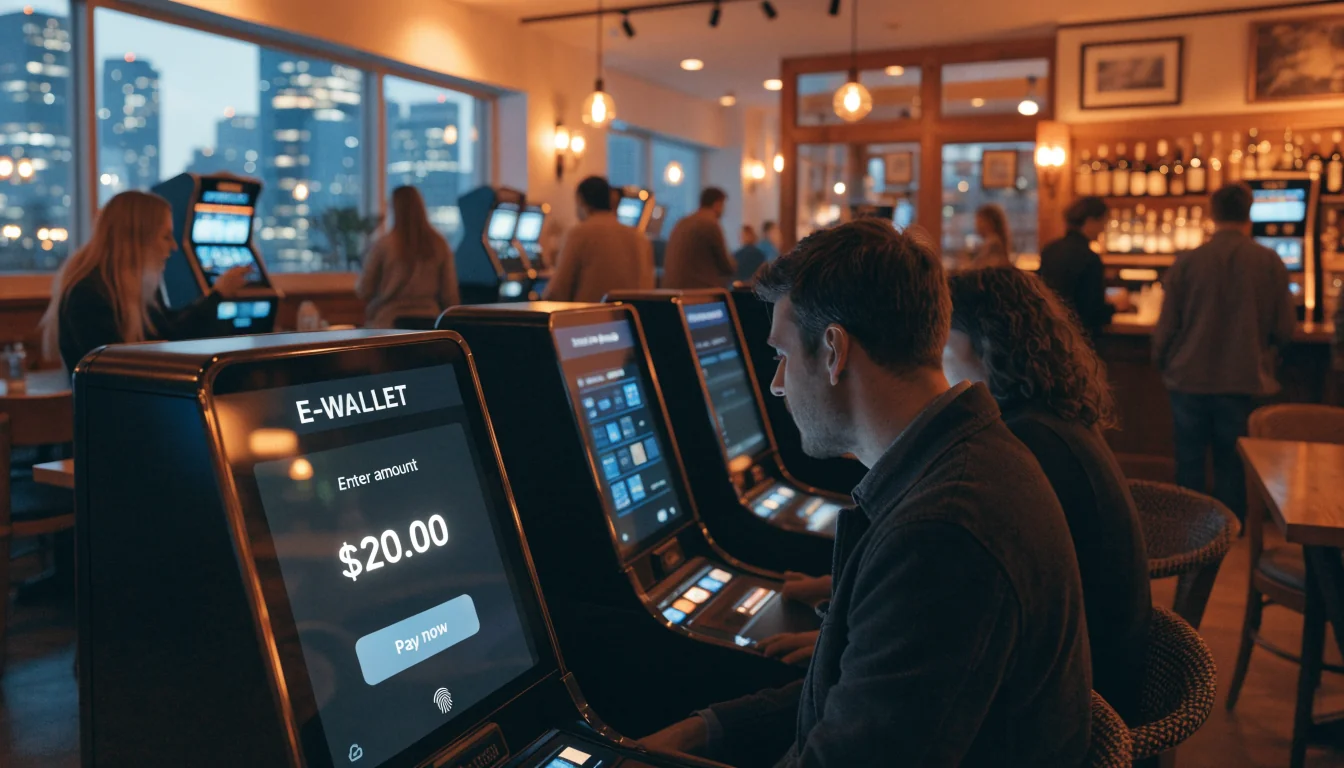
E-wallets — Skrill and Neteller being the two names that keep recurring — sit in the middle: faster than bank transfer for both directions, but requiring the extra step of funding the wallet itself before it can fund the casino account. For players who already use one of these for other online spending, that extra step is trivial. For everyone else it’s friction that bank transfer or PayID doesn’t have.
Cryptocurrency, Bitcoin specifically, has become a meaningful third lane rather than a novelty. Because it doesn’t route through the traditional banking system, it sidesteps the delays and occasional refusals that come with banks flagging gambling-related transactions — a real issue, since banks retain the discretion to block card payments to offshore gambling operators regardless of what the operator advertises as accepted. Crypto deposits and withdrawals process on the blockchain’s own timeline rather than a bank’s, which is generally faster and less prone to that kind of interference.
Visa and Mastercard remain listed as accepted methods at many operators, though it’s worth being clear-eyed about the caveat above: acceptance by the casino doesn’t guarantee the transaction clears, because the card-issuing bank sits between the player and the operator and can decline gambling-coded transactions on its own judgment. It’s an area where the operator’s payment page and the reality of what actually goes through can diverge, and no amount of site copy changes what an individual bank decides to allow.

Where withdrawal speed is concerned generally — separate from the specific PayID mechanics covered elsewhere — the pattern across payment methods roughly tracks how directly the money moves. Crypto withdrawals can land within minutes because there’s no intermediary clearing process. According to one industry review of operator terms, certain instant-withdrawal casinos process payouts in under four hours across supported methods, though that kind of figure comes from a single operator’s stated terms rather than an industry-wide standard, and terms vary enough between sites that it shouldn’t be read as a baseline anyone can rely on. Bank transfer, at the other end, is stuck with the multi-day clearing timelines the traditional banking system runs on regardless of how fast the casino itself processes the request internally.
The verification step nobody skips
Every legitimate operator in this space requires identity verification — a government-issued ID, sometimes proof of address — before releasing a first withdrawal. This isn’t a courtesy the casino is extending or a hurdle designed to slow players down out of spite; it’s a standard anti-fraud and anti-money-laundering control that exists across the industry regardless of which licence sits behind the operator. It typically only bites once. After the first successful withdrawal, most accounts move through subsequent payouts without repeating the full document check. Anyone surprised by this step at the point of cashing out hasn’t read the terms, because it’s disclosed upfront at every operator worth using — it just tends to be skimmed past during the excitement of a deposit and forgotten about until it’s suddenly relevant.
Support as a signal, not a feature
Live chat availability gets listed on comparison pages as a bullet point, which undersells what it actually indicates. Round-the-clock live chat staffed in English isn’t hard to build — what’s hard is staffing it properly across time zones for a player base that, from the operator’s side, sits roughly twelve hours out of step with wherever the support team is physically located. An operator that maintains genuine 24/7 English-language coverage for Australian hours is signalling that it treats this market as more than an afterthought bolted onto a European-facing platform. That’s a soft signal, not a certification, but it’s one worth noticing precisely because it costs the operator real ongoing money to maintain and can’t be faked with a chatbot for long before players notice.
Reading a wagering requirement before it reads you
Wagering requirements — the multiplier applied to bonus funds before any resulting winnings become withdrawable — are supposed to be disclosed clearly before the bonus is ever accepted, and any operator worth using does exactly that, spelling out the multiplier and the games it applies to in the same place the bonus itself is offered. The mechanism itself is simple enough: bonus credit isn’t real money until it’s been wagered through the specified number of times, at which point whatever remains converts to a withdrawable balance.
What’s less simple, and what a lot of players skip past, is that "clearly displayed" doesn’t mean "engineered in your favour." A requirement can be stated in plain language and still be structured so that most bonus-funded sessions end before the wagering target is ever reached — that’s not a disclosure failure, since the number was visible the whole time, but it is a reason to read the figure and actually do the multiplication against your intended deposit before assuming the bonus is worth chasing. The number itself doesn’t tell you whether it’s generous. It just tells you what you’re required to do before that generosity, if it’s real, becomes yours.


The shape of an honest comparison
Put all of this together and the actual due-diligence checklist for an Australian player looking at online pokies real money options in 2026 isn’t complicated, but it also isn’t the checklist most comparison sites publish. It’s not "is this operator licensed" — every functioning offshore operator will show a licence, since it’s a basic cost of doing business, and none of them are going to be licensed in Australia because that licence doesn’t exist. The more useful questions sit one level down: which jurisdiction issued that licence, and does it have any real enforcement teeth behind it. Which testing lab certified the RTP on the specific games being played, not just the platform in general. Which payment rail actually clears money on the timeline that matters — deposit speed rarely being the issue, withdrawal speed almost always being where the real difference shows up. And whether the site’s marketing has stayed inside the lines that keep it off ACMA’s block list, because a site that’s been added to that register isn’t a hypothetical risk — it’s one an Australian ISP may already be enforcing against by the time anyone reads this.
None of that is glamorous. It’s paperwork, plumbing, and small print. It’s also the entire difference between an operator that’s built to last and one that’s built to extract as much as possible before the inevitable happens.
Everything else — the size of a welcome offer, the number of free spins attached to it, the design of the reels — sits on top of that foundation. Get the foundation wrong and none of the rest matters.
Instant PayID Deposits: Fast and Secure Funding for Australian Players
PayID cuts out the part of depositing that used to annoy me most: waiting. Link a phone number or email to an Australian bank account, enter it at the cashier, and the funds land as an instant AUD transfer — no card details, no BSB and account number typed out by hand.
For real money pokies, that matters more than it sounds. A slow deposit means a session starts cold, waiting on a bank rather than spinning. PayID settles that before it becomes a problem.
Minimum deposits at Australian-friendly casinos generally sit between $10 and $30 AUD, so getting into real money mode doesn’t require a large commitment upfront. Worth checking the exact figure on the cashier page before funding — it varies operator to operator.
No card numbers stored, no third-party wallet in between. Just a bank-linked identifier moving money where it’s told.
Fast, and quietly so.
No‑Deposit Bonuses for Australian Pokies: What to Expect
A no deposit bonus is the free sample before the real money mode. No card, no PayID transfer, just a small credit or a batch of free spins dropped into the account on signup. One industry survey pegged the typical range at $10 to $50 in free credits, or somewhere between 10 and 50 free spins. Small enough that nobody loses sleep over it.
The catch sits in the wagering requirement, and it’s rarely small. The same survey put the usual range at 30x to 60x before any winnings clear for withdrawal. That’s the bonus turned over thirty to sixty times before it counts as money.
Wagering requirements are supposed to be shown clearly upfront, before you claim anything, not buried three clicks into terms and conditions. Read that number before the free spins. It tells you more about the offer than the headline figure does.
The free credit is bait. The multiplier is the deal.
Is there a no deposit bonus for online pokies in Australia?
Yes, they typically range from $10 to $50 in free credits or 10 to 50 free spins, but winnings usually carry wagering requirements of 30x to 60x before withdrawal, and some sites cap cashouts — Joe Fortune, for example, limits payouts to $5,000.
What is the best strategy for managing a bankroll when playing online pokies?
Treat RTP as a long-run average, not a promise about your session: a 96% RTP pokie returns $96 per $100 wagered across the game’s full mathematical cycle, so short sessions are dominated by variance and even a high-RTP, high-volatility pokie can drain your balance quickly.
What payment methods are available for Australian players at online casinos?
Common options include POLi, bank transfer, cryptocurrency, e-wallets, and Visa/Mastercard. PayID enables instant AUD deposits, withdrawals can be processed in under 4 hours, crypto withdrawals within minutes, while bank transfers typically take 2–5 business days.
How can players ensure they are playing at a safe online pokies site?
Look for an offshore licence from a regulator with real weight — the Malta Gaming Authority, UK Gambling Commission, Curaçao eGaming, Gibraltar Regulatory Authority, or Isle of Man Gambling Supervision Commission — plus clearly displayed wagering requirements, RTP-verified games, and 24/7 English live chat. Also check ACMA’s public Gambling Prohibition Register, since over 200 sites have been blocked since 2017.
What is the minimum deposit amount for most Australian-friendly online casinos?
Between $10 and $30 AUD at most Australian-friendly online casinos.
How can a player verify that an online casino holds a valid licence in Australia?
No domestic online casino licence exists in Australia — the Interactive Gambling Act 2001 makes it illegal for companies to offer online casino services here, so any licence an operator holds was issued offshore. Verify it against the regulator’s own register — Malta Gaming Authority, Curaçao eGaming, Gibraltar, or the Isle of Man — keeping in mind the operator, not the player, bears the legal risk.
Can I play online pokies for free?
Yes — modern HTML5 pokies run the same build in demo mode with free credits as in real money mode, only the accounting behind the scenes changes when you switch to an account balance.
Prepared by the Casino iPad Info editorial staff.