Best Pokie Machines to Play in Australia: What’s Legal Online
 Available in US
Table of Contents
- Online Pokie Machines: Availability and Legal Landscape
- Pokies in Australia: Scale, Turnover and Player Losses
- Understanding Pokie Machines: How They Work
- Free Pokie Play: Demos, Trials and What They Offer
- Pokie Machine Odds and Tips for Better Play
- Pokies in Australian Casinos: Regulations and Trends
- Pokie Game Types: From Classic Reels to Modern Variations
- Playing Pokies for Real Money: Risks and Regulations
- Pokie Machine Apps and APIs: What Players Need to Know
- RTP (Return to Player) and Practical Tips for Pokie Players
Online Pokie Machines: Availability and Legal Landscape
I spent a chunk of my career on the operator side, and the question I got asked most in casual conversation was always the same: where do I actually go to play pokies online in Australia. The honest answer disappoints people, because it isn’t where they expect.
Physical pokies are everywhere. Electronic gaming machines sit in pubs, clubs and casinos across every state and territory, plus the ACT and the Northern Territory. Walk into most licensed venues in the country and there’s a bank of machines waiting. That ubiquity is what makes the online question confusing — people assume if the machine is standing right there in their local, an online version must be one search away.
It isn’t, and the reason is legal, not technical.
What "online" actually means here
The Interactive Gambling Act 2001 makes it an offence for online operators to offer real-money gambling to Australian residents. That’s the whole story in one sentence, but it’s worth sitting with what it actually covers, because the wording gets stretched by marketing copy all the time.
Before spinning the reels for real money, it helps to know which platforms actually deliver on licensing, bonuses, and payout speed for Australian players.
License: Curacao – Antillephone N.V. (Versus Odds B.V.) · Bonus: up to EUR 2,000 across 5 deposits + 200 free spins · Min. deposit: EUR 20 Licensed by Curacao’s Antillephone N.V., Thor Casino backs its pokies offering with a multi-deposit bonus package worth up to EUR 2,000 plus 200 free spins, accessible from a EUR 20 minimum deposit.
Bonus: up to A$750 + 50 jackpot spins, 35x wagering · Payout speed: crypto ~90 minutes, fiat 1-5 days · Min. deposit: A$30 Kingmaker pairs a A$750 bonus with 50 jackpot spins under 35x wagering, and stands out for fast crypto payouts of around 90 minutes alongside fiat withdrawals taking a few days.
License: Curacao eGaming (Hollycorn N.V., since 2017) · Bonus: 225% up to A$1,540 + 600 free spins across 4 deposits, 20x wagering · Min. deposit: A$20-30 (depends on the offer) Operating under a long-standing Curacao eGaming license held by Hollycorn N.V. since 2017, Playfina Casino offers a substantial 225% bonus up to A$1,540 with 600 free spins spread across four deposits at a manageable 20x wagering requirement.
Bonus: up to A$7,500 + 550 free spins across 10 deposits, 50x wagering · Payout speed: crypto under 1 hour, PayID 1-3 business days · Min. deposit: A$20 (A$30 to qualify for the bonus) Ricky Casino offers one of the larger bonus packages on this list, up to A$7,500 plus 550 free spins across ten deposits, and supports quick crypto payouts under an hour alongside PayID processing within a few business days.
License: Curacao Gaming Control Board · Bonus: up to A$5,000 + 400 free spins Licensed under the Curacao Gaming Control Board, JustCasino offers a sizeable welcome package of up to A$5,000 plus 400 free spins for new pokie players.
License: Curacao Gaming Control Board OGL/2023/174/0082 (Dama N.V.) · Bonus: up to A$5,000 + 300 free spins across 4 deposits Holding a Curacao Gaming Control Board license issued to Dama N.V., SpinsUp provides a generous bonus of up to A$5,000 with 300 free spins spread over four deposits.
License: Curacao · Bonus: 100% up to A$500 + 200 free spins, 10x wagering · Payout speed: crypto 30-60 minutes, fiat 1-5 days · Min. deposit: A$10 Wild Tokyo is Curacao-licensed and keeps its entry bonus accessible with a low A$10 minimum deposit, offering 100% up to A$500 plus 200 free spins at just 10x wagering, with fast crypto payouts in as little as 30 minutes.
License: Curacao eGaming OGL/2023/174/0082 (Dama N.V.) · Bonus: up to A$10,000 + 500 free spins across 4 deposits · Min. deposit: A$15 Licensed via Curacao eGaming under Dama N.V., LevelUp Casino offers one of the largest bonuses on this list, up to A$10,000 plus 500 free spins across four deposits, with a low A$15 minimum deposit.
License: Curacao OGL/2024/1335/0780 · Bonus: up to A$1,000 + 150 free spins, wager-free · Min. deposit: EUR 20 Licensed under Curacao’s OGL framework, Vegaz Casino stands out for a wager-free bonus of up to A$1,000 plus 150 free spins, removing typical playthrough hurdles.
License: Curacao Gaming Control Board OGL/2023/176/0095 (Hollycorn N.V.) · Bonus: up to A$11,000 + 300 free spins (code NEO100) Neospin is licensed by the Curacao Gaming Control Board through Hollycorn N.V. and offers one of the biggest bonuses reviewed here, up to A$11,000 plus 300 free spins, unlocked with the code NEO100.
The offence sits on the operator’s side. A company that provides real-money online casino games — slots, roulette, blackjack, live dealer tables, pokie-style reels dressed up in any theme — to someone in Australia is the one breaking the law. That’s a deliberate design choice in the legislation: it targets supply, not the person pressing spin. Nobody drafted this to catch a punter at home; they drafted it to stop the business model existing on this side of the border in the first place.
Which means there is no domestic licence you can point to and say "this site is legitimate, it’s licensed for real-money online pokies in Australia." That licence doesn’t exist. Not because no one’s applied, but because the law doesn’t allow it to be issued. Any site claiming Australian licensing for online pokie play is either confused about its own paperwork or hoping you won’t check — and there’s nowhere to check, because there’s no public register of this kind of operator to check against.
Real money vs. everything else
This is where "online pokie machine" as a search term hides three very different products under one phrase, and conflating them is where people get burned.
Real-money online pokies aimed at Australian players — the kind that would let you deposit, spin, and withdraw winnings from home — sit outside the law as it currently stands. This isn’t a grey area with different interpretations depending on who you ask. The Act is specific, and it’s been specific since 2001.

Free-play or demo versions run on different rules entirely, because no money changes hands — that’s a separate discussion in its own right, not something to fold into the real-money question.
Offline, in-venue pokies are the machines actually operating legally across the country, in the pubs and clubs and casino floors mentioned above. They’re regulated at the state and territory level, they’re licensed, they’re taxed as businesses. That’s the legitimate side of the industry, and it’s physical by design — walk in, sit down, play.
The gap between "machines are legal and everywhere in venues" and "the same experience isn’t legally available online for real money" is the single most misunderstood part of the Australian pokies landscape. It’s not an oversight. It’s the point of the law.
Where the confusion actually comes from
Part of it is language. Overseas sites use "pokie" in their marketing because they know the term resonates with Australian visitors — it’s a word borrowed for SEO, not a sign the operator has any local standing. Part of it is that offshore platforms remain technically reachable from an Australian browser, because the Act polices the operator’s conduct rather than blocking access at the network level. A site being loadable is not the same as a site being lawful to use for real-money play by an Australian resident, and it’s certainly not the same as a site being licensed here — because, again, there’s no licence category for it to hold.
Legal risk
Playing real‑money online pokies in Australia is illegal for the operator. If you use an offshore site that offers real‑money play, you are not breaking the law yourself, but the provider is committing an offence under the Interactive Gambling Act 2001.
There’s a genuinely odd wrinkle worth naming plainly: playing at an offshore operator isn’t illegal for the individual. The offence in the Act is written against the business offering the service, not against the resident who signs up. That asymmetry is exactly why the market looks the way it does — offshore sites keep operating, keep taking Australian traffic, and the legal risk sits entirely on their side of the transaction, not on the player’s. It’s a strange bit of legislative design when you say it out loud: the thing is against the law, but only one party can actually be prosecuted for it.
One detail that surprises people who assume the worst about gambling law: winnings aren’t taxed in Australia. If you win, you keep it — the ATO doesn’t take a cut of gambling proceeds the way it would with other forms of income. That’s true regardless of the game. It doesn’t change anything about the legality of where you won it, though. A tax-free win from an unlicensed real-money site doesn’t retroactively make the site licensed.
The practical shape of it
So the actual landscape, stripped of marketing language, looks like this:
- Physical pokies — legal, licensed, taxed, operating in every state and territory.
- Real-money online pokies marketed at Australians — outside the law on the operator’s side, with no domestic licence available to legitimise them.
- Offshore sites reachable from Australia — operating in a legal grey zone where the site is the one exposed, not the player.
None of that is a comment on odds, RTP, or which machines are worth your time — that’s a different conversation. This is just about where the line actually sits, and it sits in a different place than most marketing copy wants you to believe.
"Fully licensed online pokies for Australian players" is a phrase worth reading twice. There’s no register to confirm it against, no domestic licence to name, and no regulator that would issue one. When a claim can’t be checked because nothing exists to check it against, that’s not a technicality. That’s the whole answer.
Pokies in Australia: Scale, Turnover and Player Losses
Every state, the ACT and the Northern Territory run electronic gaming machines. There’s no jurisdiction in the country where a pub or club floor doesn’t have a row of them humming away near the bar. That uniformity matters, because it means the numbers below aren’t a regional quirk — they describe the whole market.
In the financial year 2020-2021, Australians placed bets worth almost AUD 150 billion on these machines. Not turnover in some abstract industry sense — actual money fed through slots, cycled, and fed through again. Of that, players lost about AUD 12 billion over the same year. The gap between those two figures is the machine doing its job: taking a cut on every cycle, thousands of times a day, across tens of thousands of venues.
Break it down per person and it gets sharper. Per-capita losses for FY 2020-2021 came to AUD 608 — that’s an average across the entire population, including people who never touch a pokie. For the ones who do play regularly, the real number sits much higher.
Conflicting statistics
Sources differ on Australia’s share of the world’s pub and club poker machines – one cites about 3 % while another claims roughly 18 %. Both figures highlight that Australia’s machine count is disproportionate to its population, even if the exact share is unclear.
Where this leaves Australia globally
Here’s where the picture gets murky, and I’d rather say so than paper over it. One figure puts Australia’s share of the world’s pub and club poker machines at 3%. Another puts it at around 18%. These aren’t close enough to call a rounding difference — they’re describing different things, or counting different machine categories, or drawing the line between "pub and club" machines and casino floor machines in different places. I haven’t found a clean reconciliation between the two, and I’m not going to pretend one number is obviously right just because it sounds more dramatic. What’s consistent across both versions is the direction: a country with roughly a third of a percent of the world’s population running a disproportionate slice of its slot machines. Whether that slice is 3% or 18%, it’s out of proportion to population size either way.
Turnover keeps climbing
The 2020-2021 figures aren’t the ceiling. According to complyadvantage.com, pokies generated AUD 191.2 billion in gambling turnover in 2023. I’m flagging the source deliberately — this is one compliance-focused firm’s figure, reported in the context of anti-money-laundering discussion, not a government audit released as the definitive market total. Treat it as a data point from that source rather than an official benchmark. What it does confirm, alongside the earlier FY2020-2021 numbers, is that turnover through these machines isn’t shrinking. Whichever exact figure you trust, the trend line points the same way.
Why pubs and clubs, not just casinos
Pokies in Australia aren’t confined to casino floors. They’re a fixture of pubs and clubs — the local RSL, the suburban hotel, the golf club function room. That distribution is a big part of why the turnover and loss figures are so large: a casino has a finite number of gaming floors in a finite number of cities, but pubs and clubs with a handful of machines each are everywhere. Multiply "everywhere" by "every day" and the national totals stop looking surprising.
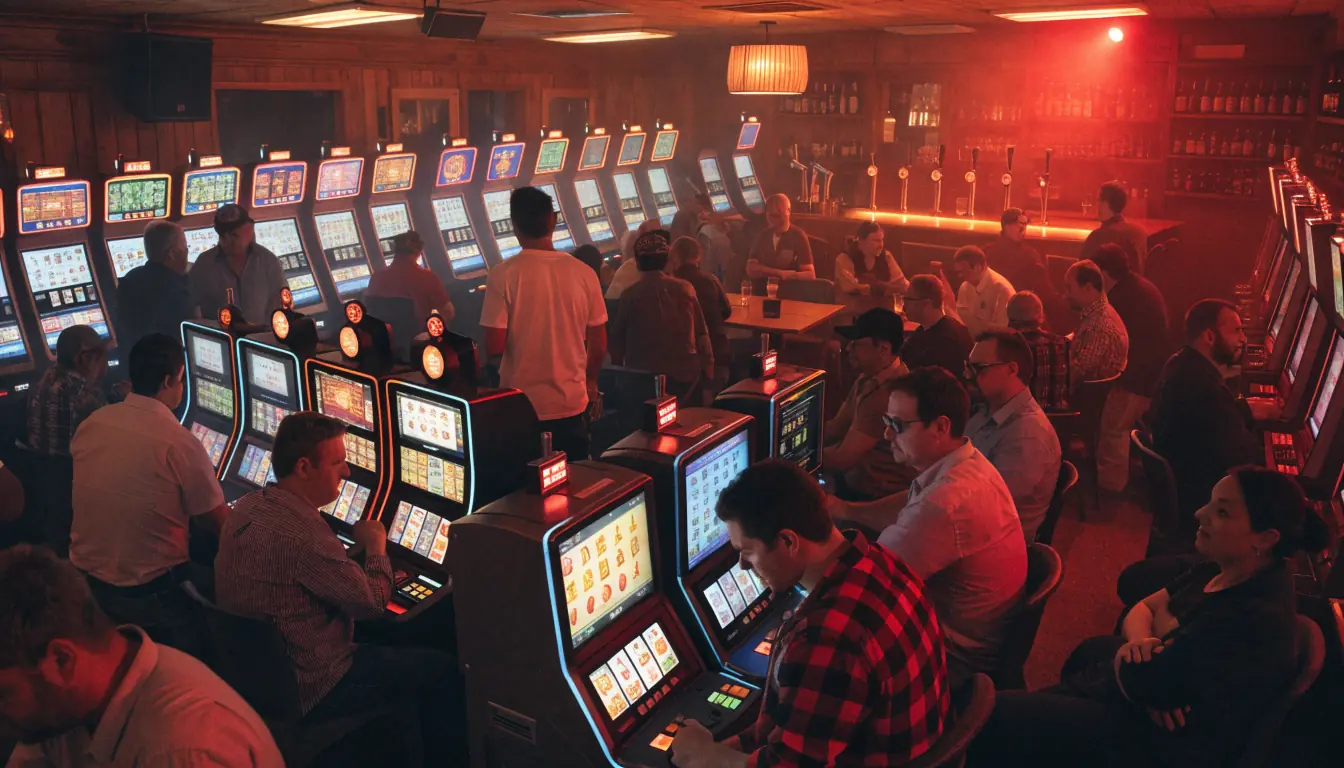
This also explains something that trips people up when they go looking for a new pokie machine to play, or search for the best pokie machine in a given venue: the market isn’t centralised. There’s no single body publishing a live leaderboard of every machine in the country, no unified feed of pokie machine payout percentage figures by venue. What exists is a scattered network of licensed premises, each running its own selection, each reporting turnover and loss data up through state-level regulators rather than a single national ledger. The AUD 150 billion and AUD 12 billion figures above are aggregates built from that scattered reporting, which is also part of why they’re the most reliable numbers in the room — assembled at the regulatory level, not self-reported by any one operator with a "best odds" claim to sell.
What the scale actually tells you
None of this is presented to be alarming for its own sake. It’s the backdrop for every other section on this page — the legal restrictions on where you can play, how the machines are built, what "free play" actually offers you instead. A market moving this much money, spread this widely, with per-capita losses this documented, is not a niche hobby. It’s a significant, well-tracked segment of Australian gambling, and the scale is precisely why regulators keep circling back to it with new rules on cash handling, identity checks and reporting thresholds — a thread picked up later in this piece.
One thing worth saying plainly: none of the figures above describe online pokie machines, because in Australia that category barely exists in a regulated, real-money form. The turnover, the losses, the venue counts — all of it comes from physical machines in physical pubs, clubs and casinos. Anyone searching for pokies machine Australia figures assuming they map onto an online pokies machine market is working from a false premise, and the next section deals with exactly why.
Understanding Pokie Machines: How They Work
A pokie machine looks simple from the outside: a screen, a few buttons, a bill acceptor. What happens underneath is closer to a piece of licensed software than to a mechanical device. Every spin runs on a random number generator that decides the outcome before the reels even start moving. The spinning symbols are theatre — the result is already fixed by the time you see it. I used to think the "near miss" on the middle reel meant something. It doesn’t. It’s a display choice, not a signal.
That distinction matters because it separates pokies from most other games on a casino floor. Blackjack and poker involve decisions that change your odds hand to hand. A pokie doesn’t care what you do — there’s no skill layer sitting between you and the result. You choose a bet size and press a button. The machine does the rest, following a program that’s been tested and certified before it ever reaches a pub or club floor.
The pieces under the hood
A standard pokie machine has a few core components, and they haven’t changed much in structure even as the graphics have:
- Random number generator — produces the outcome of each spin independently of the last one.
- Paytable logic — maps combinations of symbols to payouts, built into the machine’s certified software.
- Credit meter — tracks money in, money out, and current balance, usually shown as a running number rather than physical coins now.
- Bill acceptor / ticket printer — handles cash in and cash out, since most venues still run cash-based machines rather than fully account-linked ones.
None of this is visible to the player, which is partly the point. The machine’s job is to look inviting and feel responsive while the actual mechanics stay locked in certified firmware nobody on the floor can touch.
Progressive pokies work differently underneath
A progressive pokie machine links its jackpot to a pool that grows with every bet placed, sometimes across a single machine, sometimes across a bank of machines in the same venue. The core spin logic is identical to a standard pokie — same random number generator, same certified paytable — but a slice of every bet gets diverted into the jackpot pool instead of the base payout structure. That’s the entire mechanical difference. Everything else about how the game plays is the same as any other machine on the floor.
Where the money actually goes
Pokies aren’t a side attraction in Australian venues — they’re the main draw in most pubs and clubs, and a fixture on casino floors alongside table games. The scale backs that up: one industry estimate put total gambling turnover from pokies at AUD 191.2 billion in 2023, according to complyadvantage.com. That’s turnover, not profit — money bet and re-bet as it cycles through machines, not money kept by venues. Player losses tell a cleaner story: in the 2020–2021 financial year, the total loss to players from electronic gaming machines across the country was about AUD 12 billion. That figure sits closer to what "the house" actually retains after payouts.
Real machines vs. free versions
What you play on a demo screen and what sits on a pub floor share the same visual design but not the same purpose. A free-play version exists to demonstrate the game — no real credit meter, no real cash-out. A physical pokie machine is a regulated device tied to real currency, subject to certification and compliance checks that a demo build never has to pass. Same reels, same paytable graphics, different machine entirely once real money enters the credit meter.
Understanding this mechanical layer — RNG, paytable, credit meter — isn’t just trivia. It’s the difference between reading a machine’s behaviour and reading noise. The lights and sounds are marketing. The random number generator is the actual game.

Free Pokie Play: Demos, Trials and What They Offer
Free-play pokies exist because real-money online pokies, for an Australian resident, mostly don’t. The Interactive Gambling Act 2001 makes it an offence for an operator to offer real-money gambling to people in Australia — so demo mode is what’s left standing where a cash button would otherwise be. Everything about the free version is built around that gap, not around generosity.
A demo pokie runs the same reel sets, the same math model, the same random number generator behind the scenes as the version a player in a licensed overseas market might stake actual money on. What’s missing isn’t the game — it’s the wallet. Credits are issued by the browser or the app, not by a bank. Nothing you accumulate can be withdrawn, converted, or carried anywhere. When the tab closes, the balance dies with it.
That’s worth saying plainly because "free play" gets marketed like a taste test, a preview of something better waiting behind a paywall. For an Australian visitor it’s usually the whole meal. There’s no legal on-ramp from the free version to a real-money one on the same domestically-facing site, because that on-ramp is exactly what the law forbids an operator to build here.
Why operators bother with a version nobody can cash out of
Demos still earn their keep. They let a studio show off a theme, a bonus round, a reel layout without a licensing conversation attached. They keep a game’s name in front of players who talk about pokies the way people talk about anything — comparing themes, arguing about which one feels "tighter" or "looser." None of that requires money to change hands, and none of it is illegal anywhere, because nothing is being wagered in a legal sense. It’s software running on a loop, dressed up as a casino floor.
I’ve watched people spend genuine time chasing a free-play "big win" the same way they’d chase a real one — full attention, same tells, same little fist when the bonus triggers. The credits meant nothing and the behaviour looked identical to real staking. That’s not a criticism of the players. It’s the honest answer to why free versions are engineered to feel exactly like paid ones: the feeling is the product being tested, not the payout.
Offshore operators
Offshore sites that market “real‑money” pokies to Australian players are operating illegally. They have no domestic licence and offering real‑money gambling to Australian residents breaches the Interactive Gambling Act.
What free play doesn’t tell you
A demo can show you volatility, pacing, how often the reels throw a small win versus sit dry for a stretch. It cannot show you anything about money, because there isn’t any in the loop. Winnings on a genuine wager wouldn’t be taxed in Australia regardless — that’s settled — but it’s a fact about real bets, and a free spin was never a bet to begin with. Talking about "returns" on a demo is describing a simulation, not a transaction.
It also won’t tell you anything about how an operator handles your identity or your funds, because a free session asks for neither. Where the industry is shifting toward cashless, account-based pokies — one AML-focused source, facctum.com, frames this as an improvement in traceability, cutting down the anonymity that cash-based play allows — that shift lives entirely on the money side of the machine. A demo has no account, no cash-in, no cash-out, so there’s nothing for that trend to touch. It’s a separate world running on the same graphics engine.

None of this makes the free version worthless. It’s a genuine look at a game’s shape — how the reels move, what the bonus feature does, whether the theme holds your attention past the first few spins. Just don’t mistake it for a rehearsal for something you’ll be doing with real stakes on the same site. For most Australians, this is the whole show, not the opening act.
Pokie Machine Odds and Tips for Better Play
Ask anyone who’s worked a gaming floor what "odds" means on a pokie and you’ll get a shrug before the explanation. The machine doesn’t know you. It doesn’t warm up, cool down, or owe you a win because you’ve fed it for an hour. Every spin is its own event. What changes between machines isn’t luck, it’s the math built into the game — and that math isn’t something a player can inspect mid-session.
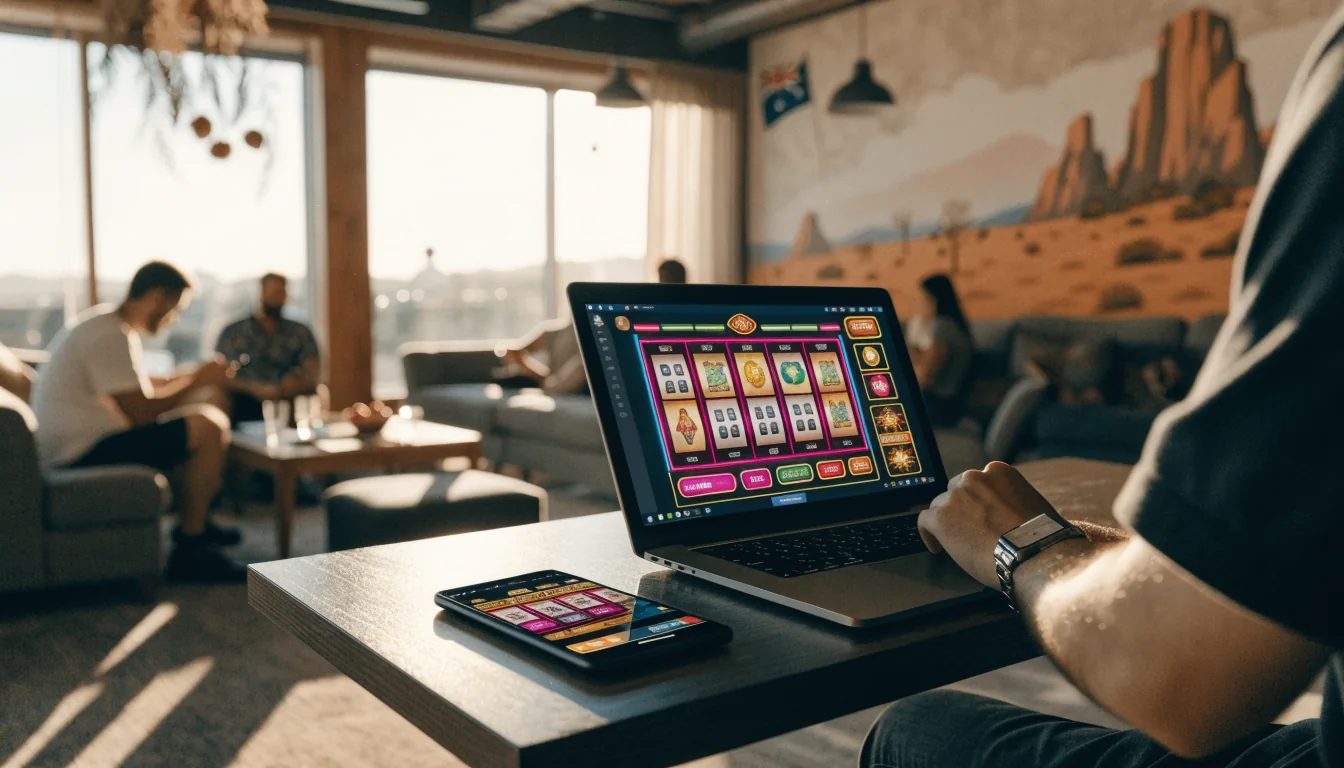
This is where the industry’s favourite word does some quiet work. "Better odds" gets printed on posters and app splash screens like it’s a fact you can check. It isn’t, not from where you’re sitting. RTP figures exist, they’re set by the game design, but the venue floor rarely publishes them next to the machine, and no public register lets an Australian player look one up before they sit down. So the honest version of the tip is smaller than the marketing version: know that RTP varies by game, know it’s fixed by design rather than by the venue’s mood, and don’t treat a machine’s recent behaviour as a signal about what it will do next.
What actually helps, practically:
- Set the number before you sit down, not after. Once the reels are moving, judgement about “just one more” is already compromised.
- Treat any win as final. Winnings aren’t taxed in Australia, so what you walk away with is what you keep — no paperwork, no deduction. That’s a reason to actually walk away with it, not a reason to feed it back in.
- Don’t read patterns into a random number generator. A machine that’s “been cold” owes you nothing. A machine that’s “been hot” doesn’t know it either.
- Prefer venues moving toward cashless, account-based play. According to facctum.com, transparent account-based systems give a full record of deposits, play, and withdrawals — which mostly exists to catch laundering, but as a side effect it also means your own session history is something you can actually look back on, rather than reconstruct from memory and a wallet that’s lighter than expected.
None of this changes the game’s design. It changes how much control you keep while playing it.
On sounds — the chimes, the near-miss jingles, the little fanfare on a modest return — none of that is informational. It’s not signalling anything about the machine’s state. It’s signalling to you, which is a different thing entirely, and worth noticing for what it is rather than what it sounds like.
Pokies in Australian Casinos: Regulations and Trends
A casino pokie machine sits in a different regulatory box than the one at the pub down the road. Standalone venue pokies answer to state gaming rules built around clubs and hotels; casino floors carry an extra layer, because a casino licence itself is conditional on how the operator runs everything under its roof — cash handling included. Same machine, different leash.
That leash got shorter after the 2022 NSW Islington Report. It recommended that all NSW pokies go cashless by the end of 2028 — a single report’s proposal, not yet a settled industry standard, but the direction regulators keep pointing toward. "Modernising the gaming floor" is the phrase operators use. What it actually means: every dollar in and out gets tied to an account instead of disappearing into a note acceptor.
The pressure isn’t just advisory. An amendment to the Casino Control Act 1992 lets NSW fine casino operators up to AUD 100 million for compliance failures. That number changes the maths for a casino board weighing whether to drag out a cashless rollout or just get it done. I’ve sat in rooms where a compliance line item got waved through faster than a marketing budget twice its size — because someone had done that maths.
What regulators are actually asking for
Not a ban on cash. A shift in visibility. The recommendations circulating around casino pokies boil down to three things:
- Tighter customer due diligence — knowing who’s playing, not just that someone is.
- Transaction monitoring — watching patterns across a session, not just single bets.
- Cashless gaming systems — an account-based approach that leaves a trail from deposit to cash-out.
None of that changes what a best Australian pokie machine feels like to play. The reels, the paytable, the volatility — untouched. What changes is what happens around the machine: who’s logged in, what’s recorded, what a compliance officer can pull up if a pattern looks wrong.
Worth saying plainly: none of this touches online play. Real-money online pokie machines aren’t licensed for Australian residents at all, casino or otherwise. Casino floor rules are a domestic story — cashless mandates, state fines, compliance officers walking the floor. The online side is a different legal universe entirely, covered elsewhere.
The trend line is consistent even where the deadline is one report’s recommendation rather than law: less anonymity, more paperwork, bigger fines for operators who treat compliance as optional.
Pokie Game Types: From Classic Reels to Modern Variations
Walk onto any pub floor in Australia and the machines aren’t identical. They just look that way to someone who hasn’t spent time behind the counter watching which ones get fed coins first.
Machines installed in pubs, clubs and casinos, licensed by state regulators, accept cash and pay out real winnings.
Online versions that use virtual credits only; they replicate the look and feel of a real machine but cannot be cashed out.
Sites based outside Australia that claim to offer real‑money play. They lack an Australian licence and operate in a legal grey area.
Classic three-reel machines are the oldest format still standing. Three spinning reels, a handful of symbols, a single payline. No bonus rounds, no story. Venues keep them around because a certain kind of regular wants exactly that — nothing to think about, just the reels.
Video pokies are the modern default. Multiple reels, multiple paylines, bonus features layered on top: free spins, multipliers, sometimes a second screen. This is where most of the floor space goes now, and where most of the turnover sits too. Pokies generated AUD 191.2 billion in gambling turnover in 2023, according to complyadvantage.com — a figure that includes this shift toward feature-heavy machines, though the source doesn’t break the total down by game type.
Progressive-style formats exist as well, machines linked across a venue or a network so a jackpot climbs as more money goes in. The mechanic is the same underneath — reels, paylines, a random outcome — but the framing around it changes what the machine feels like to play.
None of this changes what’s legally on offer to someone playing at home. Real-money online pokies aren’t available to Australian residents under any domestic licence, which means the format differences above describe machines on physical premises — pubs, clubs, casinos — not something browsable from a phone the way people search for "pokie machine names" expecting to find.
What free-play versions replicate is the surface: reel count, theme, bonus animation. What they can’t replicate is the venue context — cash in the tray, other players at the next machine, the noise. That distinction matters more than which reel format a given title uses, because it’s the difference between a game and a floor.
Pokies are widely used in Australian pubs, clubs, and casinos, and the format variety exists because operators are chasing different attention spans in the same room — not because any one type performs better than another.
Playing Pokies for Real Money: Risks and Regulations
"Real money" is the phrase that separates a demo from an actual bet, and on this market it carries more legal weight than players usually expect. The Interactive Gambling Act 2001 makes it an offence for online operators to offer real-money pokie play to Australian residents. Not a grey area, not a licensing gap to be closed later — an offence, on the books, aimed squarely at the operator side of the transaction.
That last part matters. The law targets whoever offers the game, not the person who plays it. Which is why the search for a "real pokie machine app" so often leads nowhere useful: there’s no domestic app to find, because there’s no domestic licence to build one on. Anything claiming otherwise is describing something that doesn’t legally exist here.
Land-based pokies sit outside this restriction entirely. Pubs, clubs and casinos run them under state and territory oversight, and that’s where the actual real-money experience lives for residents — not online.
What happens to winnings
One point worth stating plainly, because it surprises people who assume every windfall gets a slice taken off the top: gamblers’ winnings in Australia are not taxed. The player keeps what they win.
The tax exposure sits with the operator, not the punter — and it isn’t uniform. Taxation of gambling operators varies by state and by type of gambling service, so a venue’s obligations depend on where it operates and what it offers. No single national rate to quote here, and no attempt to invent one.
Where "buy a pokie machine" fits
Purchasing a machine outright is a different question again — a commercial and licensing matter for venue operators, governed by the same state-based rules that shape everything else about how pokies are taxed and run. It’s not something the legal framework for player-facing real-money gambling touches directly, and conflating the two only muddies what’s actually restricted.
Demo versions, by contrast, carry none of this weight — no offence, no winnings, no obligation. That’s covered elsewhere. Here, the line is simple: real money means real law.
Pokie Machine Apps and APIs: What Players Need to Know
Every casino app store search turns up the same pitch: download this, spin that, "instant jackpot" waiting inside. Most of what shows up is either a social casino product running on virtual credits, or an app pointing back to an offshore site. The technology behind both is an API — a connector that lets a mobile front end talk to a game server somewhere else. That’s the whole trick of "seamless play across devices". Nice engineering. Doesn’t change the law.
The Interactive Gambling Act 2001 doesn’t care whether the offer arrives through a website, an app, or a bare API call. It makes it an offence for an operator to offer real-money gambling to Australian residents. An app icon on a phone doesn’t move that line. If anything, apps make the question sharper, because push notifications and in-app prompts are built to bring someone back to a product that was never allowed to reach them with a real-money offer in the first place.
Where these platforms get interesting from a compliance angle is the money moving through them, not the graphics on screen. AUSTRAC’s 2024 guide on recognising money-laundering red flags applies just as much to app-based and API-driven pokie activity as it does to a machine on a pub floor. The indicators are the same: unusually high cash access, large deposits, cash transfers that don’t match a player’s usual pattern, and disbursement checks tied to occupations that wouldn’t normally generate that kind of turnover.
An API doesn’t erase a paper trail — it just moves it somewhere less visible unless someone is actually watching it.
A few things worth checking before treating any app as more than entertainment:
- Whether it runs on virtual credits with no cash-out path, or claims real-money payouts.
- Who actually operates it — a name and a jurisdiction, not just a logo.
- Whether “jackpot” figures displayed in-app are backed by anything verifiable, or just a number on a screen.
None of that tells you what a machine "costs" to play. That figure lives on the machine, not in the app description — and app stores don’t publish it.
RTP (Return to Player) and Practical Tips for Pokie Players
RTP gets thrown around like a promise. It isn’t. It’s a long-run average, calculated over a volume of spins no single session will ever reach. Treat it as a description of the machine’s design, not a forecast of your night.
What’s changed isn’t the maths — it’s the record-keeping. According to facctum.com, moving pokies to cashless, account-based systems cuts down anonymity and makes play easier to trace. That system also gives full traceability of deposits, gameplay and withdrawals.
For a player, that traceability cuts both ways: less anonymity, but also a clean history of what you actually put in and took out — no guessing after the fact.
Practical habits worth keeping:
- Decide the loss limit before sitting down, not after.
- Check the account statement, not your memory, when reviewing a session.
- Walk away when the record shows more losses than you’d guessed.
No number here should replace that record.
Can I play online pokies for free?
Yes, free-play and demo versions operate under different rules because no money changes hands, so they are not covered by the real-money online gambling ban.
What Are Pokies In Australia?
Pokies are electronic gaming machines (EGMs) found in pubs, clubs and casinos across every Australian state and territory, plus the ACT and the Northern Territory.
How Do Criminals Launder Money Through Pokies?
They insert large sums of cash into machines, gamble minimally, then cash out to create a false record of winnings; some also buy winning tickets from other players. Others spread smaller cash deposits across multiple venues — structuring — to stay below reporting thresholds, often using recruited money mules.
What law governs online gambling in Australia?
The Interactive Gambling Act 2001, which makes it an offence for operators to offer real-money online gambling to Australian residents. The offence sits on the operator’s side — no domestic licence exists for real-money online pokies.
What is the minimum legal gambling age in Australia?
The article and verified facts don’t state a minimum legal gambling age, so this can’t be answered from the provided material.
Prepared by the Casino iPad Info editorial staff.