Pokies Tips and Tricks 2026: How Australian EGMs Really Work
 Available in US
How Australian Pokies Work and What Influences Your Wins
I spent years watching people feed notes into machines that were never designed to give much back. Not because the machines are "rigged" in some cabal sense — that word gets thrown around a lot, and it’s mostly wrong. They’re designed. That’s a different thing, and the difference matters for anyone typing "how to win online pokies tips" into a search bar at midnight.
Pokies — the formal name is electronic gaming machines, or EGMs, and nobody outside a regulator’s report calls them that — sit in nearly every pub and club across the country. The scale is bigger than most players realise. Australians bet almost AUD$150 billion on EGMs in FY 2020‑2021 alone. Of that, players lost AUD$12 billion. That’s not turnover disappearing into a void; it’s the difference between what went in and what came back out, spread across a population that, per head, lost AUD$608 in that same year. Not per gambler. Per person. Babies included, technically, in the arithmetic if not in the venues.
Before spinning the reels in 2026, it helps to know which pokies sites actually back up their promises with fair licensing, workable bonus terms and dependable payouts.
License: Curacao – Antillephone N.V. (Versus Odds B.V.) · Bonus: up to EUR 2,000 across 5 deposits + 200 free spins · Min. deposit: EUR 20 Licensed under Curacao’s Antillephone framework, Thor Casino spreads a sizeable bonus package of up to EUR 2,000 plus 200 free spins across five deposits, with an accessible EUR 20 minimum deposit.
Bonus: up to A$750 + 50 jackpot spins, 35x wagering · Payout speed: crypto ~90 minutes, fiat 1-5 days · Min. deposit: A$30 Kingmaker pairs a bonus of up to A$750 with 50 jackpot spins under 35x wagering, and offers fast crypto payouts of around 90 minutes alongside standard fiat processing of a few days.
License: Curacao eGaming (Hollycorn N.V., since 2017) · Bonus: 225% up to A$1,540 + 600 free spins across 4 deposits, 20x wagering · Min. deposit: A$20-30 (depends on the offer) Operating under Curacao eGaming since 2017, Playfina Casino offers a generous 225% match up to A$1,540 with 600 free spins spread over four deposits, backed by a reasonable 20x wagering requirement.
Bonus: up to A$7,500 + 550 free spins across 10 deposits, 50x wagering · Payout speed: crypto under 1 hour, PayID 1-3 business days · Min. deposit: A$20 (A$30 to qualify for the bonus) Ricky Casino stands out for its large bonus pool of up to A$7,500 plus 550 free spins across ten deposits, and its crypto withdrawals clear in under an hour while PayID takes a few business days.
License: Curacao Gaming Control Board · Bonus: up to A$5,000 + 400 free spins Licensed by the Curacao Gaming Control Board, JustCasino offers a substantial welcome package of up to A$5,000 plus 400 free spins.
License: Curacao Gaming Control Board OGL/2023/174/0082 (Dama N.V.) · Bonus: up to A$5,000 + 300 free spins across 4 deposits SpinsUp holds a Curacao Gaming Control Board license via Dama N.V. and offers up to A$5,000 plus 300 free spins spread over four deposits.
License: Curacao · Bonus: 100% up to A$500 + 200 free spins, 10x wagering · Payout speed: crypto 30-60 minutes, fiat 1-5 days · Min. deposit: A$10 Wild Tokyo is Curacao-licensed and keeps its entry bonus manageable at 100% up to A$500 plus 200 free spins with just 10x wagering, plus a low A$10 minimum deposit and quick crypto payouts.
License: Curacao eGaming OGL/2023/174/0082 (Dama N.V.) · Bonus: up to A$10,000 + 500 free spins across 4 deposits · Min. deposit: A$15 Licensed under Curacao eGaming via Dama N.V., LevelUp Casino offers one of the larger bonus packages at up to A$10,000 plus 500 free spins across four deposits, with a low A$15 minimum deposit.
License: Curacao OGL/2024/1335/0780 · Bonus: up to A$1,000 + 150 free spins, wager-free · Min. deposit: EUR 20 Vegaz Casino is licensed under a Curacao permit and offers a wager-free bonus of up to A$1,000 plus 150 free spins, a notable perk for players wary of wagering conditions.
License: Curacao Gaming Control Board OGL/2023/176/0095 (Hollycorn N.V.) · Bonus: up to A$11,000 + 300 free spins (code NEO100) Neospin, licensed by the Curacao Gaming Control Board via Hollycorn N.V., offers a large bonus of up to A$11,000 plus 300 free spins redeemable with a dedicated bonus code.
Put that next to a fact that still catches people off guard: Australia holds only 0.3% of the world’s population, yet is home to 3% of the world’s pub and club poker machines. One source, ComplyAdvantage, put the broader figure — including casino floors — at closer to 18% of the world’s poker machines, though that number covers a different slice of the market than the pub‑and‑club figure, so the two shouldn’t be read as the same claim dressed differently. Either way you cut it, this country has an outsized number of machines for its size. New South Wales alone carries around 95,800 of them, and in the five months between December 2017 and May 2018, NSW clubs booked $1.945 billion in net profit from pokies. That’s not a typo. Five months.
None of that is trivia for its own sake. It’s the frame you need before any "trick" makes sense, because a trick that ignores the size and structure of this machine — pun intended — isn’t a trick, it’s a guess dressed up as advice.
What a pokie actually does with your money
Here’s the part venues don’t put on a poster. A pokie is a cabinet running a random number generator, and every spin is an independent event. The machine isn’t "due" for a win because it hasn’t paid in a while, and it isn’t "hot" because it just did. I’ve had regulars swear a particular machine near the door was "loose" on Friday nights. It wasn’t loose. It was in a high‑traffic spot, so more people played it, so more people eventually hit something on it — and that’s the only pattern that existed. Confirmation bias with a coin slot.
What the machine is built to do, over enough spins, is return less than it takes in. That’s not a scandal, it’s the business model — the same one behind every wagering product in the country. The scandal, if there is one, is in how well‑built these machines are for extending the number of spins a person will sit through before the maths catches up. Lights, sound cues timed to near‑misses, small "wins" that pay back less than the bet just placed — the industry calls the last one a "positive reinforcement event." I’d call it a loss with a jingle attached.
Where the real advice lives isn’t in beating the random number generator — you can’t, and anyone selling a "system" for that is selling nothing. It’s in understanding the handful of variables that do genuinely shift how long your money lasts and what you’re exposed to while it does.
The factors that actually move the needle
Volatility, not "luck." Every machine — Dragon Link included, since that’s the one players ask about by name more than almost any other — has a volatility profile baked into its design. High‑volatility machines pay rarely and pay big when they do; low‑volatility machines pay small and often. Neither is "better." They’re different bet sizes on the same underlying probability, and the practical effect is on how your bankroll behaves, not on whether you win in the long run. A player chasing a jackpot on a high‑volatility title should expect long dry stretches punctuated by spikes. A player wanting a bankroll that lasts an evening without swinging wildly is better served by something calmer. Neither choice changes the house edge sitting underneath.
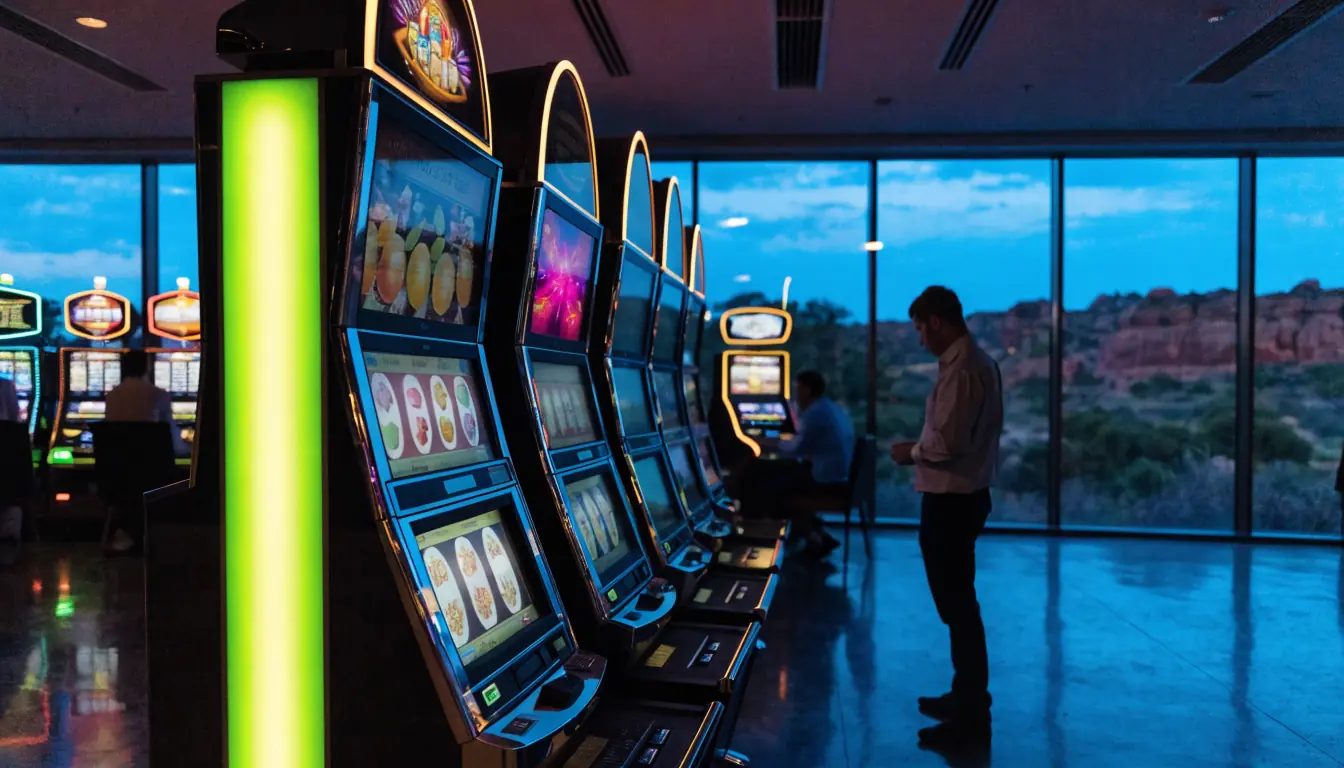
Bet size relative to bankroll. This is the one lever players actually control, and it’s the one most ignored. The size of your bet per spin, set against how much you brought to spend, determines how many spins you get before the session ends — win or lose. Bet big relative to your total and you’ll either bust fast or hit fast; there’s no third option. This isn’t a trick so much as arithmetic, but arithmetic is underrated advice in a room full of flashing lights.
Session length. The longer you sit at a machine built to return less than it takes, the more that design does its job. This sounds obvious written down. It’s much less obvious at 11pm on a Saturday with a free drink in hand and a machine that just gave you back 40% of a spin and made it feel like a win. Time, not just money, is a resource the machine is drawing on.
Where and how you play. A machine in a suburban club and a machine in a casino floor may look identical and behave identically in terms of randomness, but the environment around them differs — foot traffic, staff presence, how visible the clock is (rarely, by design). None of this changes your odds on any individual spin. It changes how easily you lose track of both.
The house edge itself, which nobody erases. I want to be direct about this because it’s the one place vague language does real harm: there is no betting pattern, no time of day, no "warm‑up" spin sequence that alters the underlying return‑to‑player built into the machine. Anyone telling you otherwise is selling a story, not a strategy. What you can influence is exposure — how much you risk, for how long, under what constraints. That’s the honest version of "improving your odds," and it’s less exciting than a secret system, which is probably why fewer people say it out loud.
Why the machines are built the way they are
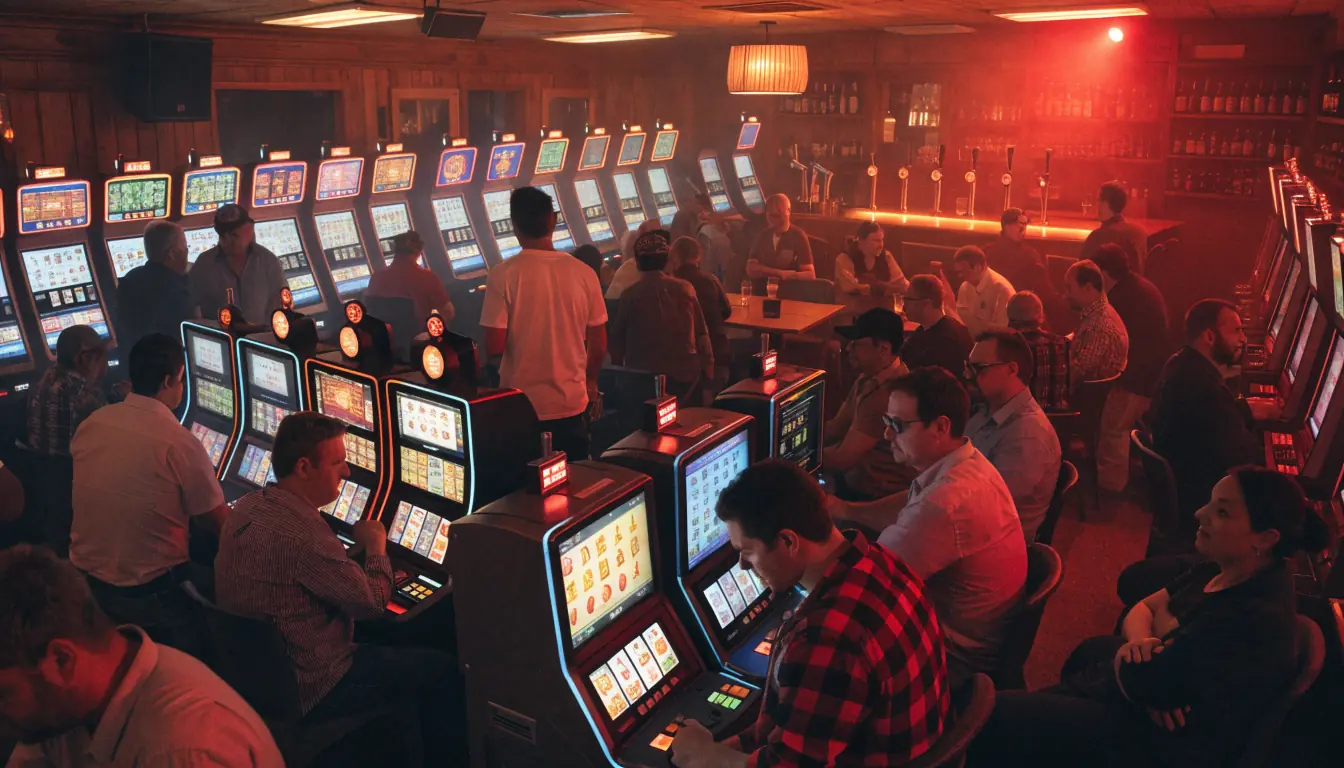
It helps to understand incentive rather than just mechanism. A club or pub running a pokies floor is running a business line with genuinely large numbers behind it — the NSW club profit figure above isn’t an outlier month, it’s indicative of what the format does at scale. Poker machines have also been identified, specifically in NSW, as the most harmful form of gambling in the state, which is a clinical way of saying: of everything on offer, this is the format doing the most damage to the people who play it. That’s not an accident of bad luck across thousands of individual sessions. It’s a predictable output of a format engineered for long, low‑friction engagement — cash in, minimal interruption, rapid repeat play.
None of this means pokies are uniquely evil compared to other forms of wagering. It means the specific design of an EGM — rapid spin cycles, small bet increments that don’t feel large individually, sound and light feedback tuned over decades — produces a harm profile that regulators and researchers keep flagging as distinct from, say, a weekly lottery ticket or a considered sports bet placed once and left alone.
Scale, in numbers that are worth sitting with
| Metric | Figure |
|---|---|
| Amount bet on EGMs, FY 2020‑21 | Almost AUD$150 billion |
| Player losses, FY 2020‑21 | AUD$12 billion |
| Per‑capita loss, FY 2020‑21 | AUD$608 |
| Share of world’s pub/club poker machines | 3% (against 0.3% of world population) |
| Pokies in NSW | ~95,800 |
| NSW club net profit, Dec 2017–May 2018 | $1.945 billion |
| Pokies turnover, 2023 (per ComplyAdvantage) | $191.2 billion |
That last figure comes from a single source, ComplyAdvantage, and covers a different year and framing than the FY 2020‑21 government figures above it — worth keeping separate in your head rather than averaging together into a single "the market is worth X" line, because that’s not what either figure actually claims.
What the table doesn’t show, and what no regulator publishes in a neat percentage, is how much of that $12 billion in annual losses came from sessions where the player understood the odds versus sessions where they didn’t. That gap — between knowing the mechanism and feeling the machine "owes" you — is where most of the damage actually happens. It’s also the gap the next section is aimed at closing, with tools that exist specifically because the scale above isn’t accidental.
The "near miss" and other things I stopped believing
Early in watching people play, I believed some of the same things players believe now. Two cherries and a near‑miss symbol felt like the machine was "warming up." It wasn’t. The near‑miss is a programmed visual event, not a signal about future spins — the random number generator doesn’t know what just displayed on screen any more than a coin knows it just landed heads. I’d call this a "feature," in the marketing sense, and then explain that the feature’s actual function is to keep a losing spin feeling like a promising one. That’s the whole trick. There isn’t a second, hidden trick underneath it that a clever player can exploit.
The “near‑miss” visual cue is a deliberate design feature that makes a losing spin feel like a potential win, increasing the likelihood you’ll keep playing.
Same with "cold" and "hot" machines, with playing at a "lucky" time of day, with betting the maximum to "unlock" better odds. None of these have a mechanism behind them because the machines don’t track your history in a way that would let last week’s losses influence this week’s payout. Every spin is its own independent event, cut off from the one before it. This is inconvenient, because it means there’s no lever except the two that were always available: how much you’re willing to lose, and how long you’re willing to sit there finding out.
Why Dragon Link and 5 Dragons draw so many questions
Certain titles attract more "tips" searches than others, and it’s worth being straightforward about why the honest answer looks the same regardless of which specific game someone’s asking about. A player asking for the best way to approach a particular linked jackpot format is really asking two separate questions bundled together: how does this specific game’s structure work, and is there a way to shift the odds in my favour. The second question has one answer across every EGM in the country — no, not through play pattern, timing, or bet sequencing — and it’s the honest answer whether the machine in front of someone is a well‑known linked‑jackpot format or an unbranded cabinet in the corner of a bowls club. The first question is closer to a product‑knowledge question than a strategy question: knowing how a game’s bonus features and volatility are structured tells you what kind of session to expect, not how to beat it.
I’m cautious about naming specific payout structures or return‑to‑player percentages here, because manufacturers vary release configurations by jurisdiction and venue, and nothing in the public record pins a single verified figure to a specific title in a way I’d want to hand someone as fact. Where a real number exists, it’s worth quoting exactly. Where it doesn’t, the honest move is to say so rather than fill the gap with a plausible‑sounding average.
The part that actually helps
If there’s a genuine takeaway from how these machines are built and how the market around them operates, it’s this: the meaningful decisions happen before the first spin, not during the fortieth. Decide the amount you’re prepared to not have anymore before you sit down. Decide how long you’re staying. Don’t treat volatility choice as a strategy for winning — treat it as a choice about how your evening will feel while you almost certainly lose, because on aggregate, across a market moving billions a year through machines engineered for exactly this outcome, that’s what the numbers say happens to nearly everyone who plays.
None of this is a reason never to play. It’s a reason to walk in knowing what the room is built to do, rather than what a machine’s lights are trying to suggest it’s doing. The practical side of that — the tools and safeguards actually available to Australian players, and how to use them properly — is where this goes next.
Practical Tricks to Improve Your Pokies Play in 2026
None of what follows will tell you how to beat a machine. There isn’t a trick for that, and anyone selling one is selling something else entirely. What actually helps is understanding the systems built around the machines — the registries, the verification steps, the paperwork venues have to do — and using them the way they’re meant to be used. That’s the whole trick.
Use the self-exclusion tools that already exist
BetStop, the national self-exclusion registry, launched in August 2023. Within its first six months it had 18,000 people registered. That number is worth sitting with. It’s not a marketing statistic — nobody signs up for a self-exclusion scheme because it’s going well. Eighteen thousand people looked at their own play and decided the safest move was to lock themselves out, nationally, across operators, in one action.
The practical value of BetStop over venue-by-venue self-exclusion is coverage. A local exclusion at one club doesn’t stop anyone from driving to the next suburb. A national registry does more of the work in one step. If pokies play has started to feel like something you’re managing rather than choosing, this is the tool built for exactly that moment — not a last resort, just an early one.
Gambling Help Online is the other piece of that infrastructure, and it’s worth knowing it exists before you need it, not after.
BetStop is a national self‑exclusion registry; registering once blocks you from all Australian online and venue‑based pokies operators.
Understand why identity checks aren’t red tape
Venues ask for ID, and account-based "transparent pokies" ask for it more consistently than the old note-and-coin machines ever did. It’s tempting to treat this as friction. It isn’t. Customer verification and patron profiling are core anti-money-laundering controls, and they exist because pokies carry a documented AML risk that has nothing to do with you personally.
The mechanics are worth knowing because they explain the friction. A high volume of cash moving through machines, with limited traceability on where it came from, is exactly the profile criminals look for. Public inquiries and sector guidance have flagged pokies as a major risk area for that reason, not as a hypothetical.
The typologies are specific:
- Cash placement with minimal play — large amounts fed into a machine, withdrawn again after little or no actual gambling.
- Purchasing winning tickets — buying a payout ticket off another patron so the cash looks like gambling winnings instead of what it actually is.
- Structuring across venues — spreading transactions across multiple clubs to stay under the radar of any single venue’s monitoring.
- Collusion — patrons and, where oversight is weak, sometimes staff working together to move cash through the system.
None of this is your problem to solve. But it’s the reason your card gets scanned, your ID gets asked for, and your redemption pattern gets quietly compared to everyone else’s. Once you know the mechanism, the process stops feeling arbitrary.
Know the red flags — because they’ll flag you too
The indicators venues and regulators watch for are published, not secret:
- Large cash insertions followed by minimal play and an immediate cash-out
- Frequent small redemptions spread across different venues
- Multiple patrons apparently coordinating to move cash through machines
- Customers declining to provide identification, or using more than one player card
- Redemption patterns that sit well outside a venue’s usual averages
- Access to more cash than would be expected for that customer’s profile
Read that list as a player, not a compliance officer, and a few things follow naturally. If you cash out repeatedly in small amounts across several clubs in one night, that’s not "playing it safe" — it’s the exact pattern a system is built to notice. If you’re irritated that a venue asked for ID again, remember that "refusing identification" sits on the same list as the genuinely suspicious behaviour. The system can’t tell the difference between someone with nothing to hide who dislikes paperwork and someone who has plenty to hide. It flags both the same way. Cooperating with verification isn’t submission to bureaucracy; it’s the fastest way to stay invisible to a system that’s actually looking for something else.
Let cashless systems work for you, not just for the regulator
Cashless and account-based machines improve traceability — that’s their stated purpose, and it’s aimed primarily at the money-laundering typologies above. But the same feature that makes a machine harder to exploit for cash structuring also makes it harder for a player to lose track of their own session.
An account-based machine keeps a running record. There’s no pile of notes disappearing into a slot with no memory of how much went in. Whatever you think of the surveillance angle, the record works both directions — it’s the same data trail that would show a criminal structuring cash across venues, and it’s the data trail that shows you, honestly, what a session actually cost. "Transparent" is the word the industry uses for these systems, and for once the word does what it says on the label: the transparency cuts toward the house’s compliance obligations, but nothing stops it cutting toward your own awareness too.
Treat tax and payout mechanics as fixed, not as leverage
Winnings from pokies aren’t taxed in Australia. That’s a fact about the tax code, not a gambling strategy, and it’s worth being precise about the difference. It means a win isn’t reduced by tax on the way out. It says nothing about win frequency, machine selection, or timing, because nothing in the public record supports claims about those things. Any "trick" that promises otherwise is inventing a mechanism that doesn’t exist.
What the tax treatment does explain is part of why the state’s interest in pokies runs so deep elsewhere in the system. Gambling revenue made up 7.7% of state and territory taxation revenue in 2015-16 — collected not from the player’s winnings but from the venues and operators. That’s one reason the compliance infrastructure around pokies — AML programs, reporting thresholds, verification requirements — is as built-out as it is. The state isn’t taxing your win. It has other reasons to want the machine’s cash flow accounted for.
Don’t mistake compliance friction for a scam
There’s a particular kind of complaint that comes up around pokies venues: "why do they need my licence just to redeem this," or "why did they ask me twice." The AML/CFT framework sitting behind those questions was built off the back of a documented risk, not a venue’s whim. The Interactive Gambling Act, passed on 28 June 2001, is the federal backbone of harm-minimisation regulation in this space, but the day-to-day friction you feel at a machine — verification, profiling, reporting — mostly comes from AML/CFT obligations layered on top of it.
Framed that way, the friction is doing a job. A venue that skips it isn’t being customer-friendly — it’s failing a control that exists because "high volume of cash transactions" and "limited traceability" is a description that fits pokies better than almost any other legal gambling product. Venues that take shortcuts on verification aren’t cutting you a break. They’re the ones a regulator is more likely to be looking at.
A short list of things that actually change your position
None of these affect odds. They affect exposure, record-keeping, and how much control you retain over the session.
- Register with BetStop if play has stopped feeling optional. One registration, national coverage — it does more than any single-venue exclusion.
- Expect and accept identity verification. It’s not aimed at you specifically; refusing it puts you on the same list as the behaviour it’s actually designed to catch.
- Keep redemptions at one venue rather than spreading small cash-outs across several in a night. Structuring-like patterns get flagged regardless of intent.
- Use account-based, cashless play where available. The same transparency built for compliance gives you an honest running total.
- Don’t read tax-free winnings as a signal about odds. It’s a tax rule, not a strategy — the two live in completely separate parts of the system.
- Treat venue paperwork as infrastructure, not inconvenience. It exists because of a real, published risk category, and it’s the same paperwork protecting the machine’s integrity for everyone playing it.
What none of this promises
It doesn’t promise better returns. There’s no trick here that shifts a machine’s underlying result in a player’s favour, because nothing in the available record supports one. What these habits promise instead is something narrower and more honest: fewer surprises, a clearer record of what happened during a session, and less friction with the systems built to catch the kind of activity that has nothing to do with an ordinary night at the venue.
That’s a smaller promise than "tips and tricks" usually implies. It’s also the only one that survives contact with how the machines, and the rules around them, actually work.
Created by the ”Casino iPad Info” editorial team.