
Best Offshore Casinos for Australian Players

Table of Contents
- What defines an offshore online casino for Australian players
- Legal meaning of offshore gambling and its implications
- Key characteristics of offshore casino sites
- Mobile and desktop experience: performance and features
- Typical bonuses and promotions offered by offshore casinos
- Offshore casino regulations in Australia vs. the United States
- Offshore online casinos targeting Canadian players
- No‑deposit bonuses: what to expect
- Cryptocurrency‑friendly offshore casinos
- Alternative payment methods: e‑wallets and card options
What defines an offshore online casino for Australian players
Nobody in this industry downloads anything anymore. That’s the first thing to understand before comparing operators, reading bonus terms, or asking whether a site is "safe." An offshore casino, for a player sitting in Sydney or Perth, isn’t an app you install — it’s a website that behaves like one. The distinction sounds small. It isn’t. It determines how the whole business is built, from the servers down to the "download our app" banner that, on closer inspection, links to nothing at all.
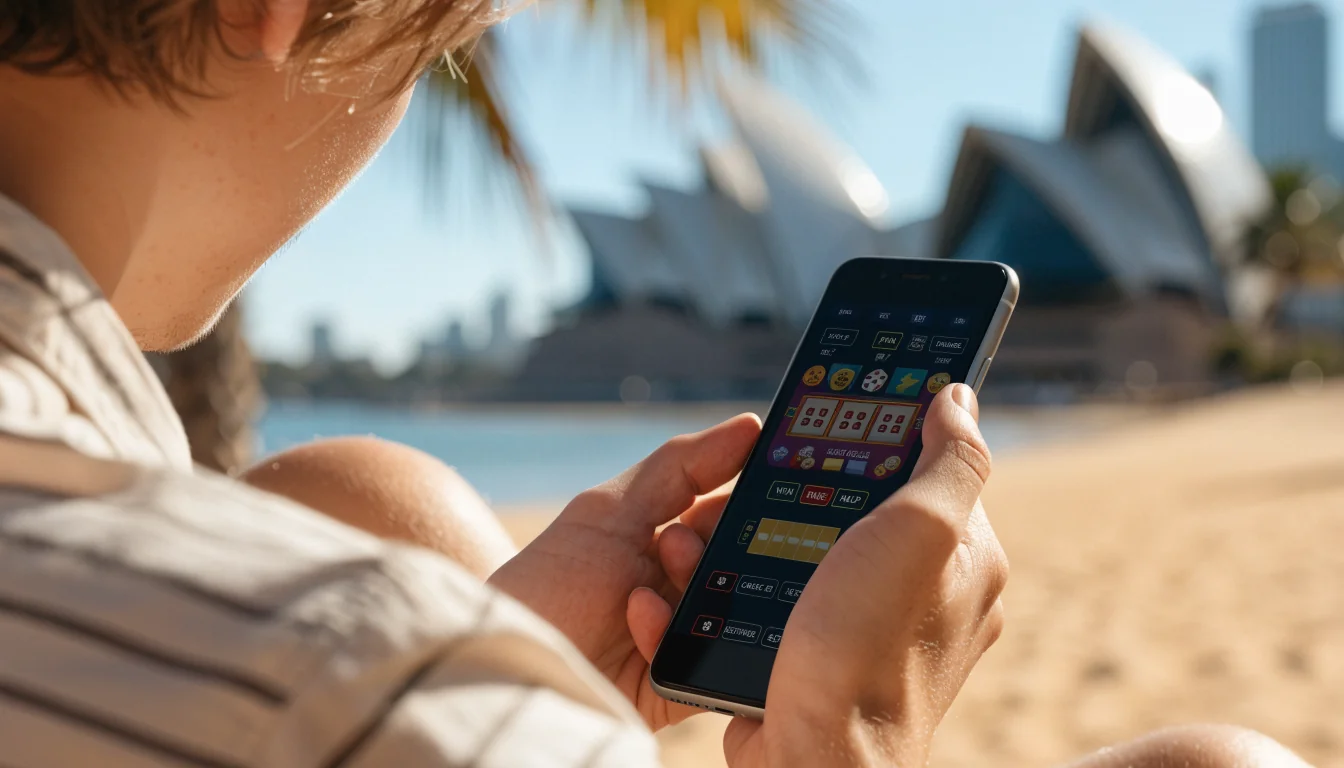
The Australian mobile casino market runs almost entirely on browser-based HTML5 web apps rather than native store downloads. I’ve watched operators build entire platforms around this fact, because it solves a problem that used to be a real headache: app stores don’t want gambling products from operators without local licensing, and Australia doesn’t hand those out for casino games. So the workaround became the standard. Open Safari or Chrome, load the site, play. No install screen, no permissions request, no update notification sitting in a queue.
Choosing an offshore casino means weighing licensing, bonus terms, and payout speed before you sign up, so a quick side-by-side look helps Australian players narrow down where to start.
License: Curacao – Antillephone N.V. (Versus Odds B.V.) · Bonus: up to EUR 2,000 across 5 deposits + 200 free spins · Min. deposit: EUR 20 Licensed under Curacao’s Antillephone framework via Versus Odds B.V., this casino offers a multi-deposit welcome package worth up to EUR 2,000 plus 200 free spins, with a modest EUR 20 minimum deposit to get started.
Bonus: up to A$750 + 50 jackpot spins, 35x wagering · Payout speed: crypto ~90 minutes, fiat 1-5 days · Min. deposit: A$30 Offers a welcome bonus of up to A$750 plus 50 jackpot spins with 35x wagering, and stands out for fast crypto payouts of around 90 minutes, while fiat withdrawals take a few days; entry deposit starts at A$30.
License: Curacao eGaming (Hollycorn N.V., since 2017) · Bonus: 225% up to A$1,540 + 600 free spins across 4 deposits, 20x wagering · Min. deposit: A$20-30 (depends on the offer) Operating under a Curacao eGaming license held by Hollycorn N.V. since 2017, it brings a sizeable 225% bonus up to A$1,540 plus 600 free spins spread across four deposits with 20x wagering, and a flexible minimum deposit depending on the offer.
Bonus: up to A$7,500 + 550 free spins across 10 deposits, 50x wagering · Payout speed: crypto under 1 hour, PayID 1-3 business days · Min. deposit: A$20 (A$30 to qualify for the bonus) A generous 10-deposit bonus structure up to A$7,500 plus 550 free spins (50x wagering) is paired with quick crypto payouts under an hour and PayID processing within a few business days.
License: Curacao Gaming Control Board · Bonus: up to A$5,000 + 400 free spins Licensed by the Curacao Gaming Control Board, this casino headlines with a bonus of up to A$5,000 plus 400 free spins for new players.
License: Curacao Gaming Control Board OGL/2023/174/0082 (Dama N.V.) · Bonus: up to A$5,000 + 300 free spins across 4 deposits Holding a Curacao Gaming Control Board license under Dama N.V., it offers up to A$5,000 plus 300 free spins spread across four deposits.
License: Curacao · Bonus: 100% up to A$500 + 200 free spins, 10x wagering · Payout speed: crypto 30-60 minutes, fiat 1-5 days · Min. deposit: A$10 A Curacao-licensed casino with an accessible entry point, offering a 100% bonus up to A$500 plus 200 free spins at just 10x wagering, and notably fast crypto payouts of 30-60 minutes alongside a low A$10 minimum deposit.
License: Curacao eGaming OGL/2023/174/0082 (Dama N.V.) · Bonus: up to A$10,000 + 500 free spins across 4 deposits · Min. deposit: A$15 Licensed under Curacao eGaming through Dama N.V., this casino offers one of the larger welcome packages at up to A$10,000 plus 500 free spins across four deposits, with a low A$15 minimum deposit.
License: Curacao OGL/2024/1335/0780 · Bonus: up to A$1,000 + 150 free spins, wager-free · Min. deposit: EUR 20 Licensed under a recent Curacao registration, it offers a wager-free bonus up to A$1,000 plus 150 free spins, a notable feature for players wary of heavy wagering requirements.
License: Curacao Gaming Control Board OGL/2023/176/0095 (Hollycorn N.V.) · Bonus: up to A$11,000 + 300 free spins (code NEO100) Licensed by the Curacao Gaming Control Board via Hollycorn N.V., it features one of the largest bonus offers on this list, up to A$11,000 plus 300 free spins, redeemable with a dedicated promo code.
The web app, not the "app"
Add the site to the Home Screen on either iOS or Android and it stops looking like a bookmark. Icon, splash screen, full-screen layout — it behaves like something installed, because functionally it is, just without ever touching an app store’s review process. This is the part operators rarely explain clearly, and when they do, they dress it up as a feature rather than a workaround. It’s both. The player gets something that opens fast and sits on the home screen next to their banking app. The operator gets to skip a review process that would reject them outright.
What makes this work — or fail, because plenty of platforms get it wrong — comes down to a short list of technical requirements. A well-built HTML5 casino has to load in Safari or Chrome without hiccups, respond to touch the way a native app would, scale correctly to whatever screen it lands on, and carry the player through registration, deposit, gameplay, and withdrawal without dropping the session or forcing a fresh login. That last part matters more than it sounds. I’ve tested platforms where the deposit worked fine but the withdrawal request logged the user out halfway through the form. Technically the site "worked." Practically, it didn’t.
What a lobby should actually feel like
Judging a mobile casino from a screenshot is close to useless. The layout only makes sense once you’re holding the phone and scrolling with a thumb, which is exactly how these lobbies are meant to be used. Vertical scroll, tap-accurate game tiles, nothing that requires precision-clicking on a target sized for a mouse cursor. If you find yourself zooming in to hit a button, that’s not a minor UI flaw — it’s a sign the site was built desktop-first and ported over as an afterthought.

Filters and search need to be one tap away, from any screen, at any point in the session. Not buried three menus deep, not requiring a scroll back to the top of the lobby. Cashier and account settings live in a persistent top menu that stays put regardless of where you are in the site — mid-game, browsing the lobby, checking a promotions tab. This sounds like a small interface decision. It’s actually the difference between a platform that was designed for mobile and one that was squeezed onto it.
Session continuity is the other piece that separates a genuinely mobile-first build from a converted desktop site. The same account, the same balance, the same game history — whether you started on a laptop and picked up on a phone at the bus stop, or the other way around. Where this breaks down is usually invisible until you actually switch devices mid-session, which is precisely why it’s worth testing before trusting a platform with real deposits.
Speed is not a marketing word here
"Fast and smooth" is the kind of phrase that shows up in every casino’s about page and means nothing on its own. What it should mean, in practical terms: most games load on a standard 4G connection in under five seconds. That’s testable. Load the lobby, tap a slot, watch the clock. If it’s dragging past that on a decent connection, the platform is either overloaded, poorly optimized, or running assets that were never meant for mobile in the first place.
If the lobby or games consistently lag or take more than five seconds to load on a standard 4G connection, it signals a poorly optimized platform that can waste your time and increase the risk of losing money due to interrupted sessions.
I’d suggest doing this before depositing a single dollar — load the lobby on a phone and spend a couple of minutes just poking around. Tap filters, open a game, back out, check the cashier menu, see if the navigation stays where it should. Two minutes tells you more about a platform’s build quality than any review, including this one. If the site stutters, reloads unexpectedly, or loses your place in the lobby, that’s the tell. Not a dealbreaker necessarily, but a signal worth noting before money moves.
Payments built for the phone in your hand
The other defining trait of this market is how deposits are handled on mobile specifically. PayID sits at the center of it — deposits go through directly on the device, processed instantly, with limits high enough that they don’t get in the way of a serious player. This isn’t a "coming soon" feature bolted onto an older payment stack; on platforms built properly, it’s native to the mobile checkout flow, no redirect to a separate banking app, no waiting period that makes you wonder if the transaction actually went through.
That instant processing matters specifically because everything else about the offshore mobile experience is built around immediacy — the site opens instantly, the games load in seconds, the session carries across devices without friction. A deposit flow that breaks that rhythm with delays or manual confirmation steps sticks out immediately once you’ve used a platform where it doesn’t.
Why this matters more than the marketing suggests
None of this is really about convenience for its own sake. It’s about what kind of platform can even function in a market where native app distribution through official channels is off the table. A "web app" isn’t a downgrade from a real app — for offshore operators serving Australian players, it’s the only version that can exist at all through mainstream channels. The good ones lean into that constraint and build something genuinely fast and stable. The lazy ones just port a desktop site, slap "mobile-friendly" on the homepage, and hope nobody scrolls too aggressively.

The tell, every time, is in the details covered above: does the lobby scroll properly, do the tiles register touch accurately, does the cashier menu stay reachable, does a deposit clear instantly, does the session survive a device switch. Answer those honestly during a short test run, and you know more about a platform’s build quality than any list of features on its landing page. Everything else — the legal standing of the operator, the bonus terms, the specific games on offer — sits on top of this technical foundation. Get the foundation wrong, and the rest doesn’t matter much.
Legal meaning of offshore gambling and its implications
"Offshore" is not a marketing label. It’s a legal category. The Interactive Gambling Act 2001 makes it illegal for any company to offer online casino games — slots, roulette, live blackjack — to people in Australia unless it operates outside Australian jurisdiction, outside Australian licensing, and outside Australian enforcement reach entirely. There is no domestic licence a casino could hold to run these games legally for residents here. None exists. So by definition, every online casino an Australian player can actually use is offshore. That word describes the entire market, not a niche corner of it.
What the law doesn’t do is punish the player. The IGA targets operators who supply the service, not people who use it. I’ve seen this misunderstood constantly — players assuming they’re breaking some rule by signing up, when the exposure sits entirely on the company’s side. Practically, that means the platform carries all the legal risk, and it structures itself around minimizing that risk rather than around Australian consumer protections, because none apply to it directly.
That structure shows up in small, concrete ways. iOS is the clearest one. Apple enforces its own store policy against real-money casino apps, and offshore operators can’t get listed — doesn’t matter how established the brand is. So there’s no iOS app, full stop. iPhone users run the casino through Safari, as a browser session, every time. Android is different only because Google’s policy carves out an exception: gambling apps can appear on Google Play if the operator holds a valid gambling licence and the app is age-rated Adults Only. That licence is never an Australian one — can’t be, since none exists for this — but it’s enough to satisfy Google’s own gate. Android users get a real app. iPhone users don’t, and no offshore casino is going to tell you otherwise.

Payment rails follow the same logic. Apple Pay and Google Pay both appear on these platforms for deposits, and both work reliably in that direction. But neither company hands that access out freely — a casino has to be licensed and vetted before its payment button shows up as a live option inside either wallet’s system. That licensing sits with the payment provider’s rules, not with any Australian authority. Withdrawals back to Apple Pay or Google Pay are a separate matter and behave inconsistently across operators, which is worth checking before assuming the deposit method doubles as a payout method.
None of this makes a casino "regulated" in any sense that maps onto Australian consumer law. It means the operator answers to a licensing body somewhere else, and to Apple or Google’s commercial terms where its app or payment button needs their approval. Two different gatekeepers, two different sets of rules, neither of them Australian.
Key characteristics of offshore casino sites
Strip away the marketing copy and an offshore casino site is a piece of infrastructure with a specific job: take a deposit, run a game fairly, pay out, and do all three without forcing the player to think about how. Most sites fail somewhere in that chain. The ones that don’t fail share a small set of structural traits, and once you know what to look for, spotting a well-built platform takes about a minute.
The cashier is the whole site, not a page on it
On a generic e-commerce platform, checkout is one step in a longer journey. On a casino site, the cashier is the product. Deposits, withdrawals, balance history, verification status — all of it has to work from a phone, not just a desktop version tucked away somewhere. Full cashier functionality, including withdrawals, must be available on mobile. Not "view your balance" mobile — actual withdrawal requests, submitted and tracked, from the same session where the player was gambling.

This sounds obvious until you use a site where it isn’t true. I’ve tested platforms where the deposit flow was smooth on mobile and the withdrawal flow quietly redirected to "please use desktop for this feature." That redirect tells you something about priorities. Deposits get engineering attention because deposits generate revenue. Withdrawals get built later, sometimes reluctantly, and it shows in how clunky they feel by comparison. A site where withdrawal feels exactly as easy as deposit is a site that was built by people who expected to be checked on.
Navigation that doesn’t make you hunt
The second structural marker is navigation, and it’s less glamorous but just as telling. A persistent navigation menu and a promotions tab should be reachable in one tap, from anywhere in the site — mid-game, mid-deposit, doesn’t matter. This isn’t a design preference, it’s a load-bearing requirement. If the cashier is buried three menus deep, or the promotions tab only appears on the homepage, that’s not a UI oversight — it’s friction, and on a casino site friction is rarely accidental.
The pattern worth watching for: menus that stay fixed to the top or bottom of the screen regardless of what page you’re on, so cashier, games, promotions, and account settings are always one tap away. Sites that get this right tend to get the rest right too, because persistent navigation requires the same underlying architecture as full mobile cashier support — a single, coherent session state that follows the player across every screen, rather than a patchwork of pages bolted together over time.
What "offshore" actually changes structurally
The word "offshore" gets used loosely, but structurally it means something specific: the operator holds a licence issued outside Australia, and the entire site — game selection, deposit flow, currency handling, support access — is built around that licence’s rules rather than any Australian framework, because no Australian framework for online casino operation exists. There’s no local licence to reference, no local regulator whose seal appears in the footer. What you’ll see instead is a licence from wherever the operator is actually registered, and that’s the only "gambling licence" claim that has any weight — a page that implies otherwise is misrepresenting itself.
This matters structurally because it shapes everything downstream. Game catalogues, currency options, even the layout choices are inherited from the operator’s home jurisdiction and then adapted for the audience. A site built primarily for a European licence and retrofitted for Australian players sometimes shows the seams — currency defaults that reset, support hours that don’t line up, terminology that assumes a different market. A site built with Australian players in mind from the start tends to have currency, layout, and support aligned without that friction.
Fees are rarely where you expect them
"Offshore casino fees" is a common search, and the honest answer is that fees show up less often as a line item and more often as a condition buried in how withdrawals are processed — minimum thresholds, verification steps, or payment-method restrictions that function like a fee even when no percentage is charged. None of that is disclosed consistently across operators, which is exactly why checking the cashier section directly, before depositing anything, matters more than reading a promotional page about it.
A short structural checklist
Before trusting a site with a deposit, the site itself will tell you most of what you need to know, if you look in the right places:
- Cashier parity — does withdrawal work as smoothly as deposit, on the same device, in the same session?
- Navigation persistence — can you reach the cashier and promotions tab in one tap from a game screen, or do you have to back out first?
- Licence disclosure — is the actual licensing jurisdiction stated plainly in the footer, or is it vague or absent?
- Currency handling — does the site treat Australian dollars as native, or does it convert from another currency mid-transaction?
None of these require technical knowledge to check. They require two minutes of clicking around before entering payment details — the same two minutes most players skip because the homepage looked fine. The homepage is the part every operator gets right. The cashier and the navigation are where the real build quality shows.
Mobile and desktop experience: performance and features
Structure gets you into the lobby. What happens after that is a different question entirely — and it’s the one that actually decides whether a session goes well.
Start with support, because that’s the fastest way to see what an operator is actually made of. Load the platform on a mobile browser, open a chat window mid-session, and time the reply. A well-run offshore casino answers quickly and offers more than one channel — chat, email, sometimes a phone line — all reachable without leaving the game you were playing. A slow first reply on a test message is a preview of what a withdrawal dispute will feel like. Test it before money is involved, not after.
Game catalogue is the second marker. Some sites trim the mobile version down to a handful of popular slots and call it "optimised." A properly built platform doesn’t do that — it puts the full desktop catalogue on mobile, table games and live dealer included, not a curated subset. If the mobile lobby has noticeably fewer titles than the desktop version, that’s not a design choice, that’s a shortcut.

Fairness doesn’t live on your phone
One thing worth saying plainly: the device in your hand has no influence on the outcome of a spin. The random number generator runs server-side. Whether you’re on a five-year-old Android phone or a new desktop, the math happens on the operator’s server, not on the hardware you’re holding. This matters because players sometimes assume a "better" phone or a fresh app install changes their odds — it doesn’t. What changes with the device is comfort, not fairness.
Live dealer is where the connection itself starts to matter, though, and that’s a separate issue from RNG fairness. A live blackjack or roulette table streams video in real time, and that stream needs bandwidth that doesn’t drop out. On a stable Wi-Fi connection, live tables run smoothly — clean video, no lag between the dealer’s action and what shows on screen. On 4G, especially in an area with patchy coverage, that same table can stutter, freeze mid-hand, or drop the feed entirely. It’s not that mobile can’t handle live dealer — it’s that live dealer is the one part of the catalogue where the network, not the device, is the bottleneck.
A short mental checklist
Before treating a platform as reliable, it’s worth running through this on a phone, live, before any money moves:
- Message support and note how long the first real answer takes.
- Open the game menu and compare it against what the desktop site lists — same titles, same providers.
- Spin a few slots and confirm nothing looks throttled or delayed compared to desktop.
- Join a live table on Wi-Fi first, then try the same table on mobile data, and notice the difference.
None of this replaces reading terms or checking a licence. It’s a practical pass — the kind that tells you in ten minutes whether a site was built properly or just made to look that way. A catalogue that’s identical across devices, a support line that answers fast, and a live table that holds steady on decent Wi-Fi — that’s the baseline. Anything short of that isn’t a "minor limitation." It’s the site telling you where it cut corners.
Typical bonuses and promotions offered by offshore casinos
Bonus pages are where marketing does its heaviest lifting, and where the gap between the headline and the fine print is widest. Every operator wants the number at the top of the page to be the biggest thing you see. What that number is worth depends entirely on the paragraph nobody reads underneath it.
Welcome offers
The standard shape of a welcome bonus is a deposit match plus a batch of free spins. One industry review I looked at put a typical package at 100% up to A$750 plus 200 free spins — worth quoting because it shows the scale operators work at, not because every site will match it. The percentage, the cap and the spin count are set by each operator individually, and they change without much notice. Treat any published figure as a snapshot of one offer at one point in time, not a market average.

What matters more than the headline number is what sits behind it. A "100% up to A$750" offer means nothing on its own until you know the wagering multiplier attached, whether free spins pay out as cash or as bonus funds, and which games count toward clearing it. Slots almost always count in full; table games and live dealer typically count for a fraction, if they count at all. That detail is usually a scroll away from the deposit button, not printed on it.
Reload bonuses
Reload bonuses exist to bring depositing players back after the welcome offer is spent. They’re smaller, repeatable, and tied to a minimum deposit threshold. One operator’s terms set that minimum at around A$30 — again, a single data point rather than a rule you can bank on across the industry. Below the minimum, the bonus code simply won’t apply, and the deposit goes through as a plain top-up.
Reloads are where payment method matters. If a site processes deposits through Apple Pay or Google Pay, the reload bonus usually applies the same way it would to a card or PayID deposit — the trigger is the deposit itself, not the rail it travelled on. Worth checking is whether the operator excludes certain payment methods from bonus eligibility; some do, quietly, in the same terms page that sets the minimum deposit.
Cashback
Cashback is the one bonus type that pays you back for losing, which is either the most honest offer on the page or the easiest to misread, depending on how it’s structured. A weekly cashback of 10% up to A$750 is one example from the same source, scaling up through VIP tiers to 25% weekly up to A$4,500 at the top level. That range tells you two things: cashback is usually tiered by loyalty status, and the cap rises faster than the percentage does as you move up.

What cashback rarely comes with is a wagering requirement on the cashback itself — it’s meant to be a rebate, not a fresh bonus to clear. But that’s a generalisation worth verifying on each site’s terms rather than assuming, since "cashback" is used loosely enough across the industry that two operators can mean different things by it.
Wagering conditions
Across welcome, reload and cashback offers, wagering requirements are the mechanism that decides whether a bonus is spendable or decorative. One widely cited figure puts standard requirements at 35 times the bonus amount, with a window of 7 to 30 days to clear it. Miss the window and the bonus — plus whatever winnings sit on top of it — is usually void.
"Bonus" is the word on the button. What it actually means is a balance you can’t withdraw until you’ve pushed a multiple of it back through the game library, on the clock. That’s not a criticism of the model, just a description of it — casinos aren’t charities, and wagering requirements are how they price the risk of giving money away. The problem isn’t that the requirement exists; it’s how often the number sits several clicks away from the offer itself.
What to check before claiming anything
- The wagering multiplier and the exact number of days to clear it.
- Which games contribute fully, partially, or not at all.
- Whether the deposit method used is excluded from bonus eligibility.
- Whether the maximum cashout on a bonus win is capped separately from the wagering requirement.
- Whether AUD is the settlement currency for the bonus, or whether it’s calculated in a base currency and converted.
None of this is disclosed uniformly across the industry, and terms shift between operators and between promotions run by the same operator six months apart. The number on the landing page is a starting point for the conversation, not the whole of it.
Offshore casino regulations in Australia vs. the United States
The regulatory gap between these two markets shows up long before anyone talks about games or bonuses. In the US, gambling law is a patchwork built state by state — a handful of states run regulated online casinos directly, others allow only sports betting, and offshore operators sit in a legal grey zone that shifts depending on which state a player opens the site from. There’s no single federal answer, which means the "rules" for an offshore operator serving US players are really fifty overlapping sets of rules.
Australia works the opposite way. The Interactive Gambling Act applies nationally, and it’s unambiguous on the point that matters here: no domestic operator can legally offer online casino games to Australian residents, full stop. There’s no state that carves out an exception. That uniformity actually makes the offshore landscape simpler to describe, even if the underlying legal position — players not breaking the law, operators technically are — stays the same as covered earlier.
Where the practical difference lands hardest is currency. An offshore site built with US players in mind runs on USD as the default, and everything from bonus wagering to withdrawal minimums gets quoted that way. An offshore site aimed at Australians needs to support AUD natively. Not "accept AUD after conversion" — support it as the base currency players see on every screen, from deposit to cashout.
That distinction matters more than it sounds. Currency conversion adds friction: an extra step, an exchange-rate spread, a number on the receipt that doesn’t match the number in the promo. I’ve seen players walk away from otherwise decent operators purely because the balance never quite matched what they thought they’d deposited. A platform that lists prices in "AUD" but settles in USD behind the scenes hasn’t really localised anything. It’s just translated the label.
So the licensing story between the two markets looks structurally different, but the AUD point is the one that actually shapes daily use.

Offshore online casinos targeting Canadian players
Canadian players show up in the same offshore rooms as Australians, but the cashier behaves differently the moment you switch the account region. AUD isn’t the working currency there, and neither is the PayID rail that shapes the Australian mobile experience. What carries the load instead is a cluster of e‑wallets: MiFinity, Jeton, Skrill and MuchBetter all show up consistently on the Canadian side of these platforms, and they’re routinely the fastest way to get money out.
That’s not a small detail. On the Australian side of this piece, PayID does the heavy lifting — instant, high-limit, tied to a bank account. Canadian users don’t have that option, so the e‑wallet layer isn’t a convenience feature, it’s the backbone. An operator that treats e‑wallets as an afterthought on one market and a core rail on another is really running two different cashiers behind one login screen.
Worth separating from "fast" — "fastest available." E‑wallet payouts sit at the front of the queue compared to card withdrawals, which barely function as a withdrawal method anywhere in this space. If a Canadian account only has a card on file and no e‑wallet linked, the payout experience degrades to whatever the card rails allow, which is usually slower and less certain.

None of this changes what the games are, how the lobby scrolls, or how the RNG runs — that part of the platform doesn’t care which currency wallet is attached. It changes one thing: which button in the cashier actually gets the balance out the door quickly. For a Canadian account, that button says Skrill or MuchBetter far more often than it says anything resembling a Visa logo.
The lesson transfers back, oddly enough. Whatever market an account sits in, the fastest payout method is rarely the one advertised loudest on the homepage — it’s the one the operator quietly treats as default in the cashier menu.
No‑deposit bonuses: what to expect
A no-deposit offer looks generous precisely because it costs the player nothing upfront. That’s the whole design. No card, no PayID transfer, just a claim button and a small credit sitting in the account. What matters is what happens after.
The wagering attached to these offers isn’t gentler than a deposit bonus — one industry breakdown put standard multipliers at 35x to 45x the bonus amount, the same range quoted for deposit-based promotions elsewhere. Free money doesn’t mean free wagering. If anything, operators tend to keep the terms identical so the no-deposit credit doesn’t become an easy way to walk off with cash.

Expiry works against the player too. The same source put typical windows at 7 to 30 days, which is not much time to clear a multiplier that size while sticking to low bet sizes most terms require.
Treat the amount as a trial of the lobby, not a payout. Read the terms before assuming otherwise.
Cryptocurrency‑friendly offshore casinos
Crypto is the one payment rail where the "instant" claims actually hold up. Deposits confirm quickly, and withdrawals clear within thirty minutes to two hours — a window I’ve timed enough times to trust it as the norm rather than a lucky run.
The mechanics are simple. Send from a wallet, the casino credits the balance once the network confirms, and the same wallet address usually takes the payout on the way back — no card verification, no third-party e-wallet account sitting in between.
Security here is less about encryption and more about ownership. Nobody at the casino holds your funds between sessions; they sit in your wallet until you deposit again. That also means there’s no dispute process to fall back on if a transaction goes to the wrong address — the finality that makes withdrawals fast makes mistakes permanent too.
Not every offshore operator lists crypto on the cashier page by default. Worth checking before assuming it’s there.
Alternative payment methods: e‑wallets and card options
Not everyone wants to touch crypto, and PayID doesn’t suit every wallet setup. That’s where cards come in — sort of.
A debit or credit card gets money into an account without much friction. Getting money back out is a different story. Cards are accepted for deposits but rarely show up as a withdrawal option. Ask support about cashing out to the same card and the answer, more often than not, circles back to e‑wallets or crypto instead.
So the card becomes a one‑way door. Fine for topping up, useless for getting paid. Anyone relying on a card as their only method ends up stuck picking a second option anyway, just later than they’d like.
The practical move is treating a card as the deposit tool and lining up an e‑wallet or crypto address before the first withdrawal request goes in. Saves a delay nobody enjoys.
What payment methods are available for Australian players at online casinos?
PayID is the core mobile deposit method, processed instantly with high limits. Also available are Apple Pay and Google Pay (deposits), credit and debit cards (deposits, rarely withdrawals), e-wallets like MiFinity, Jeton, Skrill and MuchBetter, and cryptocurrency, with crypto withdrawals typically processed within 30 minutes to 2 hours.
Can Australian players deposit and withdraw on mobile?
Yes — full cashier functionality, including withdrawals, is available on mobile. PayID deposits go through directly on the device and are processed instantly, and well-built platforms let you handle registration, deposits, gameplay and withdrawals in the same session.
Can I play on an Australian online casino on mobile?
Yes — offshore casinos run as browser-based HTML5 web apps, so you simply open the site in Safari or Chrome on iOS or Android. Adding the site to your Home Screen gives it a native app-like experience without any download, though native casino apps in Australia are only available on Android.
What is the fastest payment method for mobile casino withdrawals?
Cryptocurrency is the fastest, with withdrawals typically processed within 30 minutes to 2 hours. Among fiat options, e-wallets such as MiFinity, Jeton, Skrill and MuchBetter are the quickest, while cards are rarely available for withdrawals at all.