
Best Pokies in Brisbane: Types, Themes and Gameplay
Understanding Pokies in Brisbane: Types, Themes, and Gameplay
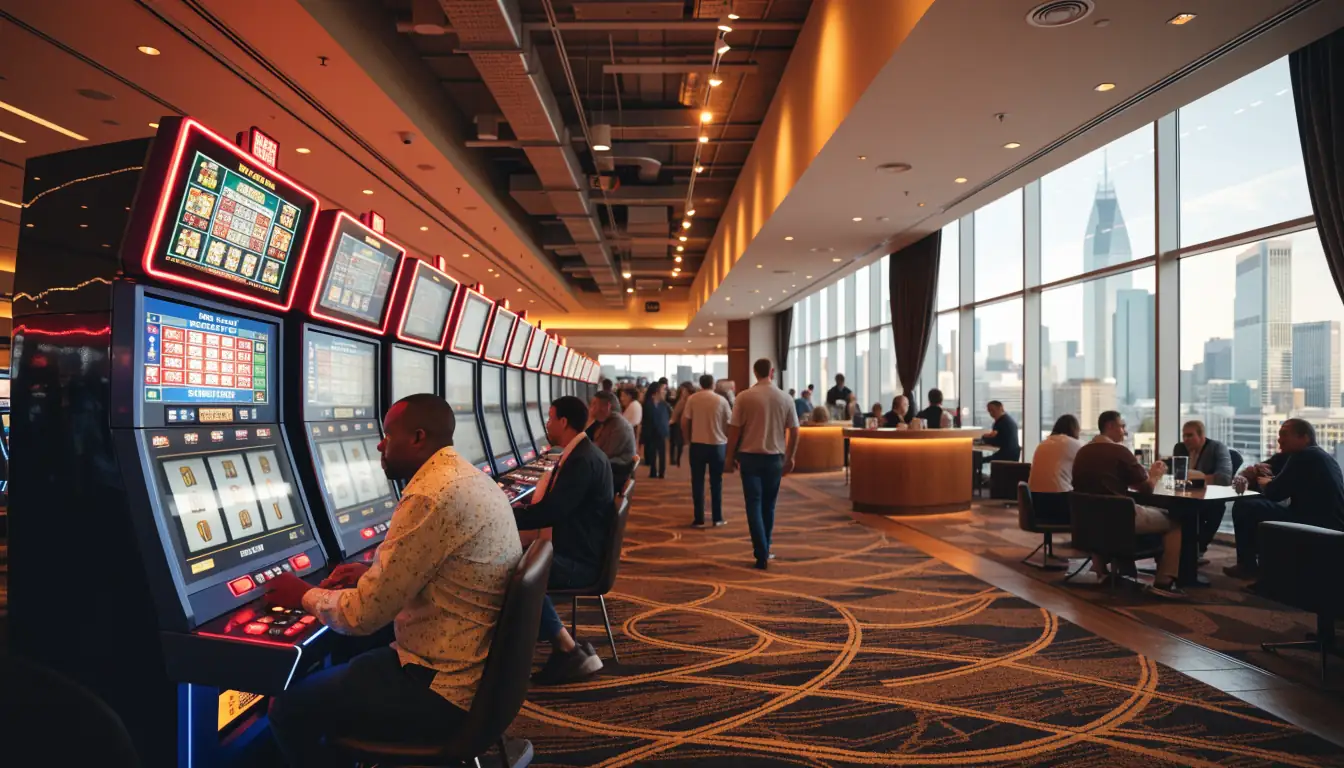
I spent enough years around gaming floors to know that the word "pokies" covers a lot more ground than people assume when they first walk into a venue on the Southbank strip or duck into a Northside club after work. Ask ten regulars what a pokie is and you’ll get ten slightly different answers — a machine with reels, a machine with buttons, a screen that lights up when you win. They’re all half right. What follows is the part nobody explains at the bar: what these machines actually are, how the mechanics differ from one cabinet to the next, and why the version sitting in a club in South Brisbane is a genuinely different animal from the pokies you’d find inside an online casino, which is a subject the next section deals with on its own terms.
What a Pokie Actually Is
A pokie, at its core, is a gaming machine that accepts a wager, spins or displays a randomised outcome, and pays out according to a fixed table of results. The name is Australian slang — short for "poker machine" — and it stuck even though most modern cabinets have nothing to do with poker at all. That’s a hangover from the early machines, which did use poker-style card rankings to determine wins. Everything since has moved on, but the word never did.
While pokies remain the star attraction at Brisbane’s land-based venues, online casinos give players a way to explore similar slot action from home, and the operators below are worth a look for their bonuses and licensing credentials.
License: Curacao – Antillephone N.V. (Versus Odds B.V.) · Bonus: up to EUR 2,000 across 5 deposits + 200 free spins · Min. deposit: EUR 20 Licensed under Curacao’s Antillephone framework, this casino backs new players with a multi-deposit bonus package that includes a solid batch of free spins and a modest entry deposit requirement.
Bonus: up to A$750 + 50 jackpot spins, 35x wagering · Payout speed: crypto ~90 minutes, fiat 1-5 days · Min. deposit: A$30 Offers a jackpot-flavoured welcome bonus with free spins, and stands out for fast crypto payouts alongside more standard fiat withdrawal times.
License: Curacao eGaming (Hollycorn N.V., since 2017) · Bonus: 225% up to A$1,540 + 600 free spins across 4 deposits, 20x wagering · Min. deposit: A$20-30 (depends on the offer) A long-standing Curacao-licensed operator (active since 2017) offering a generous multi-deposit welcome package with a large free spins allowance and accessible minimum deposit.
Bonus: up to A$7,500 + 550 free spins across 10 deposits, 50x wagering · Payout speed: crypto under 1 hour, PayID 1-3 business days · Min. deposit: A$20 (A$30 to qualify for the bonus) Stands out for a substantial ten-deposit bonus structure with hundreds of free spins, plus notably quick crypto payouts and reasonable PayID processing times.
License: Curacao Gaming Control Board · Bonus: up to A$5,000 + 400 free spins Attracts players with a sizeable welcome bonus and a healthy allotment of free spins.
License: Curacao Gaming Control Board OGL/2023/174/0082 (Dama N.V.) · Bonus: up to A$5,000 + 300 free spins across 4 deposits Curacao Gaming Control Board licensed, this casino offers a strong multi-deposit bonus package paired with a generous free spins bundle.
License: Curacao · Bonus: 100% up to A$500 + 200 free spins, 10x wagering · Payout speed: crypto 30-60 minutes, fiat 1-5 days · Min. deposit: A$10 A Curacao-licensed option with a low minimum deposit, fast crypto payout times, and a bonus with relatively light wagering requirements.
License: Curacao eGaming OGL/2023/174/0082 (Dama N.V.) · Bonus: up to A$10,000 + 500 free spins across 4 deposits · Min. deposit: A$15 Licensed through Curacao eGaming, this casino offers one of the larger multi-deposit bonus packages along with free spins and a low entry deposit.
License: Curacao OGL/2024/1335/0780 · Bonus: up to A$1,000 + 150 free spins, wager-free · Min. deposit: EUR 20 Licensed in Curacao, this casino’s bonus is notable for being wager-free, paired with a solid free spins allowance.
License: Curacao Gaming Control Board OGL/2023/176/0095 (Hollycorn N.V.) · Bonus: up to A$11,000 + 300 free spins (code NEO100) Holding a Curacao Gaming Control Board license, this casino offers one of the larger bonus packages on this list plus free spins unlocked via a bonus code.
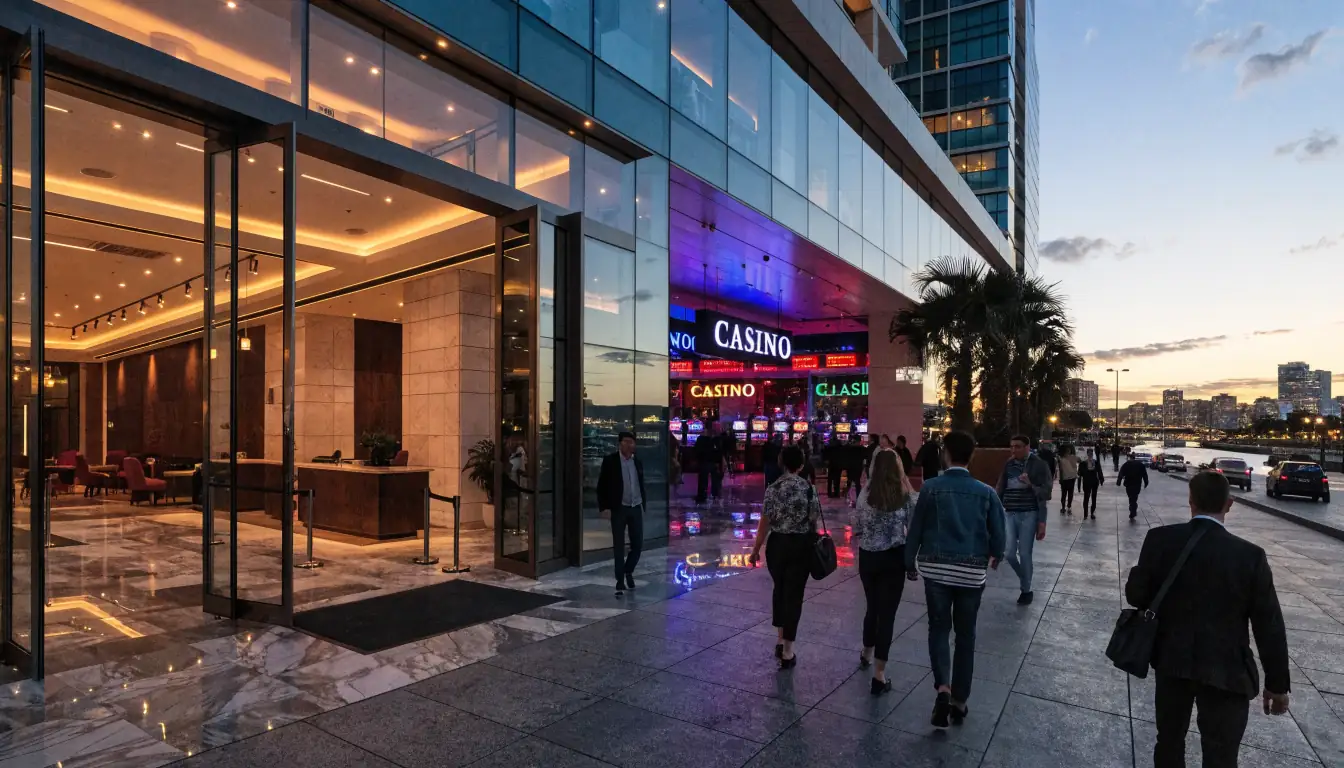
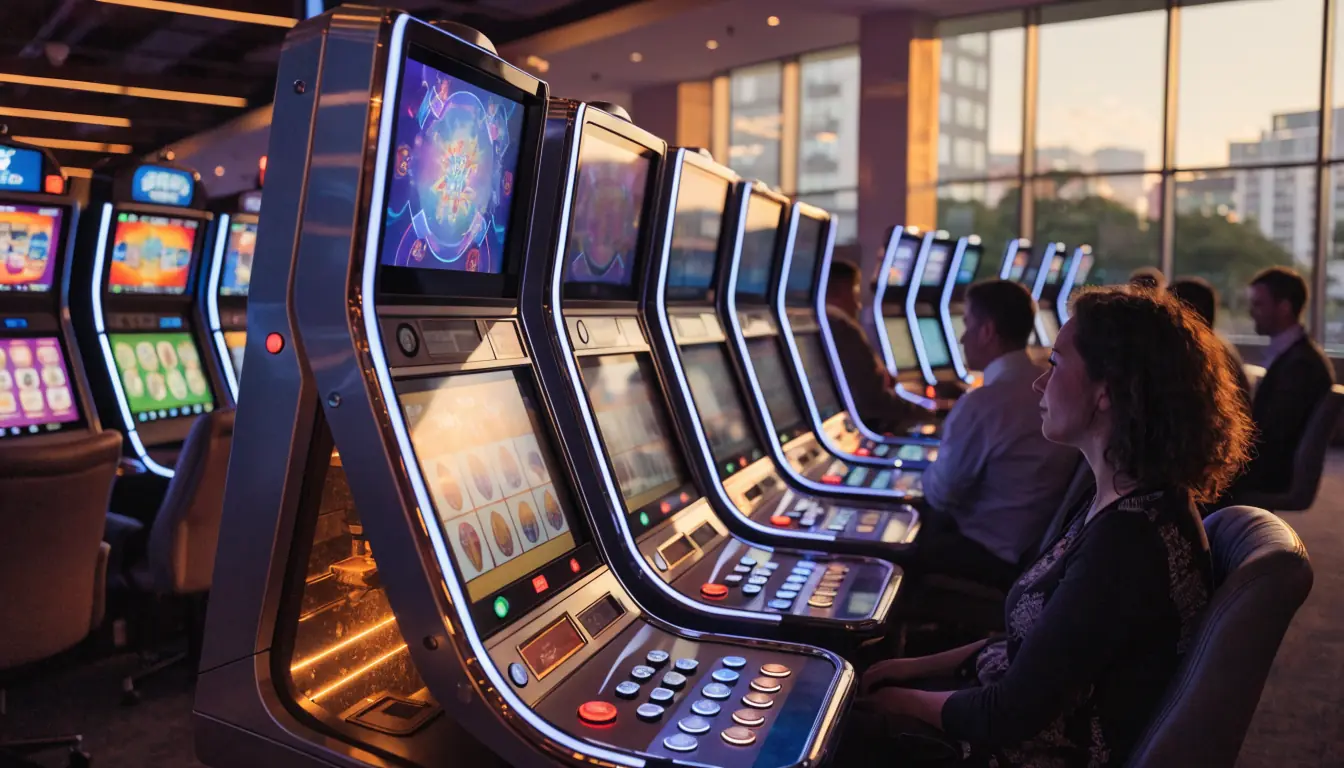
Walk into any licensed venue — a club in South Bank, a pub on the Northside, a tavern near the river — and the machines you’ll see fall into a handful of families. They look different, they sound different, and the way you interact with them is different enough that treating them as interchangeable is a mistake a lot of casual players make on their first few sessions.
The Reel-Based Family
The simplest version, and the one that still has a loyal following among older players, is the reel-based pokie. These are built around a small number of spinning reels — historically three, sometimes described in the trade as 3 reel pokies — each carrying a limited set of symbols. Pull the lever, or these days press the button, and the reels spin independently before stopping in sequence. A win is a matter of the symbols lining up on a payline that runs, usually, straight across the middle of the window.
There’s a reason these machines never disappeared even as flashier alternatives filled the floor around them. The gameplay loop is short, the outcome is immediate, and there’s nothing to interpret. Three reels, one payline, a handful of symbols — bell, bar, seven, cherry — and you know within a second whether the spin worked. No bonus round to sit through, no second screen to wait on. For a player who wants volume — many spins in a short session — the format is efficient in a way that newer machines deliberately aren’t.
The trade-off is variety. With three reels and one line, the number of possible combinations is small, which means the machine can’t support the kind of layered bonus features found on newer cabinets. What you get instead is a game whose entire personality lives in its pay table and its symbol set — a straightforward machine that either lines up or doesn’t, no theatre attached.
Video Pokies and the Multi-Line Era
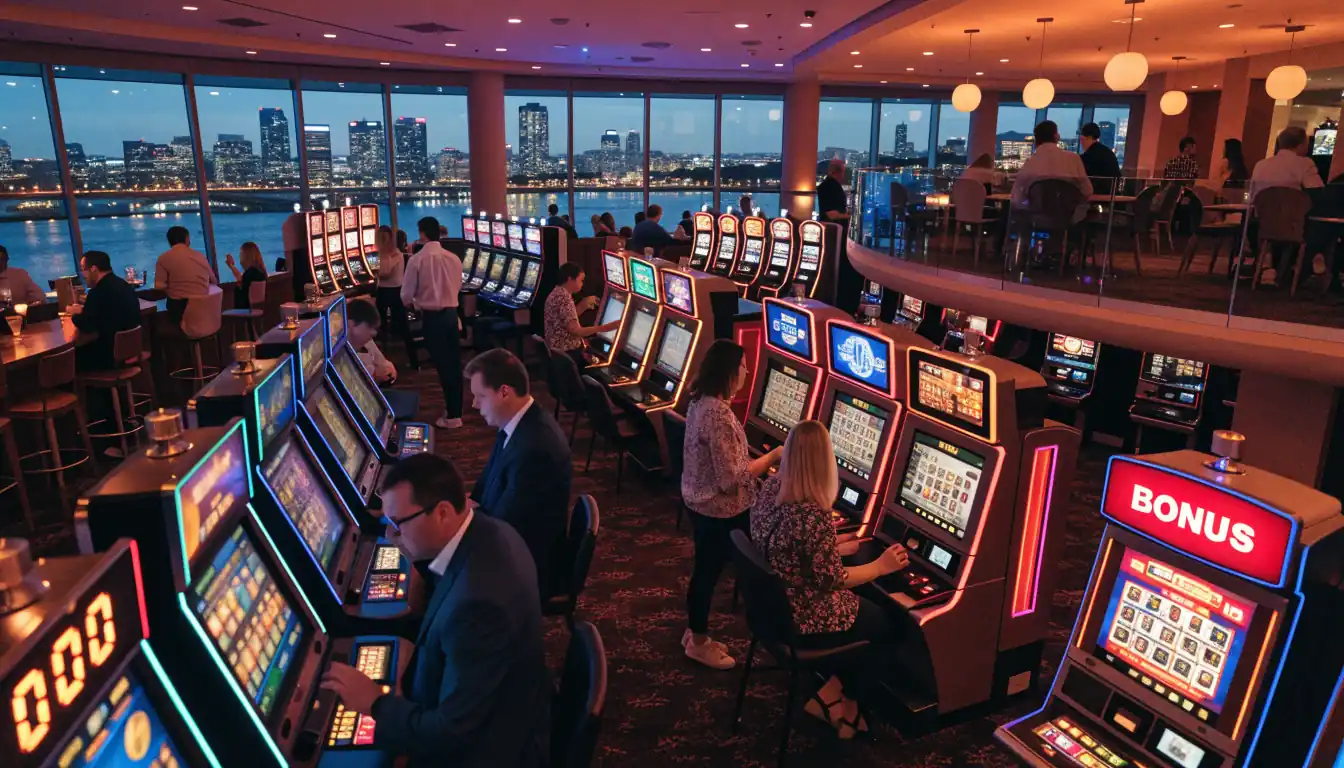
Most of the floor space in a modern Brisbane venue, though, is given over to video pokies — five-reel machines built on digital screens rather than mechanical reels, running anywhere from a handful of paylines up to systems that pay on clusters or "ways" rather than fixed lines at all. This is where the bulk of contemporary design energy goes, and it shows in how different two video pokies can feel despite sitting side by side.
Simple three-reel machines with a single payline, offering quick results and no bonus features.
Five-reel video machines with multiple paylines, bonus rounds, and adjustable volatility.
A five-reel video machine typically carries more symbols, more paylines, and consequently more possible winning combinations than anything reel-based ever could. That extra complexity is what allows for bonus rounds — free spin sequences, pick-a-prize screens, gamble features where a player can double a small win by guessing a card colour. None of that is possible on a three-reel mechanical layout; there simply isn’t room in the mathematics.
What separates one video pokie from another, more than anything else, is volatility — how often it pays versus how large those payments tend to be when they land. A low-volatility machine returns small wins frequently, which keeps a session ticking along without much drama. A high-volatility machine might sit quiet for long stretches and then deliver a disproportionately large result out of a bonus feature. Venues tend to stock a spread of both, because the players chasing a long, steady session and the players chasing one big moment are rarely the same people, and a good floor tries to keep both types of player in the building.

Themes: The Part That Actually Sells the Machine
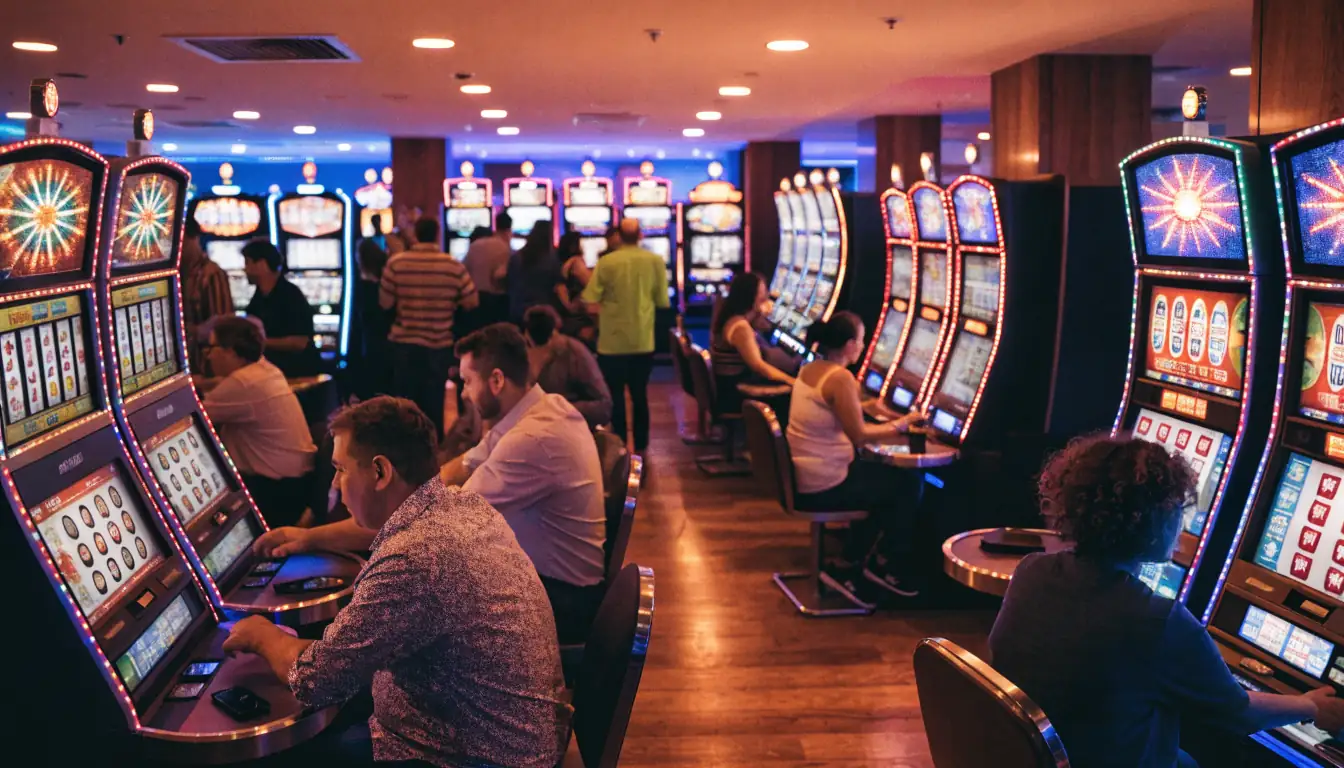
If the mechanics are the engine, the theme is the paint job — and in an industry this competitive, the paint job matters more than manufacturers like to admit out loud. Every pokie on a Brisbane floor is wrapped in a theme, and the themes fall into recognisable buckets that repeat across manufacturers because they’re proven to hold attention.
Ancient civilisations — Egypt, Greece, Rome — remain a constant. Adventure and treasure-hunting themes, animal and wildlife themes, mythology, and straightforward fruit-machine nostalgia all have their own permanent shelf space. Increasingly, though, cabinets are built around licensed intellectual property. Some Australian pokies are based on popular TV shows and movies, which is a deliberate strategy rather than an accident — a recognisable face or franchise logo on a cabinet does a lot of the marketing work that a generic Egyptian-themed machine has to do through gameplay alone. A player walking past a wall of forty machines is far more likely to sit down at the one built around something they already recognise.
None of this changes the underlying mechanics. Strip away the graphics and the licensed characters and you’re left with the same reel or video structure underneath — theme is a wrapper, not a game type. But it’s worth being honest about why the wrapper exists: it’s there to get you to sit down, and it works.
High Volatility
Machines with high volatility can go long without payouts and then deliver large wins, risking significant bankroll loss.
Gameplay Mechanics, Piece by Piece
Paylines and ways to win. A payline is a fixed pattern across the reels that a matching combination of symbols has to fall on to trigger a payout. Older and simpler machines run one line. Modern video pokies can run dozens, or dispense with lines entirely in favour of a "ways" system, where matching symbols pay regardless of position as long as they appear on adjacent reels. More paylines generally means more frequent small wins, spread across a wager that’s divided among all of them.
Wild symbols. A wild substitutes for other symbols on the reel to complete a combination that wouldn’t otherwise land. Almost every video pokie has one; the mechanical three-reel machines rarely bother, since the maths doesn’t leave room for it.
Scatter symbols. Unlike ordinary symbols, scatters don’t need to land on a payline to count — they pay, or trigger a feature, based purely on how many appear anywhere on the screen. Scatters are usually the key that unlocks a free spins round.
Free spins and bonus rounds. Triggered by scatters or a dedicated bonus symbol, these give a set number of spins without further wagering, often with an added multiplier or an expanded reel set that isn’t available in the base game. This is where a lot of the volatility in a video pokie actually lives — the base game might be fairly flat, with the free spin feature doing the heavy lifting on larger results.
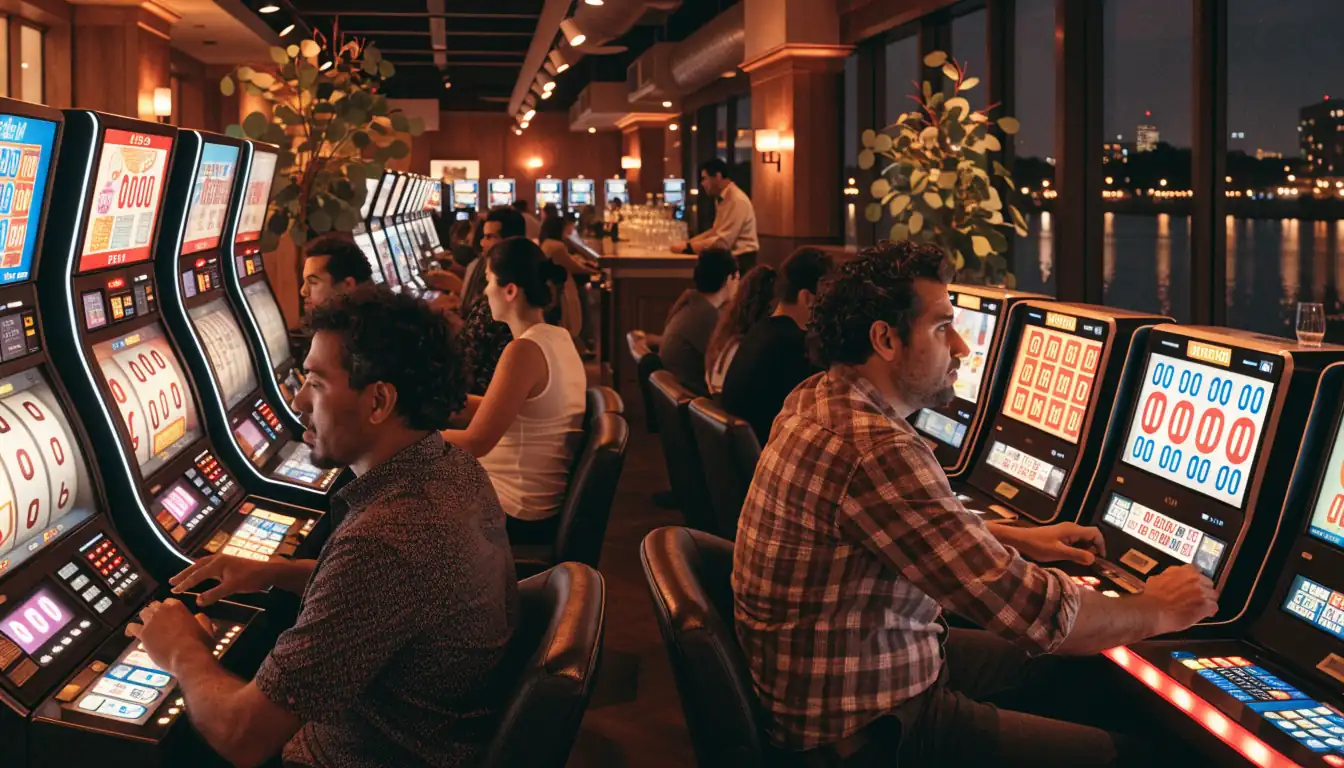
Multipliers. These increase the value of a win by a fixed factor, and can be attached to a single spin, a whole free spins round, or stack progressively as a bonus feature continues.
Progressive elements. Some machines link a small portion of every wager across a bank of cabinets into a jackpot that grows until it’s won. Not every venue runs these, and not every pokie on a progressive-linked floor is part of the same jackpot pool — it depends on the manufacturer’s network and how the venue has the machines configured.
None of these features is unique to any one theme or cabinet brand — they’re building blocks that get combined differently machine to machine, which is why two five-reel video pokies sitting next to each other can feel completely different to play despite sharing the same broad category.
Cashless Play on the Floor
One shift that’s changed the physical experience of playing in Brisbane venues is the move toward cashless systems — machines and venues set up so a player loads funds onto a card or account rather than feeding notes and coins directly into the cabinet. It changes the rhythm of a session: no trip to the change machine, no handling of coins, and a running balance that’s visible and trackable rather than represented by a stack of credits that resets every time you cash out. Whether a given venue has moved to this model, and how far, varies from club to club and pub to pub across the city — it’s not a uniform rollout, and a player used to one venue’s system shouldn’t assume the next one works identically.
Cashless systems let players load funds onto a card or account, removing the need for coins and speeding up play.
Venue Type Changes What You’re Playing
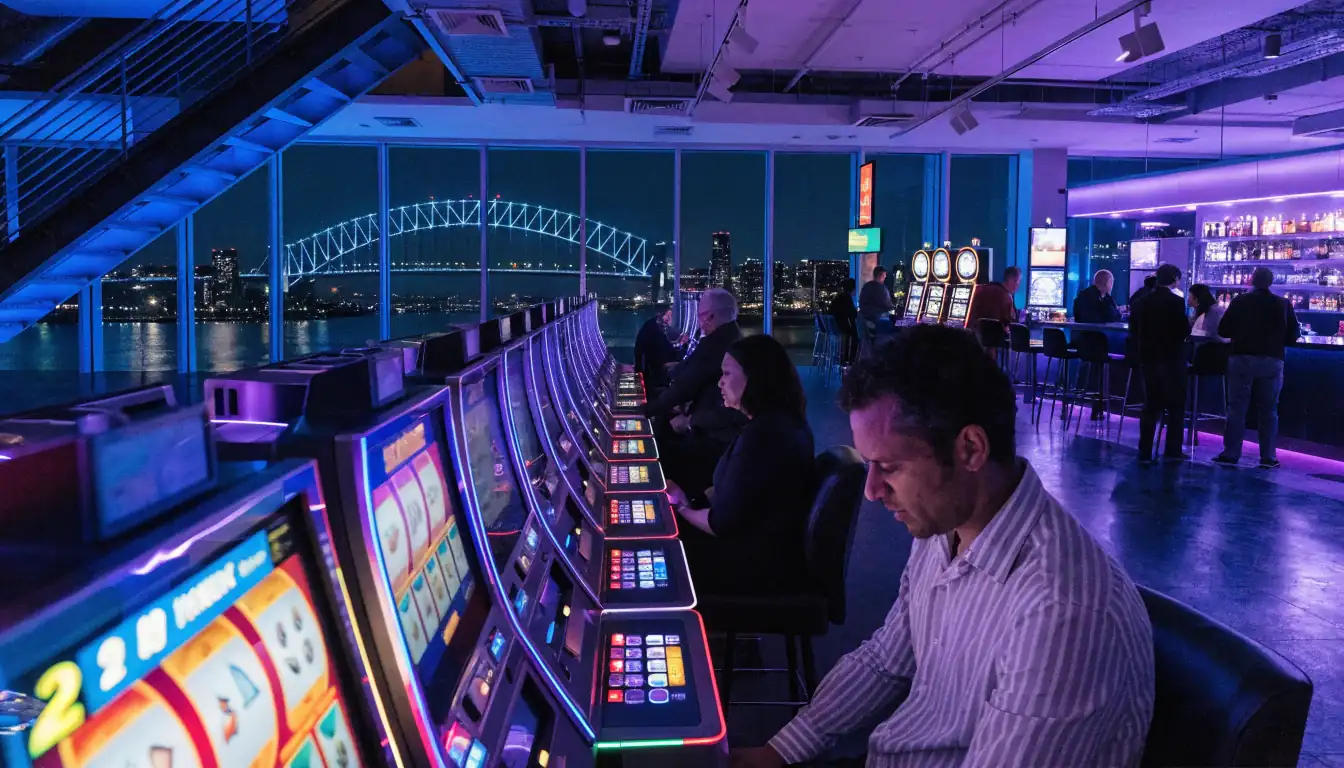
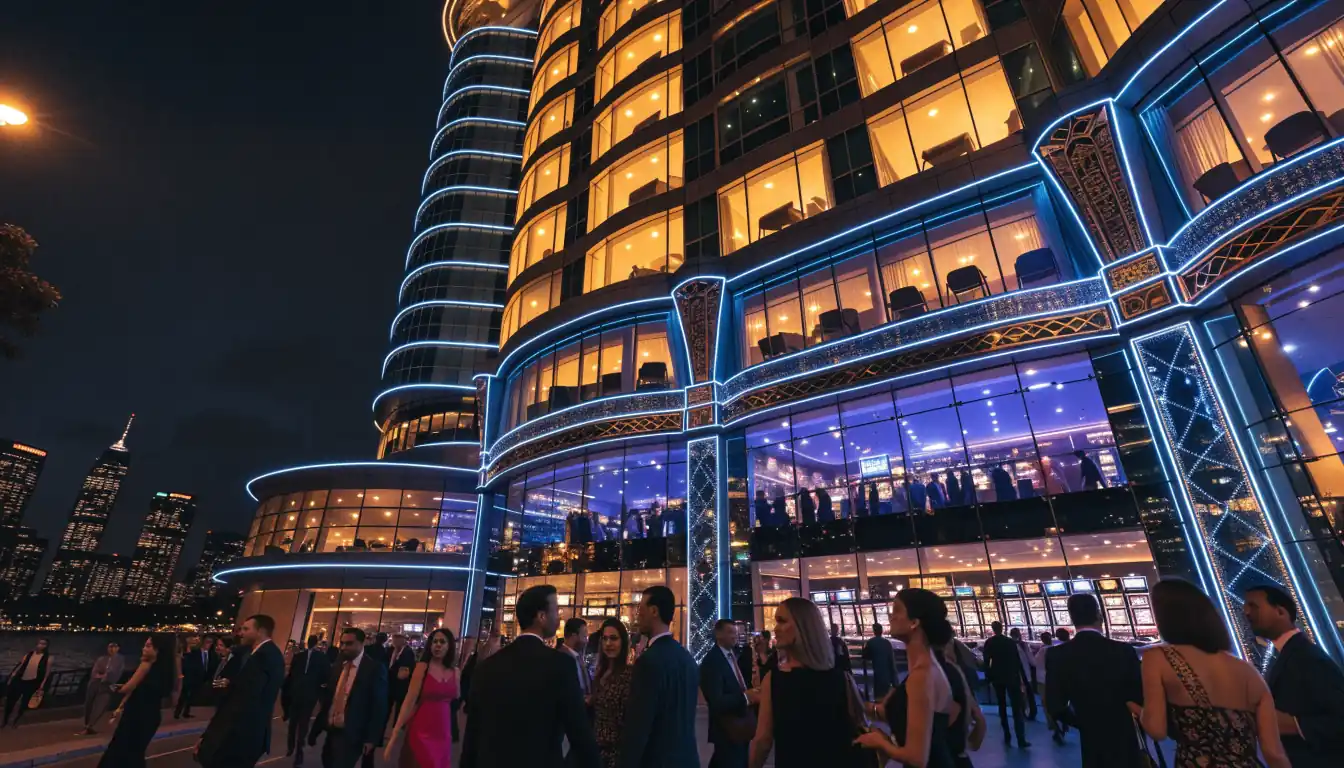
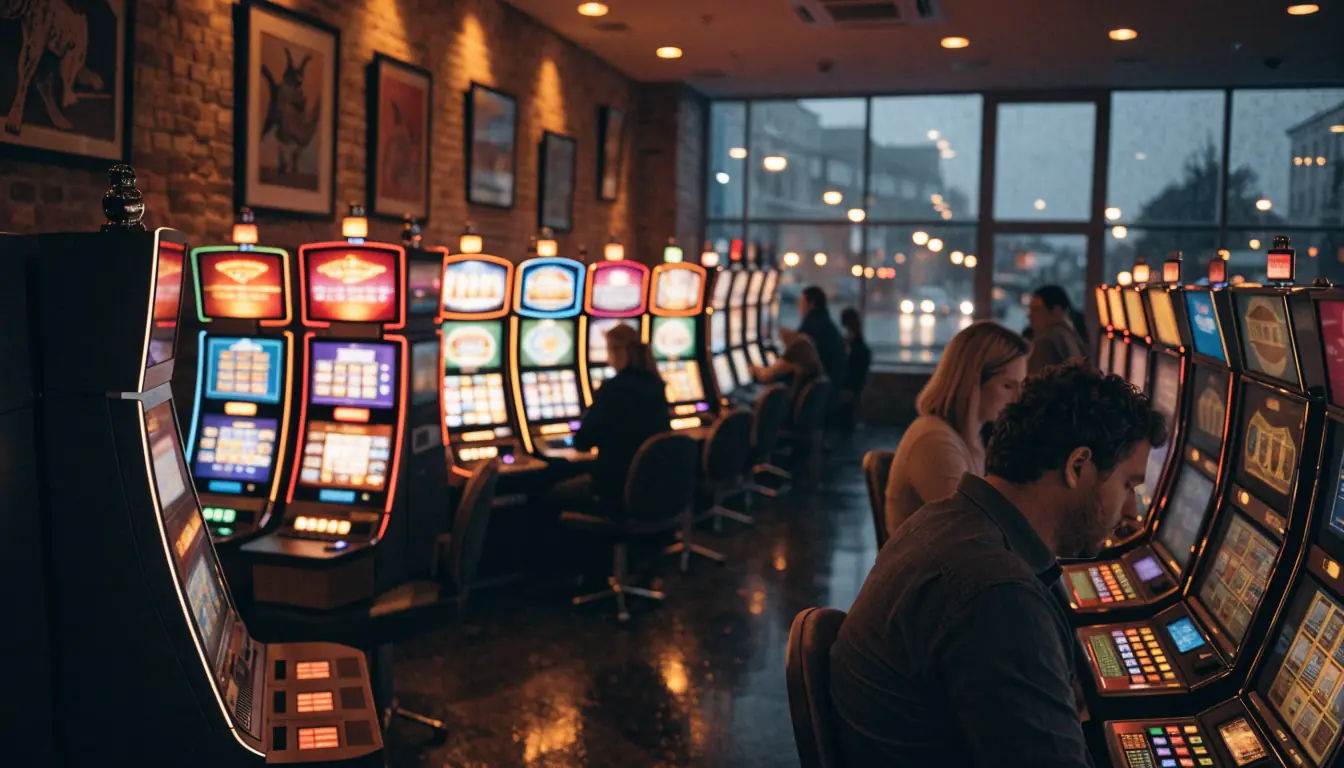
It’s worth separating two things that get blurred together constantly: the type of pokie, and the type of venue it sits in. A club in South Brisbane, a hotel on the Northside, and a pub near Southbank can all carry the same manufacturer’s cabinet, but the mix on the floor — how many reel machines versus video pokies, how many themes, whether there’s a bank of linked jackpots — is a decision each venue makes independently based on its licence, its floor space, and its regular crowd. There’s no single Brisbane standard; a venue built around older regulars might keep more three-reel machines in rotation than one aimed at a younger, higher-turnover crowd.
Trading hours are the other variable that gets conflated with the machines themselves. Some venues run extended hours, and the popular framing of "24 hour pokies" gets thrown around loosely — but hours are a function of the individual venue’s licence and operating decisions, not a property of the pokie itself. A machine doesn’t change what it is because the doors are open at 3am instead of closing at midnight; it’s still the same reel structure, the same pay table, the same volatility profile, running on the same clock as every other cabinet of that model in the state.
How This Differs From What’s Online
Everything described above is physical: a cabinet, a screen, a room, a licensed venue operating under state and territory rules that govern land-based gaming floors. That’s a genuinely separate regulatory track from anything played over the internet. Land-based venues answer to state government regulators and law enforcement bodies, and that oversight has nothing to do with the federal framework — built around the Interactive Gambling Act — that governs online gambling in Australia. The two systems don’t overlap, and conflating them is one of the more common mistakes players make when they assume a rule that applies on a club floor also applies to a website, or the reverse.
The federal law itself has an odd history worth being upfront about, because sources don’t agree on the starting point. Some material refers to a 1997 Act prohibiting the provision of online casino games to Australian residents; the version more commonly cited today is the Interactive Gambling Act 2001, which is the one still in force and the one enforced by the Australian Communications and Media Authority. Whichever year it’s traced to, the substance of the law hasn’t changed: online casino-style games — slots, poker, blackjack, roulette — are prohibited from being offered to people in Australia, while sports betting online remains legal under state and territory licensing. That distinction, and what it means for how pokies actually reach players through a screen rather than a cabinet, is the subject the next section takes on directly.
Legal Difference
Land‑based pokies are regulated by state licences, while online pokies operate under offshore licences and are not covered by Australian gambling regulators.
What matters here, before moving into that territory, is just this: a pokie in a Brisbane club and a "pokie" on a screen share a name, a general shape, and not much else once you look at the rules sitting underneath each one. Same word. Different world.
A Note on Software Behind the Scenes
Even within land-based venues, the machines themselves are built by a relatively small number of manufacturers and software providers whose products circulate across many venues rather than any one club building its own games from scratch. That’s true across the Australian market broadly — many software providers supply the machines that end up on club and pub floors, and a player who’s learned the feel of one manufacturer’s video pokie in one venue will often recognise the same mechanics, the same bonus structure, the same feel under a different theme somewhere else entirely. It’s less that every venue has its own signature, and more that the same handful of engines get reskinned constantly. Recognising that is, honestly, one of the more useful things a regular player picks up over time — the theme changes, the machinery underneath usually doesn’t.
Online Casino Pokies in Brisbane: Platforms, Access, and Regulations
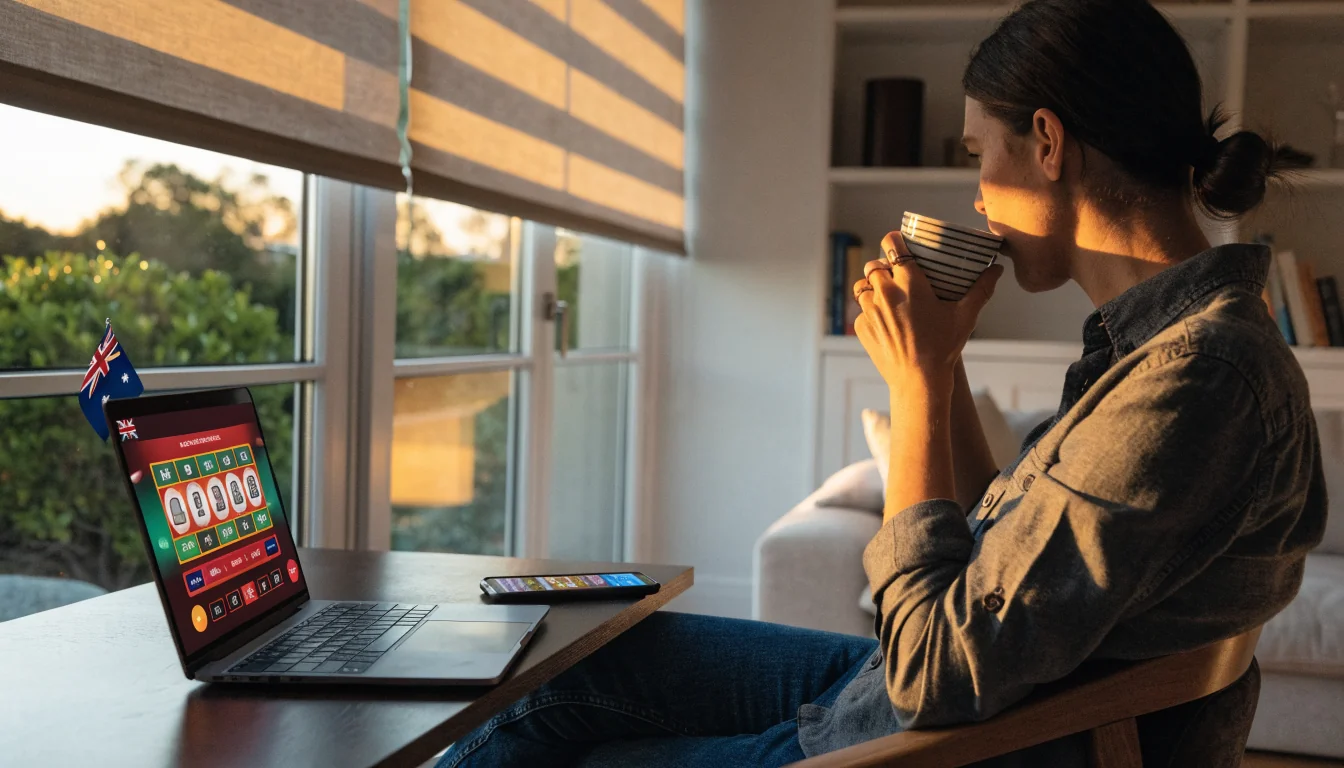
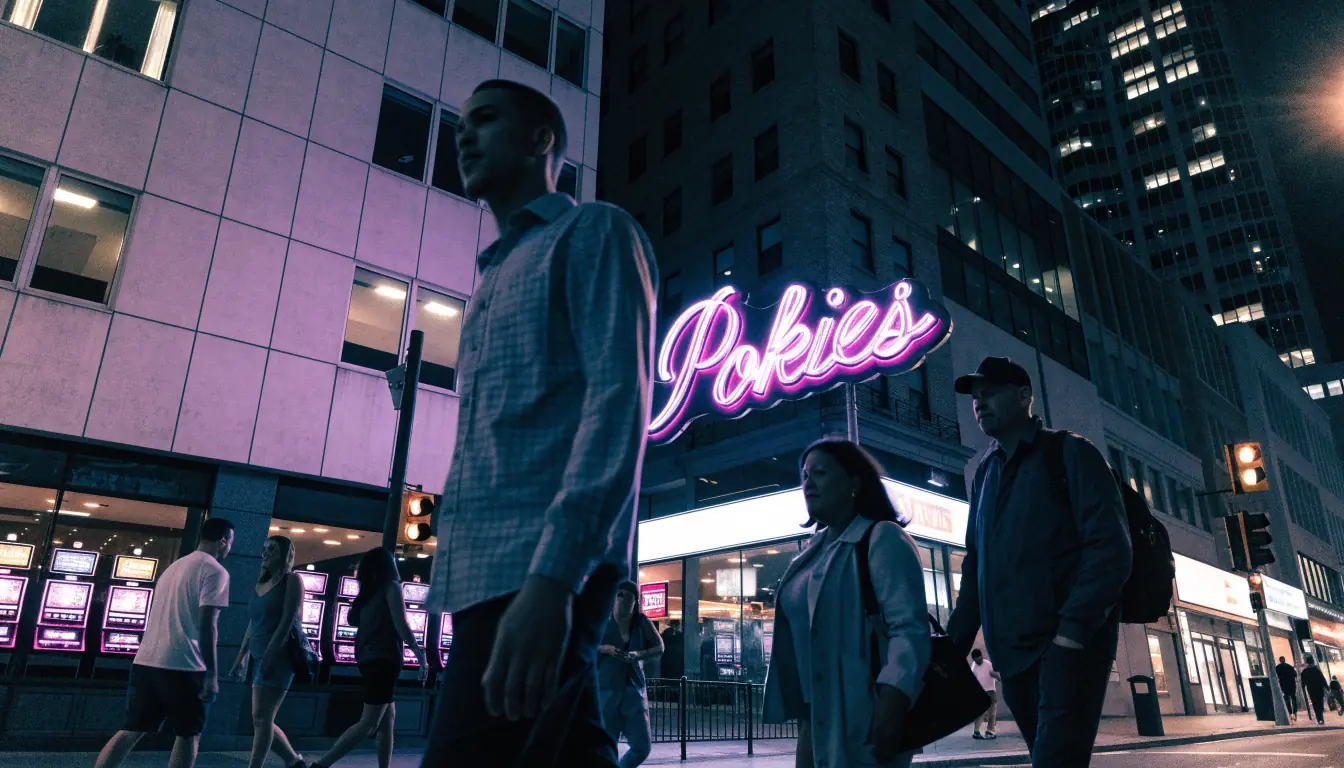
There is no such thing as a Brisbane-licensed online pokies site. That surprises people who assume the Crown building on Queen Street has a digital twin somewhere. It doesn’t, and it can’t — not legally, not under any Australian licence. Everything that looks like an online casino serving Queensland players is running on a licence issued somewhere else entirely.
Here’s the part that gets lost in the fine print: playing at one of these offshore sites isn’t illegal for the person sitting at the laptop. The Interactive Gambling Act 2001 — the Commonwealth law that shapes all of this — was built to go after operators, not the people using their platforms. The Australian Communications and Media Authority enforces that Act, and its focus sits squarely on the businesses offering the games, not on individual accounts logging in from a Brisbane address.
Where the platforms actually sit
The sites Brisbane players find themselves on are licensed abroad. That’s not a loophole dressed up as a feature — it’s the entire structure. No domestic body issues licences for online casino games, so every operator serving Australian traffic is doing so from a jurisdiction with its own rules, its own oversight, and its own idea of what "responsible" looks like. Reading the footer of one of these sites tells you more about where the company is legally answerable than any marketing copy will.
This is also why the usual advice — "check the operator’s licence in the local register" — doesn’t apply here. There’s no local register to check. The licence, if disclosed, points overseas. What’s worth checking instead is whether the platform is straightforward about that fact or buries it.
Getting online: no real friction
Technically, access is simple. Australian-facing platforms are built to run cleanly on desktop and mobile, with no meaningful gap in stability between the two. I’ve moved a session between a laptop and a phone mid-play more than once without the interface stumbling. That part of the industry solved itself years ago.
The games themselves come from a wide bench of software studios — Australian-facing sites don’t rely on one supplier, they stitch together libraries from several, which is part of why catalogue size varies so much from one platform to the next even when the underlying game pool overlaps.
The enforcement gap, plainly
ACMA has the power to order Australian internet providers to block offshore gambling domains, and it uses that power. What it doesn’t have is the ability to shut an offshore operator down at the source, or to compel it to change its terms. That split — blocking access on one side of the border, zero jurisdiction on the other — is the actual shape of "regulation" here. It’s not a gap that gets mentioned in a welcome banner.
State-level bodies like Liquor & Gaming NSW or Queensland’s own regulators sit in a similar position: real authority over land-based venues and locally licensed wagering, effectively none over a site hosted and licensed offshore. Anyone expecting a Brisbane regulator to arbitrate a dispute with an offshore pokies operator is expecting something the system isn’t built to provide.
None of this is a reason to treat every offshore platform as identical or interchangeable — payout handling, verification steps, and support quality all differ. But the legal skeleton underneath them is the same for all of them: an overseas licence, a federal law that targets the operator rather than the player, and a regulator whose main tool is blocking, not correcting.
Brisbane Pokies Payout Percentages: What Players Should Expect
Payout percentage is the number everyone asks about and nobody puts on a poster. There’s no public register listing return-to-player figures for individual pokies available to Brisbane players — no regulator here publishes that data, and no operator is obliged to display it. What determines the number sits with the software provider, not the venue or the platform showing the game.
Take NetEnt, licensed in the UK: its games are built to a specification set under that licence, which is a different regime entirely from anything governing land-based machines in Queensland. A pokie licensed in one jurisdiction and reskinned with a TV or movie theme for the Australian market doesn’t inherit a new percentage just because the branding changed — the math sits underneath the theme, untouched by it.
So the honest position is this: nobody centrally reports Brisbane-specific RTP ranges. Anyone quoting a market average is quoting a guess dressed as a fact.