
Best Pokies in South Australia: Types, Payouts, Access
 Available in US
Understanding Pokies in South Australia: Types, Mechanics, and Player Considerations
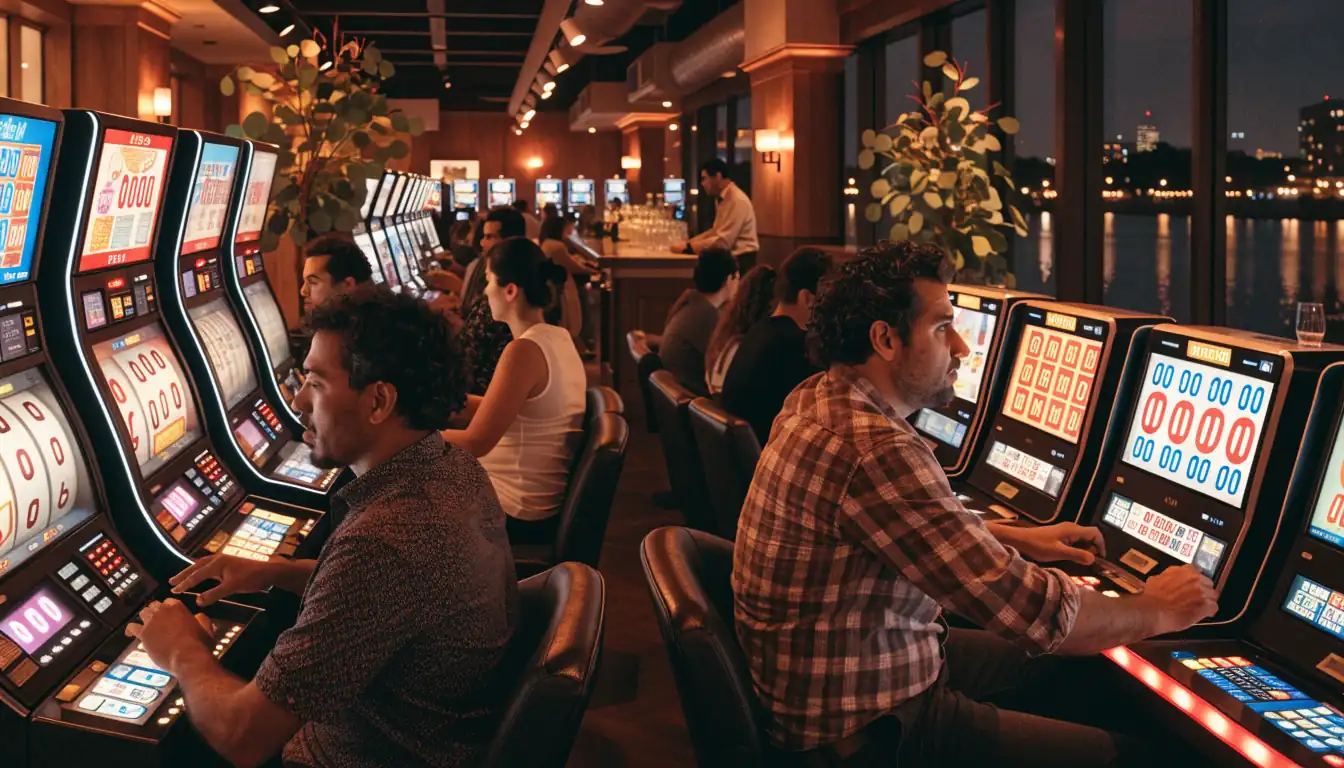
Walk into any venue with a gaming licence across Adelaide’s suburbs or out toward the Riverland, and you’ll find rooms full of machines that look nothing alike but run on the same handful of principles. I spent enough years around gaming floors to know that most players never ask how the box actually decides what it pays — they just know some machines feel "hot" and some feel "cold." Neither of those words means anything. What matters is what’s actually built into the game, and that’s what this section is about.
South Australia’s venues — pubs, clubs, licensed premises — run land-based pokies under state gaming rules, and the machines themselves share a lineage with games you’d recognise from digital platforms. Reel-based mechanics, simple to approach, wildly varied in what they offer once you look past the spinning symbols. That’s the whole appeal of pokies as a category: anyone can push a button, but the machine underneath that button can be built a hundred different ways.
Before you spin the reels at any pokies site in South Australia, it helps to see how each operator’s licensing, welcome offer and deposit terms actually stack up.
License: Curacao – Antillephone N.V. (Versus Odds B.V.) · Bonus: up to EUR 2,000 across 5 deposits + 200 free spins · Min. deposit: EUR 20 Licensed under Curacao’s Antillephone framework, this operator backs its pokies lineup with a multi-deposit bonus package worth up to EUR 2,000 plus 200 free spins, accessible from a EUR 20 deposit.
Bonus: up to A$750 + 50 jackpot spins, 35x wagering · Payout speed: crypto ~90 minutes, fiat 1-5 days · Min. deposit: A$30 Offers a bonus up to A$750 with 50 jackpot spins on 35x wagering, and stands out for fast crypto payouts around 90 minutes alongside a low A$30 minimum deposit.
License: Curacao eGaming (Hollycorn N.V., since 2017) · Bonus: 225% up to A$1,540 + 600 free spins across 4 deposits, 20x wagering · Min. deposit: A$20-30 (depends on the offer) A Curacao-licensed operator active since 2017, offering a 225% bonus up to A$1,540 with 600 free spins spread across four deposits at a comparatively easy 20x wagering requirement.
Bonus: up to A$7,500 + 550 free spins across 10 deposits, 50x wagering · Payout speed: crypto under 1 hour, PayID 1-3 business days · Min. deposit: A$20 (A$30 to qualify for the bonus) Features a substantial welcome package up to A$7,500 with 550 free spins over ten deposits, plus notably quick crypto withdrawals under an hour and PayID processing within a few business days.
License: Curacao Gaming Control Board · Bonus: up to A$5,000 + 400 free spins Licensed by the Curacao Gaming Control Board, this operator pairs its pokies offering with a bonus of up to A$5,000 and 400 free spins.
License: Curacao Gaming Control Board OGL/2023/174/0082 (Dama N.V.) · Bonus: up to A$5,000 + 300 free spins across 4 deposits Holding a Curacao Gaming Control Board license under Dama N.V., it provides a bonus up to A$5,000 with 300 free spins distributed across four deposits.
License: Curacao · Bonus: 100% up to A$500 + 200 free spins, 10x wagering · Payout speed: crypto 30-60 minutes, fiat 1-5 days · Min. deposit: A$10 A Curacao-licensed site with a straightforward 100% bonus up to A$500 and 200 free spins on just 10x wagering, plus fast crypto payout times and a low A$10 minimum deposit.
License: Curacao eGaming OGL/2023/174/0082 (Dama N.V.) · Bonus: up to A$10,000 + 500 free spins across 4 deposits · Min. deposit: A$15 Licensed under Curacao eGaming via Dama N.V., this operator offers one of the larger bonus packages listed, up to A$10,000 with 500 free spins across four deposits, with a low A$15 minimum deposit.
License: Curacao OGL/2024/1335/0780 · Bonus: up to A$1,000 + 150 free spins, wager-free · Min. deposit: EUR 20 Licensed under a current Curacao permit, it offers a wager-free bonus up to A$1,000 with 150 free spins, a rare feature that removes wagering conditions entirely.
License: Curacao Gaming Control Board OGL/2023/176/0095 (Hollycorn N.V.) · Bonus: up to A$11,000 + 300 free spins (code NEO100) Licensed by the Curacao Gaming Control Board through Hollycorn N.V., it offers one of the largest bonuses on this list, up to A$11,000 plus 300 free spins via a bonus code.
The Basic Machine: What’s Actually Spinning
A pokie, at its core, is a reel-based casino game. Rows of symbols, a paytable, a button. That simplicity is the point — it’s why the format has survived essentially unchanged in concept for decades while everything around it (the cabinets, the screens, the math models) has been rebuilt from scratch multiple times over.
What’s changed is the mechanics sitting behind that simple front end. Modern pokies — whether you’re standing at one in a licensed venue or looking at their digital equivalents — are governed by a random number generator that determines every outcome independently. No memory, no pattern, no "due for a win." Each spin is its own event. I’ve had operators tell me straight that the RNG doesn’t know or care what happened on the last hundred spins, and that’s not a marketing line — it’s how the mathematics works.
Behind that RNG sits a set of numbers that actually tell you something useful, if you know where to look. Three of them matter more than the rest.
RTP: The Number That Actually Matters
RTP — Return to Player — is a long-term theoretical measure of how much a game returns over many spins. Not your session, not your night out, not even your month. It’s calculated across millions of spins in testing, and it tells you what percentage of all money wagered on a game theoretically comes back to players over that enormous sample size.

Say a pokie carries a listed RTP figure. That number is baked into the game’s math model at the design stage — it’s not something that drifts based on how busy the venue is or what time of day it is. The house edge is just the flip side of that same number.
Here’s where players get it wrong more often than not: they treat RTP as a promise about their own session. It isn’t. RTP says nothing about whether you win in the next twenty minutes. What it does tell you, reliably, is which games are mathematically friendlier over time and which ones are quietly stacked against you.
The line I’d draw, and the one worth remembering: avoid pokies with an RTP below 96%. Below that threshold, the game is taking a bigger cut of long-term turnover than the better-designed titles on the floor, and there’s no volatility profile or bonus feature that changes that basic arithmetic.
On the other end, a handful of titles publish RTP figures that sit clearly above the pack. Merge Up runs at 97.25%, and Snoop Dogg Dollars sits at 97.00%. Neither number guarantees anything about a given session, but both sit comfortably above the 96% line, and that’s the kind of detail worth checking before you commit real money to a machine rather than after.
Playing pokies with an RTP below 96% is a mathematically poor choice and will erode your bankroll faster than higher‑RTP machines.
Volatility: The Shape of the Ride, Not the Size of It
If RTP tells you how much a machine gives back over the long run, volatility tells you how it doles that return out. Two games can carry near-identical RTP figures and feel completely different to play, because volatility describes how a pokie tends to pay — not how much, but in what pattern.
Low volatility pokies offer frequent but smaller wins. You’ll see your balance tick up and down in small increments, rarely dropping to zero for long stretches, rarely spiking into anything dramatic either. This is the profile suited to players who want their session to last, who’d rather watch numbers move steadily than gamble on one big swing.
High volatility pokies take the opposite approach entirely — an all-or-nothing structure with massive wins sitting at the far end of long dry stretches. These are the machines that can eat a bankroll in silence for an extended run and then pay out in a way that makes the drought worth it, or that simply don’t pay out during the session at all. There’s no dishonesty in that structure — it’s disclosed in the math model — but it’s a different kind of gambling than the low-volatility version, and conflating the two is how players end up disappointed by a game that was never built to behave the way they expected.

Somewhere between those two extremes sits what the industry calls a balanced pokie — one with a hit frequency between 25% and 35%. That figure describes how often a spin returns any win at all, regardless of size, and games sitting in that band tend to feel neither punishing nor overly generous. They’re the middle ground, and a lot of the most popular titles on any gaming floor sit somewhere in that range because it’s the profile most players tolerate best over a long session.
None of this is guesswork if you know where to check. Reputable providers publish volatility ratings alongside RTP, usually on a simple low-medium-high scale, sometimes with more granular numeric ratings underneath. Ignore that information and you’re choosing a machine based on cabinet art and sound effects, which tells you nothing about how it actually behaves.
Reading a Pokie Before You Play It
Every legitimate pokie carries a small set of published figures that, taken together, describe the whole game before you’ve spent a cent on it.
| What to check | What it tells you |
|---|---|
| RTP percentage | Long-term theoretical return; below 96% is a poor bet by design |
| Volatility rating | Whether wins come often and small, or rarely and large |
| Hit frequency | How often any win lands, win size aside |
| Max win multiplier | The ceiling on what a single spin can pay |
| Provider name | Who built the math model and whether it’s independently audited |
That last row matters more than most players give it credit for. Australian-friendly platforms vary widely in the software they offer, and the provider behind a game shapes almost everything about how it plays — not just the graphics, but the underlying math, the bonus structures, and increasingly, features that didn’t exist on gaming floors a decade ago.
The Providers Actually Building These Games
I’ve watched the software side of this industry change faster than the venues themselves. A pokie in 2026 isn’t built the same way one was built in 2015, and the differences aren’t cosmetic.
Pragmatic Play has leaned hard into extreme-multiplier design with its 1000 series, offering multipliers up to 1,000×. That’s a "max win" figure, not an RTP figure — it describes the ceiling on a single spin under ideal circumstances, which is a different thing entirely from the everyday return profile of the game. Worth knowing the distinction before assuming a big headline multiplier says anything about how the machine plays on an average night.
Known for extreme‑multiplier series (up to 1,000×) and high‑volatility titles.
Pioneer of Provably Fair technology, allowing players to verify individual spin outcomes.
Focuses on live‑dealer experiences and AR‑enhanced tables, complementing its slot portfolio.
Offers omnichannel sync, letting progress carry between online and land‑based terminals.
BGaming pioneered Provably Fair technology, a system that lets a game’s fairness be independently verified through cryptographic proof rather than taken on trust. It’s a technical innovation that started in the crypto-adjacent corner of the industry and has since become a broader signal of transparency — a provider building Provably Fair games is one that’s put its math where players can check it, rather than just publishing a certificate and asking for faith.
Evolution Gaming works primarily in the live dealer space rather than reel-based pokies, but it’s worth knowing the name because it now provides live dealer games with augmented-reality hosts — a step beyond the standard webcam-and-croupier setup that defined live gaming for years. That’s a different product category to pokies proper, but the same provider ecosystem often sits behind both, and understanding who’s building what helps make sense of a crowded platform lineup.
NetEnt has pushed into omnichannel gaming that syncs progress across online and physical terminals — a feature that starts to blur the line between the venue floor and the screen in your pocket, letting the same game state theoretically follow a player across formats. It’s an emerging capability rather than an everyday standard across the industry, but it signals where the bigger providers are pointed.
None of this is trivia for its own sake. The provider behind a pokie determines the game’s math model, its volatility profile, whether it’s been through independent testing, and whether features like bonus buys or multiplier series are built into the title at all. Two games that look similar on a gaming floor can come from entirely different design philosophies once you know which studio built them.
Progressive jackpot pokies typically have a lower base RTP because a portion of each spin funds the growing jackpot, resulting in higher volatility.
Progressive Jackpot Pokies: A Different Kind of Machine
Sitting apart from the standard-paytable pokie is the progressive jackpot category — machines where the top prize increases over time as players keep spinning, drawing from a small percentage of every wager across a linked network of games rather than paying a fixed maximum. According to one widely cited industry review of jackpot mechanics, this structure means the advertised jackpot figure at any given moment is a moving target, climbing steadily until someone hits the triggering combination and it resets.
The trade-off with progressive jackpot pokies is baked into the math: a slice of every spin’s RTP is effectively diverted toward funding that growing top prize, which usually means the base game’s regular-paytable RTP sits a touch lower than a comparable non-progressive title. That’s not a flaw, just a structural reality worth knowing — you’re trading some of the steady, everyday return for a shot at a jackpot that dwarfs anything a standalone machine could pay.
Progressive jackpots also tend to run at higher volatility almost by definition, because the vast majority of spins feed the pool without paying the headline prize. If you’re the type of player drawn to the enormous number on the jackpot meter, that’s a legitimate reason to play — just understand you’re choosing a high-volatility structure with a specific payout shape, not a generally "better" machine.
Bonus Buy: Paying to Skip the Wait
One of the more debated mechanics on modern gaming floors and their digital counterparts is the bonus buy feature — sometimes called a Feature Buy — which lets a player pay upfront to trigger a game’s bonus round directly, rather than spinning toward it through normal play.

According to figures reported by one industry source, a Feature Buy can increase a game’s RTP by 0.5%–1.5% over the base game, and it typically costs around 100 times the current bet to activate. Read that carefully: it’s a reported figure from a single source describing how one class of games tends to be structured, not a fixed rule that applies to every bonus buy on every machine. The mechanic varies from title to title and provider to provider, and the actual cost-to-RTP relationship on any specific game is set by that game’s own published rules, not by an industry-wide standard.
What’s consistent is the basic trade being offered: skip the grind of spinning toward a bonus round, pay a lump sum instead, and get straight to the feature that usually carries the game’s biggest win potential. Whether that trade is worth it depends entirely on the individual player’s bankroll and appetite for variance — spending a large multiple of your base bet in one go is a different kind of decision than spinning steadily and hoping a bonus lands naturally.
Turbo Play and Side Bets: Speeding Up and Layering On
Two other mechanics show up often enough on modern pokies to be worth naming plainly.
Turbo play speeds up the animation and spin cycle, letting a player push through more spins in the same amount of time. It doesn’t change the RTP or the odds on any individual spin — the math underneath is untouched — but it does change the pace at which a bankroll moves through the machine, for better or worse depending on how the session is going.
Illegal Online Play
Australian law prohibits operators from offering online pokies to residents; using offshore sites can expose you to unregulated risk and potential legal issues.
Side bets are additional wagers layered on top of the main game, usually offering a separate payout structure tied to specific outcomes rather than the primary paytable. They’re a way of adding variance and options without changing the base game itself, and they’ve become more common as providers look for ways to differentiate titles that otherwise share similar core mechanics.
Hold & Win: A Feature Worth Understanding on Its Own Terms
Among the specific bonus mechanics that have become near-standard across a huge number of modern pokies is Hold & Win — a feature where certain symbols lock in place on the reels and trigger a limited number of respins, during which any further matching symbols reset that respin count and add to the total. It’s the mechanic behind a huge share of the "money symbol" style bonus rounds you’ll see across providers, and it’s worth recognising by name because it behaves consistently across most titles that use it, even when the cabinet art and theming differ completely.
Understanding Hold & Win matters because it’s usually the mechanism through which a pokie’s biggest wins land, particularly on games without a traditional free-spins bonus round. Knowing what triggers it and how the respin count resets gives a clearer read on why a session suddenly turned, rather than chalking it up to a "hot machine."
Player Considerations: What Actually Changes the Outcome
None of the mechanics above change what’s ultimately true of every pokie, land-based or otherwise: the RNG decides, and no amount of button-timing, machine-watching, or superstition alters the math sitting underneath the cabinet. What a player actually controls is which games they choose to sit down at, how they read the published figures before committing money, and how they manage the session once it starts.
That’s where responsible-gambling tools come in, and they’re worth treating as part of the mechanics rather than an afterthought bolted on for compliance. Deposit limits, reality checks, and self-exclusion options exist specifically because the format is designed to be engaging over long stretches, and a player who sets boundaries before starting a session is in a stronger position than one who decides in the moment.
A few things worth carrying onto any gaming floor, or any screen showing a pokie:
- Check the RTP before you sit down, not after. A game below 96% is a mathematically weaker choice regardless of how it’s themed or dressed up.
- Match the volatility to what you actually want from the session. Low volatility for a long, steady evening; high volatility if you’re comfortable with dry stretches in exchange for bigger potential wins.
- Understand hit frequency separately from win size. A machine hitting on every fourth or fifth spin (that 25%–35% band) plays very differently to one that pays rarely but big — even at similar RTP.
- Know what a bonus buy actually costs before using it. Read the game’s own posted terms rather than assuming a flat rule across every title.
- Recognise the provider behind the game. It tells you more about the underlying math and fairness testing than the theme ever will.
- Use the limit tools if they’re offered. Deposit limits and reality checks aren’t a sign the operator doesn’t trust you — they’re a structural safeguard against a format built to hold attention.
Fairness and Auditing: The Part Players Rarely Check
Reputable operators — the ones worth spending time with — run RNG-based games built by audited providers, and that auditing detail is not a minor footnote. Independent testing confirms that a game’s actual return matches its published RTP over the tested sample, and that the RNG isn’t skewed in ways the paytable doesn’t disclose. Provably Fair technology, the innovation BGaming brought to the wider market, takes this a step further by letting individual outcomes be cryptographically verified rather than relying purely on third-party certification after the fact.
I’d treat both as complementary rather than competing standards. Independent audits confirm a game behaves as advertised across a huge sample; Provably Fair tools let a player check an individual spin’s legitimacy in real time. A machine — or its digital equivalent — that offers neither is asking for trust it hasn’t earned.
None of this is abstract. It’s the difference between sitting down at a game because the cabinet looks appealing and sitting down at one because you’ve actually looked at what it’s built to do. Pokies remain simple to play — that’s the entire design philosophy behind the format — but "simple to play" and "understood by the player" are two very different things, and the gap between them is where most disappointing sessions actually happen.
Pokies Payout Percentages in South Australia: What Players Should Know
RTP gets thrown around as a marketing number. It isn’t one. It’s a theoretical figure — what a machine returns over a very long run of spins, not what happens in any single session. Nobody sitting at a terminal in Adelaide is going to see 96.5% land in their pocket by Tuesday.
That said, the number still matters as a filter. Below 96%, walk away. There’s no reason to feed a machine that’s built to give back less than the market average.

At the higher end, a couple of titles worth knowing: Merge Up runs at 97.25%, Snoop Dogg Dollars at 97.00%. Neither guarantees a win on any given spin — that’s not what the figure claims to do. What it tells you is where the odds are stacked slightly less against you, across thousands of spins nobody will ever personally sit through.
Treat RTP as a sorting tool, not a promise.
Online Casino Pokies in South Australia: Access, Payment Methods, and Support
Land-based venues sit under state law. Offshore platforms sit under a different jurisdiction entirely, and no domestic licence covers what happens on a phone screen in Adelaide. The Interactive Gambling Act 2001 makes that plain: operators can’t lawfully offer online pokies to Australian residents. It targets the business, not the person spinning the reels — a distinction worth knowing, because it explains why offshore sites keep operating in a grey zone that no local regulator polices and no public register tracks.
That absence of a register is the first thing I’d tell anyone checking an operator’s credentials. There’s nowhere to look them up locally. Whatever licence a site displays, it’s issued somewhere else, under rules written for a different market.
What moves money, and how fast
Payment infrastructure is where the real difference between operators shows up — not in the size of the welcome offer.
PayID is the one worth understanding first. It ties a mobile number or email straight to an Australian bank account, so a deposit or withdrawal doesn’t need a card number or BSB typed out each time. Paired with Osko, transfers settle in real time, all day, every day — no batch processing, no "next business day."
Since July 2025, Australian banks have run Confirmation of Payee alongside this. When a PayID is entered on a casino’s cashier page, the system checks that the name behind it actually matches. It’s a small step, easy to miss, but it’s the difference between a transfer landing where it should and a support ticket explaining why it didn’t.
None of this replaces identity checks. Every legitimate operator still requires government-issued ID before a withdrawal clears — that’s not a formality to route around, it’s the point at which the site confirms it’s paying the right person.
On the speed question itself: the better-run sites process the large majority of payments in under fifteen minutes, using digital ID verification to skip the manual back-and-forth that used to hold withdrawals up for days. That’s the number to ask about before signing up anywhere — not the size of the match bonus, not the number of pokies titles. "Instant Payout" is a phrase every operator uses in marketing. Whether it’s true shows up the first time you try to take money out.
High-limit play and what support actually looks like
High-limit accounts exist mainly to move larger sums without friction — higher single-transaction caps, sometimes a dedicated contact instead of a shared queue. The payment rails underneath don’t change. PayID and Osko handle a large transfer the same way they handle a small one; the difference is administrative, not technical.
Support quality is easier to test than to describe. Good sites run live chat around the clock and answer in under two minutes — not as an aspiration, as a baseline. Anything slower than that on a withdrawal question is a signal, not an inconvenience.
Responsible-gambling tools sit next to all of this, not apart from it: deposit limits, reality checks, self-exclusion. On a properly run site these are a few clicks away in account settings, not buried three menus deep. Access to your own money and the ability to stop accessing it should be equally easy to find — a site that makes one simple and the other complicated is telling you something about priorities.
None of the above is a recommendation to gamble online from South Australia. It’s a description of how the payment and support layer actually works, for anyone deciding whether the mechanics behind the marketing hold up.
Prepared by the Casino iPad Info editorial staff.