
Best RTG Casinos in Australia: Full Guide
 Available in US
Table of Contents
- RTG Casinos Available to Australian Players
- RTG Online Slots Overview
- Key Features of RTG Slot Games
- Free RTG Slot Options and Fair Play
- Verified RTG Casino List and Fairness Certification
- Real Money Play: Deposits and Payout Timelines
- New RTG Slot Releases and Special Features
- Variety of RTG Table and Specialty Games
- RTG Slot Demos: Trying Before You Bet
- Australian RTG Casinos: Local Support and Security
RTG Casinos Available to Australian Players
REAL-TIME Gaming has been building casino software since 1998. That’s long enough to have outlasted several waves of competitors who came in with flashier marketing and folded within a few years. The platform’s age shows up less in the graphics — which have been refreshed plenty of times — and more in how the backend behaves: the cashier works the way it worked the year before, the game math doesn’t get quietly retuned, and the bonus terms follow a template the operators clearly didn’t rewrite from scratch. When something is that old and still running, it usually means the plumbing was solid to begin with.
For Australian players, "RTG casino" doesn’t mean a company you sign up with directly. RTG builds the games and the systems; individual operators license that software and run their own casino brands on top of it. So the question isn’t really "is RTG legal" or "is RTG safe" — RTG is a supplier, not a bookmaker. The real question is which operators are running RTG’s platform, and what each one does with it once the license is in place.
With so many RTG-powered casinos competing for Australian players, it helps to see at a glance how each site’s licensing, bonus structure and deposit terms actually stack up before you sign up.
License: Curacao – Antillephone N.V. (Versus Odds B.V.) · Bonus: up to EUR 2,000 across 5 deposits + 200 free spins · Min. deposit: EUR 20 Licensed by Curacao’s Antillephone N.V. framework, this operator offers a multi-deposit bonus package worth up to EUR 2,000 plus 200 free spins, with a modest EUR 20 minimum deposit to get started.
Bonus: up to A$750 + 50 jackpot spins, 35x wagering · Payout speed: crypto ~90 minutes, fiat 1-5 days · Min. deposit: A$30 This site pairs a bonus of up to A$750 with 50 jackpot spins under 35x wagering, and stands out for fast crypto payouts around 90 minutes alongside a low A$30 minimum deposit.
License: Curacao eGaming (Hollycorn N.V., since 2017) · Bonus: 225% up to A$1,540 + 600 free spins across 4 deposits, 20x wagering · Min. deposit: A$20-30 (depends on the offer) Operating under a long-standing Curacao eGaming license since 2017, this casino spreads a 225% bonus worth up to A$1,540 plus 600 free spins across four deposits with 20x wagering.
Bonus: up to A$7,500 + 550 free spins across 10 deposits, 50x wagering · Payout speed: crypto under 1 hour, PayID 1-3 business days · Min. deposit: A$20 (A$30 to qualify for the bonus) A generous bonus package reaching up to A$7,500 with 550 free spins across ten deposits is backed by quick crypto withdrawals under an hour and PayID processing within a few business days.
License: Curacao Gaming Control Board · Bonus: up to A$5,000 + 400 free spins Licensed under the Curacao Gaming Control Board, this casino offers a sizeable welcome package of up to A$5,000 plus 400 free spins.
License: Curacao Gaming Control Board OGL/2023/174/0082 (Dama N.V.) · Bonus: up to A$5,000 + 300 free spins across 4 deposits Holding a specific Curacao Gaming Control Board license number under Dama N.V., this operator spreads a bonus of up to A$5,000 and 300 free spins across four deposits.
License: Curacao · Bonus: 100% up to A$500 + 200 free spins, 10x wagering · Payout speed: crypto 30-60 minutes, fiat 1-5 days · Min. deposit: A$10 A Curacao-licensed casino with an accessible entry point, offering a 100% bonus up to A$500 plus 200 free spins under low 10x wagering, a A$10 minimum deposit, and fast crypto payouts within an hour.
License: Curacao eGaming OGL/2023/174/0082 (Dama N.V.) · Bonus: up to A$10,000 + 500 free spins across 4 deposits · Min. deposit: A$15 Licensed under Curacao eGaming via Dama N.V., this casino offers one of the larger bonus packages on this page, up to A$10,000 with 500 free spins spread across four deposits, plus a low A$15 minimum deposit.
License: Curacao OGL/2024/1335/0780 · Bonus: up to A$1,000 + 150 free spins, wager-free · Min. deposit: EUR 20 Under a recent Curacao license, this operator provides a wager-free bonus of up to A$1,000 plus 150 free spins, a notable feature for players who prefer no wagering conditions.
License: Curacao Gaming Control Board OGL/2023/176/0095 (Hollycorn N.V.) · Bonus: up to A$11,000 + 300 free spins (code NEO100) Licensed by the Curacao Gaming Control Board through Hollycorn N.V., this casino offers one of the largest bonuses listed here, up to A$11,000 plus 300 free spins via a dedicated bonus code.
What "powered by RTG" actually means
Under Australian federal law, no online casino — RTG-powered or otherwise — can be licensed domestically. The Interactive Gambling Act 2001 prohibits operators from offering online casino games, including slots, blackjack and roulette, to anyone in Australia. There’s no local licence to check, no domestic regulator that oversees these platforms, and no register where an Australian player could look up an RTG casino’s Australian credentials — because that credential doesn’t exist. What does exist, and what’s worth being clear-eyed about, is the separate fact that the law targets the businesses offering these games, not the individuals playing them. Australians using offshore-licensed platforms aren’t breaking the law by doing so. It’s a distinction that gets glossed over a lot in marketing copy, usually in the direction that makes the operator look more locally sanctioned than it is.
That’s the backdrop against which "RTG casino" has to be read. Every operator running this software is licensed somewhere other than Australia. The platform itself — the games menu, the RNG, the cashier — is the same core technology wherever it’s deployed. What changes brand to brand is the bonus structure, the payment options offered to Australian accounts, and how quickly support actually responds when something goes wrong with a withdrawal.

The game catalogue behind the brand name
Whichever RTG-powered operator a player lands on, the games menu draws from the same well: more than 150 unique titles spanning pokies, table games and specialty formats. That number matters more than it looks, because it’s the ceiling every RTG casino is working with — nobody’s reinventing content, they’re all drawing from the same catalogue and deciding which slice of it to feature on the homepage. A newer RTG brand with a smaller footprint might only surface a fraction of that library at launch; an established one usually has the whole menu switched on from day one.
This is also where RTG’s history becomes practically relevant rather than just a trivia point. A company that’s been developing pokies and table games since the late ’90s has had multiple console generations, currency shifts and browser standards to adapt to. The reel formats, the theming, the mobile builds — all of that has iterated over decades rather than being built once and left alone. Newer providers entering the market don’t carry that backlog of iteration; RTG does.
Cherry Jackpot: an RTG brand with its own bonus economics
Cherry Jackpot Casino is one operator running on the RTG platform, according to one industry review of the brand’s own published terms. Worth saying plainly: this is one source describing one operator’s current offer, not a market-wide standard — casino bonus structures shift often enough that what’s true this quarter may not hold the next. What’s consistent is the underlying architecture: an RTG-powered games menu, a deposit match bonus system, and the wagering conditions that come attached to any promotional credit.
Bonus Terms
The deposit match bonus is tied to wagering requirements that must be cleared before any winnings can be withdrawn, so players should read the fine print carefully.
The mechanics are the part worth understanding rather than the headline number. A deposit match bonus isn’t free money sitting in an account ready to withdraw — it’s tied to wagering requirements that have to be cleared before any of it, or the winnings generated from it, can be cashed out. Reading the fine print before opting in is the only way to know what a given bonus is actually worth to a specific playing style, and that fine print differs enough between RTG operators that no single figure can be treated as representative of the platform as a whole.
Raging Bull Casino: another storefront on the same engine
Raging Bull Casino is a second brand built on REAL-TIME Gaming software — again, according to one industry source summarising the operator’s own terms rather than an independently audited standard. It’s a useful comparison point precisely because it shows how much variation two RTG operators can carry even while running identical core technology.
Where Cherry Jackpot’s public terms describe one bonus structure, Raging Bull’s describe a different one: a 250% bonus paired with 40 free spins on Cash Bandits 2, activated with the code UNLTDPOKIESVIP, carrying a 5x wagering requirement. There’s also a separate 50% match reward on a player’s third deposit, capped at $200. None of these numbers should be read as what "RTG casinos generally offer" — they’re what one operator was offering according to one source, on one game, at one point in time. The instinct to generalise from a single promotion to the whole platform is exactly the instinct worth resisting; bonus terms are the part of any casino’s offer that changes fastest and gets rewritten without much notice.
What’s more durable than the promotional numbers is the payment side. According to the same source, e-wallet withdrawals through NETeller, Skrill and EcoPayz process instantly once approved — a detail that matters more in practice than the size of a welcome bonus, because it’s the difference between money sitting in an account for days and money actually being usable.
Reading RTG casino terms the way an operator writes them
There’s a pattern in how bonus terms get worded across RTG operators, and it’s worth naming rather than just working around. A "250%" headline is the number designed to be read first. The wagering requirement, the maximum cap, the game restrictions — those live in a second paragraph, in smaller type, and they’re the part that determines whether the headline number is realistic or decorative. None of this is unique to RTG-powered brands specifically; it’s how casino bonus copy works everywhere. But it’s worth flagging here because the platform’s age and reputation can make players assume the terms behind it are correspondingly generous. They’re not automatically anything. Each operator sets its own numbers.
What the RTG brand does guarantee — because it’s a property of the software rather than of any single operator’s marketing department — is that the games running underneath the bonus are the same certified builds regardless of which storefront is presenting them. A pokie’s reel count, paylines and RTP don’t change because a different casino brand put its logo on the lobby page. That consistency is arguably the actual value of "RTG casino" as a category: it tells a player what game engine they’re getting, even when it says nothing about what bonus terms, payment speed or support quality they’ll get once they’re inside it.
What actually differs between RTG operators, and what doesn’t
It’s tempting to write a tidy comparison table here — Cherry Jackpot versus Raging Bull versus whichever brand comes next, ranked on bonus size and withdrawal speed. That table would be more confident than the facts support. Two data points, each sourced from a single industry review of operator-published terms, aren’t enough to establish what varies systematically across the RTG operator landscape and what’s identical everywhere. Bonus percentages clearly differ. Wagering multiples clearly differ. Whether payment processing speed, customer support hours or verification requirements differ in any consistent pattern across RTG brands as a category isn’t something published sources actually settle — and pretending otherwise, with a hedge like "usually" or "typically," would be manufacturing a pattern rather than reporting one.

What can be said without hedging: every operator running RTG’s software inherits the same underlying game engine, the same RNG-driven fairness architecture, and the same broad catalogue of pokies and table games. What each operator does with the bonus terms, the cashier, and the support desk sitting on top of that engine is a decision made brand by brand — and reading one operator’s terms tells a player nothing reliable about the next one’s.
Where this leaves an Australian player choosing between them
No operator on this list holds — or could hold — an Australian gambling licence for casino games, because that licence category doesn’t exist under the Interactive Gambling Act. Every RTG casino available to Australian players is licensed offshore, and playing on one isn’t itself illegal for the individual, even though the Act prohibits the operator from marketing casino products to Australian residents in the first place. That legal architecture doesn’t change from brand to brand. What does change is the specific bonus on offer, the wagering conditions attached to it, and how the cashier is configured for Australian account holders — details that belong to each operator’s own terms page, not to RTG as a platform.
Choosing between RTG-powered brands, in practice, means reading past the size of the welcome offer and checking three things: what wagering requirement sits behind it, which withdrawal methods are actually available on an Australian-facing account, and how the operator’s own terms describe processing times. Those are the numbers that matter once the free spins are spent. The 150-plus game catalogue and the RNG certification underneath it are constants. Everything layered on top of them is a business decision, made separately by every operator wearing the RTG badge.
RTG Online Slots Overview
What separates one pokies portfolio from another usually comes down to structure, not marketing copy. RTG built its slot catalogue across three reel formats — 3-reel, 5-reel and 6-reel screens — which is a wider spread than most competing studios bother with. The 3-reel machines are the closest thing to a mechanical pokie translated onto a screen: fewer decisions, faster spins, no theme dressing required. The 5-reel format is where the bulk of the catalogue sits, and it’s the format most players mean when they say "online slot" without thinking about it. The 6-reel screens are the outlier — built specifically to host the bigger jackpot mechanics and stacked symbol features that don’t fit a narrower grid.
Theme variety is the other axis RTG plays on. The portfolio is described, without much exaggeration, as covering "games of every theme" — ancient civilisations, heist plots, holiday specials, fantasy, fruit-machine nostalgia. That breadth matters less for novelty than for retention: a catalogue this wide means a player who gets bored of one theme doesn’t have to leave the platform to find another. It’s a retention mechanic dressed up as choice, and it works because the underlying game engine doesn’t change much between skins — only the reel count, the paytable and the bonus round do.
Progressive jackpot games sit apart from the rest
Inside that catalogue, progressive jackpot games are treated as a separate category rather than just another theme. A progressive slot pools a share of stakes across the network into a jackpot that grows until someone hits it, which is structurally different from a fixed-top-prize pokie. RTG runs these across its reel formats — not confined to one grid size — so a progressive can show up on a 5-reel or a 6-reel screen depending on the title. The distinction worth remembering: a progressive’s advertised jackpot is a pooled, moving number, while a standard slot’s top prize is fixed by the paytable and doesn’t grow with other players’ bets.
Instant play, download, and mobile — three ways in, not one
RTG casinos don’t force a single access route. Three options exist side by side:
- Instant play — runs in the browser, no software installed, works the same on a laptop as it does mid-session on a phone.
- Download client — a locally installed program, historically the fuller-featured route, still offered by casinos that keep it running for players who prefer it.
- Mobile play — browser-based access tuned for phone and tablet screens, using the same instant-play engine rather than a separate app.
That third option is worth pausing on, because "mobile-compatible" gets thrown around loosely in this industry. What it actually means here is that the same RTG-powered games menu that runs on desktop instant play is accessible through a mobile browser, without a dedicated app download. No separate mobile catalogue, no stripped-down version — the reels, the paylines and the bonus rounds are the same game, just resized. That’s a meaningful difference from platforms that ship a reduced mobile library and call it parity.
What actually varies between casinos, and what doesn’t
Here’s where it gets less tidy than a features list suggests. The reel formats, the theme range, the progressive mechanics — those come from the RTG game engine itself, so they look identical wherever an RTG-powered casino turns up. What changes from one operator to the next — how a given casino badges its instant-play lobby, which subset of the 150-plus games it actually lists, how its mobile browser handles load times — isn’t something publicly documented in a consistent way. No operator publishes a side-by-side breakdown of this, and neither does any independent source I’ve come across. So rather than guess at differences that sound plausible but aren’t verified, it’s fairer to say: the game engine is shared, the storefront around it isn’t uniform, and nobody’s put out a reliable comparison of exactly how.
Reading a reel count like a spec sheet
Worth treating reel structure the way you’d treat any spec sheet — as a starting filter, not a verdict. A 3-reel game tells you the session will be quick and the paytable simple before you’ve even loaded it. A 6-reel game signals a denser feature set, usually because that’s the format chosen to carry the more elaborate bonus mechanics. None of that guarantees enjoyment. It just tells you what kind of session you’re opening before you commit spins to it.

The overview, stripped of pitch language: three reel formats, a wide theme catalogue, progressive jackpot games layered across both, and access through instant play, a download client, or a mobile browser — the same underlying titles either way. Where the actual differences between individual Australian-facing RTG casinos lie, beyond that shared engine, isn’t something the public record settles.
Key Features of RTG Slot Games
Strip away the theme and the soundtrack, and what’s left of an RTG slot machine is a fairly consistent set of numbers. That consistency is the point. Once you’ve checked the specs on one title, you can reasonably guess the shape of the next.
Take a standard RTG pokie: five reels, 25 paylines. That’s the frame most of the catalogue is built on, though the wider RTG-powered games menu also includes 3-reel and 6-reel formats for players who want something closer to a classic fruit machine or a bigger grid. Five-by-25 is the middle ground — enough paylines to make small wins land often, without the game turning into a spreadsheet.
The RTP sits at 96%. That figure is the theoretical return over a long stretch of spins, not a promise about any single session, but it’s the number worth comparing across providers before assuming one slot machine is "better" than another because of its bonus round or its graphics. A flashy wild symbol doesn’t move the RTP. Only the underlying math does.
Betting limits are where RTG keeps things narrow rather than wide. Stakes on this format run from a minimum of 0.25 up to a maximum of 6.25. That’s not a huge spread, and it tells you who the format is built for — someone spinning steadily through a session, not someone chasing a single oversized wager. Compare that range against a provider whose max bet runs into the hundreds, and the difference in intended audience becomes obvious.
What the numbers add up to
| Specification | Value |
|---|---|
| Reels | 5 |
| Paylines | 25 |
| RTP | 96% |
| Minimum bet | 0.25 |
| Maximum bet | 6.25 |
None of this is marketing copy. It’s the mechanical skeleton underneath the theme — the part that stays the same whether the symbols are cops and robbers or something else entirely. RTG’s scatter and wild mechanics vary release to release, but the reel-and-payline structure, the RTP disclosure, and the bet ceiling are the load-bearing walls.
How exactly individual RTG casinos differ from each other on top of this shared engine — bonus multipliers, wagering conditions, deposit tiers — isn’t something I’ll pretend to summarise here. Operators structure those terms independently, and no single technical spec sheet covers that ground. What’s fixed is the game itself; what’s negotiable is everything the casino wraps around it.
That distinction matters more than it sounds. A slot’s RTP and paytable are certified and don’t move once the game is live. The bonus terms attached to it at a given casino can and do. Confusing the two — assuming a generous welcome offer says anything about the game’s underlying odds — is how "great value" ends up meaning nothing at all.
Free RTG Slot Options and Fair Play
People ask about the "loosest" RTG slots or which ones pay the most, and the honest answer is: nobody outside the operator sees that data in real time, and no free-play mode will reveal it either. What free play does show you is the game itself — the reels, the bonus rounds, the pace of a session — without a wallet attached.
RTG’s free versions run on the same engine as the paid ones. Same math, same reel weighting, same bonus triggers. The difference is that no money moves. Australian players can’t legally stake real cash on these games through an onshore operator anyway, so the free mode is often the only version anyone here interacts with directly, and offshore real-money play sits in a legal grey zone the law doesn’t chase individuals over.
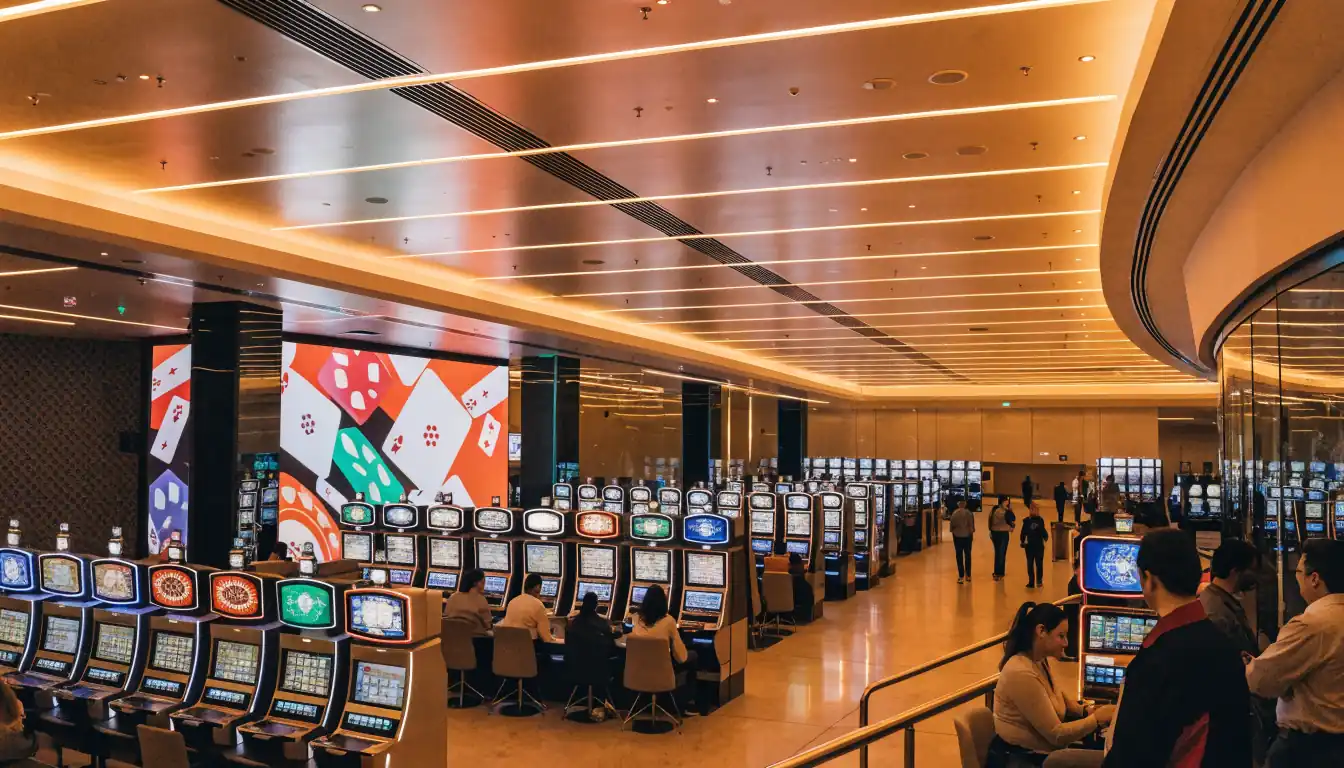
What "fair" actually means here
The term gets thrown around loosely in marketing copy, so it’s worth separating the claim from the mechanism. Every spin, whether in free mode or for stakes, runs through a Random Number Generator. That’s the piece doing the actual work: it produces the outcome before any graphics or sound plays, so the animation is theatre layered on top of a result that’s already decided. RTG applies this RNG process across its catalogue, not just the reel slots.
This is also where the specialty titles fit in. Keno draws and scratch card games use the same RNG logic as a five-reel pokie — there’s no reel, no payline, but the number-generation step is identical in principle. If someone tells you a scratch card is "more random" than a slot because it feels simpler, that’s marketing instinct talking, not mechanics.
Why RTP numbers on free versions can mislead
A demo session showing a hot streak means nothing about the underlying RTP. RTP is a theoretical figure calculated over a very large number of spins, not something a ten-minute free session can demonstrate one way or the other. Chasing the "best paying" RTG title by playing free spins for an hour is chasing noise. The number that matters is published in the game’s own paytable or info screen — that’s the figure to check, not the feel of a session.
What separates free and paid beyond the money
- No withdrawal step, so identity verification requirements don’t apply to free play.
- No wagering conditions, since there’s no deposit match bonus tied to a demo balance.
- The RNG output isn’t different — it’s the same certified process, just with nothing riding on it.
If a game runs a fairness certification through an independent testing body, that certification applies to the game’s math model as a whole, not to a "real money" build versus a "free" build. Fair, in that specific sense, doesn’t have two tiers.
Verified RTG Casino List and Fairness Certification
A list of RTG casinos is easy to publish and hard to verify. Anyone can copy a provider’s game catalogue onto a page and call it a review. What separates a checked list from a recycled one is whether the fairness claims behind each name actually hold up, and whether anyone independent signed off on them.
"Certified fair" gets printed on a lot of banners. Usually it means a testing lab looked at the random number generator once, at a point in time, under conditions the operator chose. That’s not nothing — but it’s not the same as an ongoing guarantee either.
Here’s what a verified entry should actually carry:
- Confirmation the operator runs on RTG software — not just a logo in the footer, but game behaviour that matches the RTG catalogue: the reel counts, the bonus mechanics, the interface conventions players already recognise from other RTG sites.
- A named testing body, not a vague “independently audited” line. TST (Technical Systems Testing) is the lab most commonly cited for RTG game fairness. When a casino claims certification, the useful question is which lab, tested when, covering which games — not just the claim itself.
Raging Bull Casino is one example where this holds up in a checkable way: it runs on RTG software, and its games have been tested and proven fair by TST specifically. That’s a narrower, more useful claim than "our games are fair" with no name attached.
What a short, verified list actually needs
| Check | Why it matters |
|---|---|
| Software provider confirmed as RTG | Determines the actual games menu, not just marketing copy |
| Fairness testing lab named | Distinguishes a real audit from a badge image |
| Support channel and hours disclosed | Shows the operator is reachable, not just listed |
On that last point: a casino worth including should have customer service available around the clock, across phone, email and live chat — not a contact form that goes quiet after business hours. Raging Bull Casino covers all three channels, which is a small detail but a telling one. Operators that skip live chat entirely, or only staff it during limited hours, are usually cutting cost somewhere else too.
None of this replaces the identity checks a casino runs before it releases a withdrawal, or the licence a legitimate operator displays openly. It’s a narrower question: does the fairness claim on the page point to a real test, by a named lab, on the actual games being played. If it doesn’t, the "verified" label is doing more work than the evidence behind it.
A short list, checked properly, is worth more than a long one copied from somewhere else.
Real Money Play: Deposits and Payout Timelines
Playing a demo costs nothing and settles instantly — there’s no money moving, so there’s nothing to wait for. Real money play is a different transaction entirely, and the gap between the two is where most of the frustration in this industry actually lives.
Deposits are the easy part. Cards and e-wallets clear fast enough that the RTG-powered games menu is playable within minutes of funding an account. Withdrawals are where the "instant" language quietly disappears from the marketing.
I’ve seen this pattern repeat across operators enough times to trust it more than any single number: e-wallet withdrawals through NETeller, Skrill or EcoPayz move quickly once approved. Bank wire transfers don’t. According to one operator’s own published terms, wire transfers take 5 to 10 business days to process — and that’s after the approval step, not instead of it. The same terms put the overall payout promise at 4 to 10 days, which tells you the wire timeline and the payout timeline aren’t the same clock.
That gap between "approved" and "in your account" is the part demo play never teaches, because demo play never asks for identity verification either. Real money withdrawals do — a government-issued ID check happens before funds move, every time, regardless of payment method. It’s not an inconvenience the casino invented for you specifically. It’s a step that exists before the wire or the e-wallet transfer ever starts counting down.
Deposit speed sells the account. Withdrawal speed is what actually gets tested.
None of these figures are universal across every RTG-powered casino — they come from one operator’s published terms, not a market standard, so the same request can move faster or slower elsewhere depending on the payment method and how quickly verification clears.
New RTG Slot Releases and Special Features
Older RTG titles mostly leaned on standard wilds and scatters to do the work. Newer releases build a whole mechanic around one symbol and give it a name that sounds like a heist plot.
The Vault symbol is the clearest example. In the games that use it, Vault substitutes for every symbol on the reels except the Cops and Robbers Badge, which stays untouched to keep the game’s own bonus logic intact. That single exclusion changes how a payline gets built — the Badge becomes the one piece the wild can’t fake, so it still has to land on its own.
The payout structure tied to the symbol is fixed rather than scaled by bet size in the usual multiplier sense: five Vault symbols on an active payline pay 2500 coins. No sliding scale, no "up to" — a flat number attached to a specific line combination.

It’s a small design shift, but it says something about where RTG has been putting its effort lately: fewer generic wilds, more symbols with a job description. The theme wrapping changes release to release. The mechanic underneath is what actually moved.
Variety of RTG Table and Specialty Games
Reels get the marketing budget. Tables get the players who already know what they’re doing.
The RTG catalogue away from slots runs to blackjack, baccarat, craps and roulette, each in multiple variations rather than one standard build. That matters more than it sounds — a single "blackjack" listing usually hides three or four rule sets underneath, and which one loads depends on the variation picked, not the casino.
Beyond the classics sit the offshoots: Three Card Poker, Caribbean Hold’em, Pontoon. These aren’t slots with cards painted on. They run on fixed house-edge math and player decisions — hit, stand, fold — rather than a spin outcome decided the instant a button is pressed.
Video poker fills its own corner, and specialty games — keno, scratch cards — sit apart from both. No reels, no paylines, no bonus rounds triggered by symbol combinations. Keno draws numbers. Scratch cards reveal a result the moment they’re opened.
None of this replaces the slot library described elsewhere. It runs alongside it, aimed at a different kind of session — slower, rule-based, less dependent on visual spectacle.
RTG Slot Demos: Trying Before You Bet
A demo screen strips out the one thing that makes a slot machine feel real: the money. Everything else stays — the reels spin, the wild triggers, the payline lights up the same way it would if a real balance were sitting behind it. What changes is the number in the corner, which resets on its own instead of draining.

This matters more on video poker than people expect. RTG’s catalogue runs to over four dozen variants, and each one plays differently enough that "just try it" isn’t a throwaway line — Jacks or Better rewards a different discipline than Deuces Wild, and no amount of reading strategy charts substitutes for actually sitting with the hand.
Demo mode won’t answer everything, though. It can’t tell anyone how a support line handles a stuck withdrawal, or what happens when a bonus code doesn’t apply the way the terms suggested. For that, Australian players have a toll-free number to call — a small detail, but it’s the difference between typing into a chat box at 2am and getting someone on the phone.
Play free first. Ask questions second.
Australian RTG Casinos: Local Support and Security
No operator can hold a local licence for this — the Interactive Gambling Act 2001 rules out any domestically licensed online casino, and nothing in an operator’s terms changes that. What "Australian" ends up meaning in practice is narrower: wire transfers set up for local banking, and support that doesn’t leave someone waiting on a callback from a different time zone.
Wire transfer is the withdrawal method most of these platforms build around for Australian accounts. It’s slower than an e-wallet, but it’s the one that actually lands in a local bank without extra conversion steps.
Security sits behind all of it in a less visible way: SSL encryption on the data connection, which is standard enough that it barely gets mentioned in marketing copy — it’s just assumed to be there, the way a lock on a door is assumed rather than advertised.
None of this touches the legal question. It’s not illegal for an Australian to play at an offshore-licensed site. It is illegal for anyone to run the casino from here.
What kind of games does RTG provide at Cherry Jackpot Casino?
RTG’s catalogue of more than 150 unique titles spans pokies with 3-, 5- and 6-reel screens, progressive jackpots and every theme imaginable, plus table games like blackjack, baccarat, craps and roulette in multiple variations, modern offshoots such as Three Card Poker, Caribbean Hold’em and Pontoon, over four dozen video poker variants, and specialty games including keno and scratch cards. Every RTG operator, including Cherry Jackpot, draws from this same library.
Can I play crypto casino games on my mobile device?
Yes — RTG-powered casinos offer instant play, download and mobile play options, so the full games menu, including the same pokies and table games, is accessible on mobile as well as desktop.
What payment methods are available for Australian players at online casinos?
E-wallet withdrawals via NETeller, Skrill and EcoPayz are instant once approved, while bank wire transfers take 5 to 10 business days, with payouts promised within 4 to 10 days overall. Australian players can withdraw via wire transfer, and customer support is reachable 24/7 via a toll-free phone number, email and live chat.
Created by the ”Casino iPad Info” editorial team.