Plinko Casino Australia: What to Know in 2026
 Available in US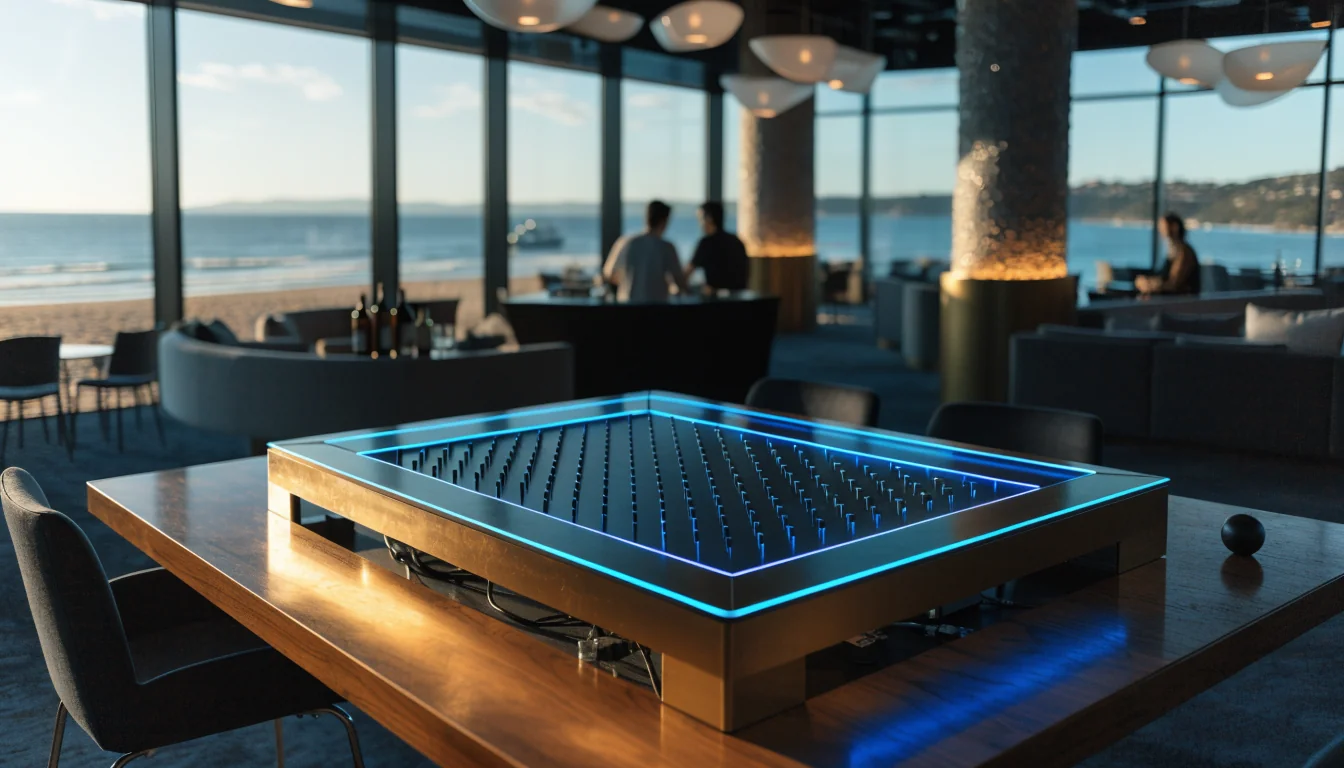
Table of Contents
- The Australian Online Casino Landscape
- Slots and Online Pokies: What Australian Players See
- Real‑Money Play: Legal Rules and Player Obligations
- Game Types You’ll Find on Australian Sites
- How to Choose a Reputable Australian Online Casino
- Plinko Casino Explained: Mechanics and Availability
- Free‑Play and Demo Options for Plinko
- Bonuses, Promotions and Their Conditions
- Quick Review of Plinko Casino Options in 2026
- Crypto and Script Considerations (What We Know)
The Australian Online Casino Landscape
No domestic licence exists for an Australian online casino. That single fact sits underneath everything else in this section, and it’s worth stating before any talk of growth or choice, because "landscape" here doesn’t mean a regulated home market — it means Australians reaching offshore, and a regulator that watches the edges of that arrangement rather than the middle of it.
The Australian Communications and Media Authority (ACMA) is the body responsible for online gambling regulation in the country. Its role isn’t to license casino operators — it can’t, because that licence doesn’t exist — but to enforce the rules around who may not offer such services to Australian residents. That distinction gets lost in a lot of casual writing about this market, so it’s worth being precise about it here, once, before the rest of the article builds on it.
Against that backdrop, the sector itself keeps expanding. By some measures the number of online casino sites accepting Australian traffic, including operators branding themselves as Australian-facing, is increasing — that comes from a single industry survey rather than an official register, and it’s the kind of number that shifts every time someone re-runs the count. I’d treat it as direction, not fact: more sites than last year, fewer than next year’s tally will show. The broader push behind that growth is technological — better streaming, faster mobile rendering, payment integration — improvements that have lifted the profile of online casino gambling globally, Australia included, without changing its legal footing here one bit.
If you’re weighing up where to play Plinko online in Australia, it helps to see how casinos stack up on licensing, deposit requirements and welcome offers before you sign up.
License: Curacao – Antillephone N.V. (Versus Odds B.V.) · Bonus: up to EUR 2,000 across 5 deposits + 200 free spins · Min. deposit: EUR 20 Licensed under Curacao’s Antillephone framework via Versus Odds B.V., this operator offers a multi-deposit welcome package worth up to EUR 2,000 plus 200 free spins, with a EUR 20 minimum deposit to get started.
Bonus: up to A$750 + 50 jackpot spins, 35x wagering · Payout speed: crypto ~90 minutes, fiat 1-5 days · Min. deposit: A$30 This operator pairs a A$750 bonus with 50 jackpot spins under 35x wagering, and stands out for fast crypto payouts of around 90 minutes alongside a low A$30 minimum deposit.
License: Curacao eGaming (Hollycorn N.V., since 2017) · Bonus: 225% up to A$1,540 + 600 free spins across 4 deposits, 20x wagering · Min. deposit: A$20-30 (depends on the offer) Operating under Curacao eGaming via Hollycorn N.V. since 2017, this casino offers a sizeable 225% bonus up to A$1,540 with 600 free spins spread across four deposits at 20x wagering.
Bonus: up to A$7,500 + 550 free spins across 10 deposits, 50x wagering · Payout speed: crypto under 1 hour, PayID 1-3 business days · Min. deposit: A$20 (A$30 to qualify for the bonus) With a generous package of up to A$7,500 and 550 free spins across ten deposits, this operator also offers quick crypto withdrawals under an hour, though its 50x wagering requirement is on the higher side.
License: Curacao Gaming Control Board · Bonus: up to A$5,000 + 400 free spins Licensed by the Curacao Gaming Control Board, this casino offers a straightforward welcome bonus of up to A$5,000 plus 400 free spins.
License: Curacao Gaming Control Board OGL/2023/174/0082 (Dama N.V.) · Bonus: up to A$5,000 + 300 free spins across 4 deposits Holding a Curacao Gaming Control Board license via Dama N.V., this operator spreads a A$5,000 bonus and 300 free spins across four deposits.
License: Curacao · Bonus: 100% up to A$500 + 200 free spins, 10x wagering · Payout speed: crypto 30-60 minutes, fiat 1-5 days · Min. deposit: A$10 Curacao-licensed with a low A$10 minimum deposit, this casino offers a 100% bonus up to A$500 with 200 free spins at a comparatively light 10x wagering requirement, plus fast crypto payouts.
License: Curacao eGaming OGL/2023/174/0082 (Dama N.V.) · Bonus: up to A$10,000 + 500 free spins across 4 deposits · Min. deposit: A$15 Licensed under Curacao eGaming through Dama N.V., this operator offers one of the larger packages on this list, up to A$10,000 plus 500 free spins over four deposits, with a low A$15 minimum deposit.
License: Curacao OGL/2024/1335/0780 · Bonus: up to A$1,000 + 150 free spins, wager-free · Min. deposit: EUR 20 Licensed under Curacao’s OGL framework, this casino offers a wager-free bonus up to A$1,000 with 150 free spins, appealing to players who prefer fewer strings attached.
License: Curacao Gaming Control Board OGL/2023/176/0095 (Hollycorn N.V.) · Bonus: up to A$11,000 + 300 free spins (code NEO100) Licensed by the Curacao Gaming Control Board via Hollycorn N.V., this operator offers one of the largest bonuses on this list, up to A$11,000 plus 300 free spins, redeemable with a bonus code.
What players actually find once they land on a site
Whatever the legal wrapper, the games themselves fall into recognisable categories once you’re through the door. Card games — poker, baccarat, blackjack — show up in numerous variations, each platform running its own house rules on side bets and table limits. Table games extend further than the obvious roulette: craps, Pai Gow, Sic Bo all turn up on sites that bother to build out a full catalogue rather than leaning on a handful of headline titles.
Underneath all of it, two delivery models do the heavy lifting. RNG-based games run on software that generates outcomes independently every round — no dealer, no camera, just an algorithm doing what it’s built to do. Live-dealer games flip that: real people, real cards or wheels, streamed to a screen, with the "live" doing genuine work rather than sitting there as marketing dressing. Both models exist side by side on most catalogues, and which one a player prefers usually comes down to whether they want speed or theatre.
Who’s actually playing
The demographic side of this is less charted than the game catalogue, but the access rule is fixed and non-negotiable: 18 is the minimum age to play at any online casino operator serving Australians. That’s not a house policy some sites enforce more strictly than others — it’s the floor, full stop. Age verification sits at the front door of every legitimate operation, though how rigorously any given offshore site actually checks it before a player deposits is a separate question from whether the rule exists.
Beyond age, the landscape trades in incentives the same way any consumer market does — bonuses, deposit matches, free spins, whatever the promotional language of the month happens to be. "Free" is one of those words worth pausing on. Bonuses arrive with wagering requirements, restrictions on which games count toward clearing them, and expiry windows that quietly turn an unused bonus into nothing at all. None of that is disclosed to trap anyone — most of it sits in terms and conditions exactly where it’s supposed to be — but "bonus" and "free money" are not the same sentence, and treating them as interchangeable is how players end up disappointed rather than deceived.
The shape of the market, plainly
Put the pieces together and the picture is this: a growing number of offshore-facing sites, a widening spread of RNG and live-dealer game types, an Australian regulator that polices supply rather than issuing permission slips, and a player base bound by one hard age line and a lot of soft promotional language around it. There’s no local licensing body to check, no Australian casino to point to as the "legitimate" one among the rest — the entire market Australians interact with sits outside the country’s own gambling licensing system by design, not by oversight.
That’s the frame the rest of this article works inside. Game categories, legal obligations, bonus mechanics, and the specifics of something like Plinko all sit downstream of the same starting point: growth without domestic licensing, choice without a local reference point, and a regulator whose job is narrower than most players assume.
Worth being blunt about it now, rather than later:
No local licence. No local casino.
Slots and Online Pokies: What Australian Players See
Walk into any pub on the Central Coast and you’ll find a wall of flashing screens before you find the bar. That’s not an accident of design — it’s a reflection of how deeply the pokie is wired into Australian gambling culture, online and off. Anyone building an online casino product here already knows the local player doesn’t need slots explained. They grew up next to them.
The numbers behind that familiarity are worth sitting with. Australia holds 3% of the world’s pub and club poker machines while accounting for just 0.3% of the world’s population — a concentration that has no real parallel elsewhere. New South Wales alone carries around 95,800 of those machines. The Central Coast region contributes 4,672 of them, roughly 2.37% of the national total. Break it down further and it gets stranger: Gosford has about one pokie for every 71 adults, Wyong closer to one for every 47. These aren’t abstractions from a policy paper — they’re the reason an Australian player opening an online casino for the first time already has a mental model of what a "pokie" looks like, sounds like, and pays like, long before they’ve clicked a single reel.
That expectation travels straight into the online environment. Slot games — called online pokies almost universally on Australian-facing sites — are the dominant category on most platforms serving this market. Not a category among equals. The dominant one. Everything else on a typical lobby page — table games, live-dealer studios, card games — tends to sit in a secondary tab, while the slot catalogue takes the homepage.
Why the money backs up the habit
The scale of real-money play through electronic gaming machines gives some sense of why operators build around slots rather than around anything else. In FY 2020–2021, Australians placed bets worth almost AUD$150 billion through electronic gaming machines, and the total player loss across that same period came to AUD$12 billion. Per capita, that works out to a loss of AUD$608 for the year — an average, spread across every adult in the country, whether or not they’d ever touched a machine.
I’ve heard the industry line about "entertainment spend" used to soften numbers like that, and there’s a kernel of truth in it — most people who play pokies aren’t chasing rent money. But the phrase does a lot of quiet work. It reframes a loss as a purchase, which is a neat trick when the product in question is built, tested and tuned to keep people playing longer than they planned to. Worth remembering when the same instinct gets carried from the pub floor to a phone screen.
The Australian online casino market has no domestic licence; all operators are offshore and regulated only by foreign authorities.
What changes online, and what doesn’t
The physical machine and its online counterpart share a name and a rough visual grammar — spinning reels, paylines, a big win animation — but the mechanics underneath are different animals. Land-based pokies run on certified hardware with a fixed, regulator-tested payout mechanism bolted into the cabinet. Online slot games run on software, and that software depends on a Random Number Generator to decide every outcome. These RNGs are regularly audited by independent testing agencies, which is meant to be the online equivalent of the compliance plate on a pub machine — proof, on paper, that the spin wasn’t rigged in either direction.
Whether a player ever sees that audit certificate is another matter. It usually lives several clicks deep in a terms page, not on the reel itself. The trust is inherited from the land-based habit — "it’s a pokie, pokies are regulated, this must be fine" — rather than earned freshly from the online product. That’s a gap worth being aware of, because the assumption doesn’t always hold the way people think it does.
Demo mode: the one genuine safety valve
One thing the online format offers that the pub floor never could is the ability to play without staking anything. Many slot games can be run in demo mode, using virtual funds instead of real money. This matters more than it sounds like it should. A player who grew up feeding coins into a Central Coast pokie has no equivalent experience of trying the machine for free — the demo mode is a genuinely online-only concession, and it’s one of the few places where the online product is structurally more forgiving than its physical ancestor.
It’s not risk-free in the way the marketing implies, either. A demo spin run through the same RNG as the real-money version will still feel identical, hit the same visual highs, and train the same expectations — the only thing missing is the money leaving your account. That can cut either way: useful for genuinely testing a game’s feel, less useful if it’s just delaying the moment real funds get involved.

The pattern that carries through
What ties the physical statistics to the online catalogue is expectation, not mechanics. A Wyong local who’s used to a pokie on every corner isn’t surprised to see fifty slot titles on a casino homepage before finding a blackjack table. The saturation offline primes the saturation online. Operators know this, which is why slot content — reel counts, theme variety, jackpot framing — gets the design budget that table games and live-dealer sections don’t always receive.
None of this is unique to any one operator or platform; it’s closer to a structural feature of how the Australian market has been shaped by decades of physical machine exposure before online ever entered the picture. The card games, table games and live-dealer formats that share the same sites exist on their own terms and get covered separately — but none of them carry the same weight of familiarity that the pokie does. That familiarity is the actual product being sold on the homepage, more than any individual game title.
A note on scale versus scrutiny
It’s worth flagging the asymmetry here plainly: the physical pokie statistics above are audited, published, and traceable to government and industry reporting. The online side offers far less of that kind of public accounting. RNG audits happen, but the results aren’t typically presented to players in the way a machine’s compliance sticker is bolted to its cabinet in a pub. The dominance of the category is visible everywhere — the verification of any individual product usually isn’t, unless you go looking for it.
That’s not a reason to treat every slot title as suspect. It’s a reason not to transfer the trust built by decades of regulated pub machines onto a screen just because it uses the same word. "Pokie" is doing a lot of reassurance work in that sentence. Worth checking what’s actually underneath it.
Real‑Money Play: Legal Rules and Player Obligations
Before any conversation about Plinko for real stakes, the legal picture needs to be straight. Not the marketing version. The actual one, with its gaps and contradictions intact.
The federal law here is the Interactive Gambling Act 2001, commonly shortened to the IGA. It’s the primary piece of Commonwealth legislation covering online gambling, and its stated purpose is harm minimisation — protecting the public rather than policing what people do in private. That framing matters, because it explains why the law is built the way it is: aimed squarely at the businesses supplying the games, not at the people playing them.
One thing worth flagging directly: sources on this don’t agree on the year. Some reference an Interactive Gambling Act from 1997 prohibiting the provision of online casino games to Australian residents; the more commonly cited version is the 2001 Act. I won’t pretend to settle which is the "correct" one here — both versions appear in circulation, and a reader relying on either name should know the discrepancy exists rather than have it smoothed over.
What’s actually prohibited
Under the 2001 Act, a specific list of casino-style products is banned from being offered to people in Australia: slots, poker, blackjack, and roulette all fall under that prohibition. Plinko, as a slot-style RNG game, sits in the same category as those named games — it’s the same style of product wearing a different shape.
The prohibition also extends to online poker and in-play (live) betting, both barred federally. Sports betting is a different animal — legal under state and territory licences — which is part of why Australians see legal betting ads everywhere but no equivalent for casino products.
Who the law actually targets
Here’s the part that surprises people who assume "illegal" means "illegal for everyone touching it." It doesn’t, in this case. The IGA is written to target operators — the companies offering these games to Australian residents — not the individuals playing them. It is not illegal for an Australian to play at an offshore-licensed online casino. The liability sits with whoever is running the site, not with whoever opens it.
Legal Risk
Playing on offshore platforms offers no recourse to Australian regulators if the operator breaches its terms or disappears with funds.
That’s a real distinction, not a technicality dressed up to sound reassuring. It means a resident spinning Plinko for cash on an offshore platform isn’t committing an offence by doing so. But it also means there’s no local authority standing behind that resident if something goes wrong — no domestic regulator granted power over a business it never licensed in the first place. "Fully licensed" on an offshore casino’s homepage refers to wherever that licence was issued, not to any permission granted here. Worth remembering before treating the phrase as a safety signal.
Baseline obligations that don’t move
Two conditions sit underneath everything else, regardless of which version of the Act you’re reading or which platform you’re looking at:
- Age — the minimum is 18. No exceptions, no regional variation.
- Residency — participation is framed around Australian residents specifically. The obligations and prohibitions discussed here attach to people playing from Australia, not to gambling in general.
Neither of these is negotiable in the way bonus terms or game selection might be. They’re the floor, not a feature.
What this means in practice
Put plainly: there is no domestic licence that makes an online casino — or a Plinko variant offered as a casino game — legally available to Australian residents. None exists to check for, none exists to be missing. So any claim that leans on "licensed for Australian players" as a mark of legitimacy is describing something that, as far as casino-style products go, doesn’t exist here in that form. That’s not caution dressed up as advice; it’s just what the law says.
What does exist is a resident’s right to make their own decision about an offshore-licensed site, understanding that the legal responsibility for offering the game sits elsewhere, and any recourse if things go wrong sits elsewhere too. No local regulator, no local complaints process built for this specific product.
None of this addresses whether a given operator is well-run, fair, or worth trusting with money — that’s a separate question, covered later. This section is only about where the legal line actually sits. Once that’s clear, everything else — the game mechanics, the bonus terms, the demo options — can be read for what it is, rather than mistaken for a legal guarantee it was never built to offer.
Real money. Real law gap.
Game Types You’ll Find on Australian Sites
Pokies get most of the attention, and rightly so given how deep the habit runs here — but they’re one category among several. Sites built for this market typically organise their catalogue into a handful of distinct buckets, and each one runs on different mechanics, different pacing, and in some cases different technology underneath.
Card games
Poker, baccarat and blackjack show up in more variations than most players expect. Not just "blackjack" but half a dozen rule-sets bundled under that name, each with slightly different table conditions. Same with poker — the branded name on the game tile rarely tells you which ruleset you’re actually sitting down to. This is the category that rewards reading the rules screen instead of skipping it, because "poker" as a marketing word covers a lot of ground.
Table games
Roulette, craps, Pai Gow and Sic Bo sit in their own bucket, mechanically closer to a physical casino floor than to a slot reel. These games are built on fixed odds and fixed structures — a roulette wheel doesn’t have "volatility settings" the way a slot does. What changes between operators isn’t the game itself so much as the table limits and the interface wrapped around it. Sic Bo and Pai Gow in particular are less commonly stocked than roulette, so their presence (or absence) is often the quickest way to size up how deep a site’s table selection actually goes.
Software generates outcomes instantly; fast, no dealer, ideal for quick play.
Real dealers are streamed live; slower pace but adds a casino atmosphere.
Free‑play version using virtual credits; same RNG engine as real‑money play.
Only certain titles count towards wagering requirements; check each operator’s terms.
RNG-based versions and their live counterparts
Most of what’s listed above exists in two forms. There’s the RNG-based version, where a certified algorithm decides every outcome instantly, and there’s a live-dealer version, streamed from a studio with an actual dealer running the game in real time. Same rules, same odds structure, completely different pacing — RNG tables run as fast as you click, live tables run at the speed of a human dealer and however many other players are seated with you. Neither is "better," they’re just different products serving different moods.
Where the differences actually sit
The game itself — the rules of baccarat, the layout of a roulette wheel — doesn’t change much between platforms. What does change is everything wrapped around it: bonus eligibility, wagering requirements attached to promotional funds, and time limits before a bonus expires. I’ve seen table games excluded outright from bonus wagering while slots count in full, and I’ve seen the reverse. None of this is standardised, and none of it is obvious from the lobby screen — it’s buried in bonus terms, which is exactly where it’s designed to be found last.
Regulation, for what it’s worth, doesn’t touch any of this at the game level. In Australia, oversight of online conduct sits with the Australian Communications and Media Authority, but that’s a framework around advertising and access — not a body auditing individual blackjack variants or table limits. The catalogue itself, and the fine print attached to it, is entirely a matter of what the operator chooses to publish.
A short rule of thumb: if a site’s promotional page talks about its slots in detail but goes vague the moment table games come up, that’s not an accident. It usually means the card and table catalogue is thinner than the marketing implies, or that the bonus terms treat it as an afterthought.
How to Choose a Reputable Australian Online Casino
"Reputable" is a word every operator puts on its homepage, right next to a padlock icon and a badge that looks official. None of that tells you what the word is supposed to mean here. So start with what’s actually checkable.
There’s no domestic licence to look for. ACMA oversees online gambling regulation in Australia, but it doesn’t license or approve casino-style games for local operators — that category isn’t something it hands out permits for. Any site claiming an Australian gambling licence for casino games is telling you something that doesn’t exist. That’s not a red flag to note and move past; it’s disqualifying.
What you can check, and should:
- Age gating. The minimum age to play is 18. A site that lets you through without asking, or asks and doesn’t verify later, isn’t taking the rule seriously — it’s decorating with it.
- Residency requirements. Players are expected to be Australian residents to take part. A platform that never asks where you live, or waves off the question, is skipping a check it’s supposed to run.
- How it handles the two above at the point that matters — not at sign-up where it costs nothing to tick a box, but at withdrawal, where verification actually bites. A casino that only asks for ID once you’re trying to take money out is doing it the way most legitimate operators do it. One that never asks at all isn’t being convenient. It’s not checking.
None of this tells you whether a site is safe to deposit into. It tells you whether it’s honest about the two things it’s legally required to ask: your age and where you live. A site that gets those wrong isn’t going to get the harder questions right either.
I’ve seen operators treat age verification as friction to minimise rather than a rule to follow — fewer fields, faster sign-up, "seamless onboarding." Seamless for who is the question worth asking. Not the player.
Responsible-gaming measures are the other marker worth watching for: self-exclusion options, deposit limits, visible links to help services rather than a single line buried in the footer. Their presence doesn’t fix the underlying legal picture. It does tell you whether an operator built the site for players or just for traffic.
No registry. No local seal of approval. Just what the site does when you show up.
Plinko Casino Explained: Mechanics and Availability
Plinko didn’t start as a casino game. It’s a drop-a-disc-through-pegs mechanic borrowed from a television game show, and someone in the iGaming industry noticed how well it translates to a betting screen. A chip falls from the top, bounces off a grid of pins, and lands in one of several slots at the bottom, each carrying a different multiplier. No cards, no reels, no dealer. Just gravity and probability dressed up for a wager.
That simplicity is exactly why operators file it under "slots" even though it looks nothing like one. Under the hood, it runs on the same RNG-based engine that decides where a pokie’s reels stop — the pegs and the falling animation are theatre over a random outcome, not a physical simulation. Ask a support agent whether Plinko is "really" a slot and you’ll get a shrug. Categorisation is a menu decision, not a technical one.
On Australian-facing platforms, Plinko usually sits in a "instant win" or "crash games" tab alongside other quick-round titles, separate from the traditional pokies library and away from table games and live-dealer rooms. That placement matters: it signals a game built for fast, repeated rounds rather than bonus rounds or storylines.
Where it’s offered, it’s typically presented the same way any online pokie is — playable instantly in the browser, no download required. What differs is pace. A pokie spin has reels to watch; a Plinko drop is over almost as soon as it starts.
Fast round.
Free‑Play and Demo Options for Plinko
Most slot-style titles, Plinko included, come with a demo mode running on virtual funds. No deposit, no ID check, no wallet connected — just the board and a counter that resets on refresh. That’s the version worth spending time on before any money moves.
The mechanics behind demo mode aren’t a scaled-down imitation. The same Random Number Generator engine drives both the free and real-money versions, and that engine is subject to independent auditing regardless of which mode you’re clicking through. So a session in demo mode tells you something real about how the drops behave — the volatility, the spread of outcomes, how often the ball lands where you’d want it to.
What demo mode won’t tell you is anything about withdrawal, verification, or how a given site actually treats a payout request. Virtual credits don’t test that part of the relationship. Anyone promising a "true feel" of real play from the free version is skipping over the part that matters once actual money is involved.
Use it for what it is. A way to see the board work.
Bonuses, Promotions and Their Conditions
A "welcome bonus" is the first thing most sign-up pages put in front of you, and the word deserves those quotes. Behind it sit wagering requirements — a multiple of the bonus you must bet before withdrawing anything — plus game restrictions that decide whether a Plinko-style title even counts toward that target, and an expiry date that quietly cancels the offer if you don’t move fast enough.
None of that makes the bonus fake. It makes it conditional, which is a different thing, and the conditions are usually the actual product.
Since no casino games can be licensed for Australian residents domestically, these promotions come from offshore-licensed operators. Playing there isn’t illegal for an individual — the law targets the operator, not the player — but it also means no local body stands behind the bonus terms if a dispute comes up.
Read the terms before the deposit. Not after.
Quick Review of Plinko Casino Options in 2026
People search for named Plinko variants — Plinko Rush, Plinko Verde, Plinko Deluxe, a MrBeast‑branded version — expecting a ranked verdict. I can’t give one, and neither can anyone else writing honestly about this market. There’s no domestic licensing body checking these products, no register listing which studio built which drop pattern, no audited RTP disclosure I can point to for a specific title. What I can say comes from watching the category rather than any one operator’s marketing page.
The pattern holds across the sector: interest in Plinko-style games has grown alongside the broader push of technological innovation into online casino products generally — new interfaces, faster load times, mobile-first builds. That’s a real shift, but it’s an industry-wide trend, not proof that any particular Plinko release is better engineered than the last.
What separates a decent offering from a weak one, in my experience, isn’t the drop animation or the branding on the ball. It’s whether the demo mode is genuinely unrestricted, whether the terms around any bonus tied to the game are stated before you deposit rather than after, and whether the site treats age and identity checks as a formality or an actual gate. Reviews that promise a "top pick" without addressing those three things are marketing copy wearing a reviewer’s coat.
I’d treat any 2026 "best Plinko casino" list — including ones with numbers attached — as a starting point for questions, not a verdict. Ask what’s verifiable. Most of what’s published isn’t.
Crypto and Script Considerations (What We Know)
Searches pairing Plinko with crypto wallets or with "script" turn up plenty of forum chatter and not much else. I went looking for verified specifics — which providers actually settle in Bitcoin or Ethereum, how any claimed "script" or algorithm is supposed to affect outcomes — and found no documented source that stands up to scrutiny.
That gap matters more than it looks. Plinko’s RNG-based results come from software audited by independent testing agencies, same as any other online pokies title. A "script" claiming to predict or influence drops sits outside that audited chain entirely. No regulator publishes findings on these tools, and no operator discloses how — or whether — crypto deposits change the game’s mechanics.
Treat it as an open question, not a feature. Nothing to verify.
Given that domestic real-money online casino licensing doesn’t exist in Australia in the first place, offers built around unverifiable crypto mechanics or "guaranteed" scripts deserve more scepticism, not less.
Are crypto casinos legal in Australia in 2026?
No — there is no domestic licence for online casinos in Australia, and the Interactive Gambling Act 2001 prohibits offering online casino games to Australian residents. It is not illegal for individual Australians to play at offshore-licensed casinos, though, as the law targets operators, not players.
Can I play online pokies for free?
Yes, many slot games can be played in demo mode with virtual funds, so you can try online pokies without wagering real money.
How can I verify if a gambling operator is legal?
There are no domestically licensed real-money online casino operators for Australian players, so no local licence exists to check. Online gambling regulation is overseen by the Australian Communications and Media Authority (ACMA), which enforces rules against operators offering prohibited services rather than issuing casino licences.
What security features must licensed casinos have?
Online casino games must use Random Number Generators (RNGs) to ensure random outcomes, and these RNGs are regularly audited by independent testing agencies. Age verification at 18 is also a baseline requirement for any legitimate operation.
How do I file a complaint against a casino?
Complaints about online gambling services offered to Australians can be directed to the Australian Communications and Media Authority (ACMA), the body responsible for enforcing online gambling rules in the country.
Created by the ”Casino iPad Info” editorial team.