Best Pokies in New South Wales: NSW Guide for 2026
 Available in US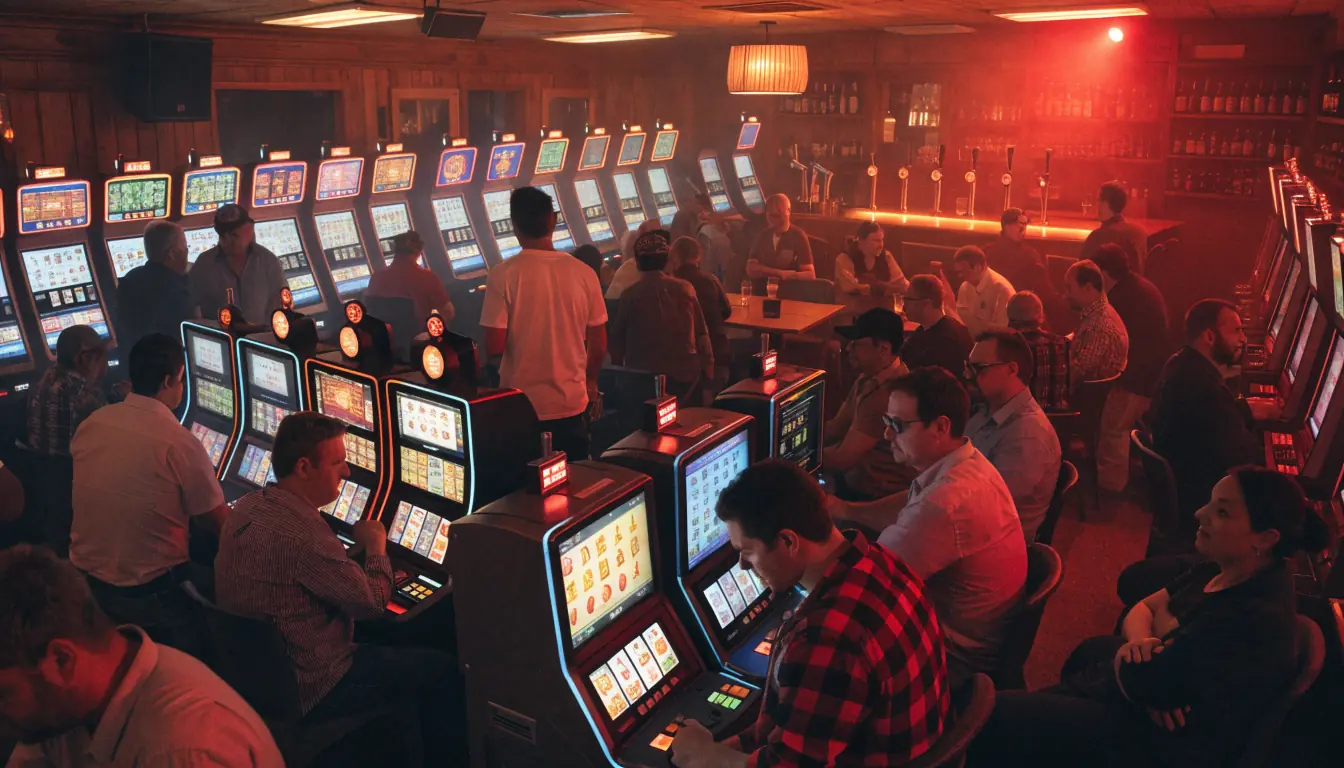
Understanding Pokies in New South Wales
Walk into any suburban club in Sydney on a Tuesday afternoon and you’ll find the pokies room busier than the bar. That’s not an accident of design. It’s the business model. Clubs and pubs across New South Wales built their food, entertainment and membership offerings on the back of gaming room revenue, and the machines sitting in carpeted alcoves near the entrance are doing more financial work than almost anything else on the premises.
Electronic gaming machines — pokies, in the language everyone here actually uses — operate in every Australian state, plus the Australian Capital Territory and the Northern Territory. NSW is not an outlier in having them. What makes NSW notable is the sheer density of venues and the role pokies play in the finances of the clubs sector specifically, a sector that in this state is unusually large and unusually intertwined with local sport, RSL branches and community fundraising.
I’ve sat on the operations side of a gaming floor. I’ve watched a manager reconcile a night’s takings and seen the number that pokies alone brought in against what the bistro made. There’s no contest. The machines are quiet, they don’t need staff to serve them, and once installed they run for years. That’s the appeal from the venue’s side, and it explains why almost every conversation about "renovating the club" in this state eventually turns into a conversation about "how many machines can we fit."
Before you spin the reels at any pokies site in NSW, it pays to check how a casino is licensed, what its welcome offer actually involves, and how quickly you can get paid out.
License: Curacao – Antillephone N.V. (Versus Odds B.V.) · Bonus: up to EUR 2,000 across 5 deposits + 200 free spins · Min. deposit: EUR 20 Licensed under Curacao’s Antillephone framework, it offers a multi-deposit welcome package worth up to EUR 2,000 plus 200 free spins, with a EUR 20 minimum deposit to get started.
Bonus: up to A$750 + 50 jackpot spins, 35x wagering · Payout speed: crypto ~90 minutes, fiat 1-5 days · Min. deposit: A$30 Its welcome offer combines a cash bonus with jackpot spins under a 35x wagering requirement, and it stands out for fast crypto withdrawals alongside more standard fiat processing times.
License: Curacao eGaming (Hollycorn N.V., since 2017) · Bonus: 225% up to A$1,540 + 600 free spins across 4 deposits, 20x wagering · Min. deposit: A$20-30 (depends on the offer) Operating under a long-standing Curacao eGaming license since 2017, it spreads a sizeable 225% bonus and hundreds of free spins across four deposits with a relatively low wagering requirement.
Bonus: up to A$7,500 + 550 free spins across 10 deposits, 50x wagering · Payout speed: crypto under 1 hour, PayID 1-3 business days · Min. deposit: A$20 (A$30 to qualify for the bonus) This operator offers one of the more extensive welcome packages spread over ten deposits, backed by notably quick crypto payouts and PayID processing within a few business days.
License: Curacao Gaming Control Board · Bonus: up to A$5,000 + 400 free spins Licensed by the Curacao Gaming Control Board, it backs its offering with a substantial bonus package that includes free spins.
License: Curacao Gaming Control Board OGL/2023/174/0082 (Dama N.V.) · Bonus: up to A$5,000 + 300 free spins across 4 deposits Operating under a Curacao Gaming Control Board license via Dama N.V., it structures its bonus across multiple deposits, giving players a sizeable spins package alongside the cash match.
License: Curacao · Bonus: 100% up to A$500 + 200 free spins, 10x wagering · Payout speed: crypto 30-60 minutes, fiat 1-5 days · Min. deposit: A$10 Curacao-licensed with a low minimum deposit and a wagering requirement on the lighter side, plus quick crypto payout times that make it approachable for smaller-stakes players.
License: Curacao eGaming OGL/2023/174/0082 (Dama N.V.) · Bonus: up to A$10,000 + 500 free spins across 4 deposits · Min. deposit: A$15 Licensed under Curacao eGaming through Dama N.V., it offers one of the larger bonus packages on this list, spread across four deposits with a low minimum deposit requirement.
License: Curacao OGL/2024/1335/0780 · Bonus: up to A$1,000 + 150 free spins, wager-free · Min. deposit: EUR 20 Licensed in Curacao, it distinguishes itself with a wager-free bonus structure, making the free spins and matched funds easier to actually use.
License: Curacao Gaming Control Board OGL/2023/176/0095 (Hollycorn N.V.) · Bonus: up to A$11,000 + 300 free spins (code NEO100) Licensed by the Curacao Gaming Control Board via Hollycorn N.V., it offers a large welcome bonus and spins package activated through a dedicated promo code.
How big the pokies market actually is
The numbers at a national level give some sense of scale, even though they aren’t broken down by state in the data available. In the 2020–2021 financial year, Australians placed bets worth almost AUD 150 billion on electronic gaming machines. That’s turnover — money cycled through the machines, not money lost, since most of it returns to players as winnings that get bet again in the same session. The actual loss figure for the same year was about AUD 12 billion nationally, which works out to roughly AUD 608 per person when spread across the population. That per-capita number doesn’t distinguish between someone who’s never touched a pokie and someone who plays weekly — it’s a population-wide average, and it’s worth remembering that whenever the figure gets quoted as if it describes a typical player.
There’s a more recent turnover figure worth flagging too. According to complyadvantage.com, pokies generated AUD 191.2 billion in gambling turnover in 2023. I’ll say plainly: that’s a claim from one source, describing a different year and a different scope than the FY2020–21 figures above, so treat it as a data point rather than a confirmed trend line. Turnover figures from different sources aren’t always counting the same thing — some include all EGM activity, others narrow it to specific machine categories — and nobody publishing these numbers seems to agree on methodology. I’d rather say that plainly than smooth it into a single tidy "the market is worth X" statement.
On global share, there’s a similar problem. One figure says Australia accounts for 3% of the world’s pub and club poker machines. Another, from a different source, puts it at around 18%. These are wildly different claims about the same thing, and I’m not going to pretend one is obviously right. What I can say is that regardless of which figure is closer to reality, Australia’s pokies are unusually concentrated in pubs and clubs rather than in dedicated casino floors — which is the opposite arrangement from most of Europe, where slot machines sit almost exclusively inside licensed casinos. That structural difference is the more useful fact here than either percentage.
Pubs, clubs and casinos: three different animals
NSW runs pokies through three separate channels, and they don’t behave the same way commercially or regulatorily.
Registered clubs (RSLs, leagues clubs, bowling clubs, etc.) hold the largest share of pokies in NSW, subsidising cheap meals, community grants and junior sports through gaming revenue.
Hotels with gaming licences run smaller machine banks, typically placed near the bar, competing directly with food and drink sales for floor space.
Casino floors operate under the Casino Control Act 1992, with heavier compliance obligations and much larger fines for breaches.
Clubs. Registered clubs — RSLs, leagues clubs, bowling clubs, various social and sporting clubs — hold the largest share of pokies in the state by venue count. Membership is usually free or nominal, and the pokies room is typically the first thing past the foyer. The economics here are distinctive: club pokies revenue subsidises cheap meals, function rooms, junior sports sponsorship and community grants. I’ve seen boards justify a machine upgrade purely on the basis that it funds the under-16s rugby league team. That’s a real dynamic, not a talking point — the money genuinely does flow that way in a lot of venues, which is part of why pokies reform in this state is politically difficult. Cut machine numbers and you’re not just touching a gambling product, you’re touching a junior sports budget.
Pubs. Hotels with gaming licences run smaller machine banks than clubs, generally speaking, and the room tends to feel more incidental — a corner near the bar rather than a purpose-built hall. Pub pokies compete more directly with the venue’s core business (drinks, meals) for floor space and attention, so the commercial logic is a bit different from clubs, where the gaming room often is the core business.


Casinos. Casino floors operate under a distinct regulatory regime — the Casino Control Act 1992 governs this specifically, separate from the club and pub gaming rules administered elsewhhere. Casino pokies sit alongside table games, and the compliance obligations on casino operators are heavier, partly because the amounts moving through a casino floor are larger and partly because casinos have historically drawn more regulatory scrutiny. An amendment to the Casino Control Act 1992 now allows NSW casino operators to be fined up to AUD 100 million for compliance failures — a figure that gives some sense of how seriously the state treats casino-level non-compliance compared with the smaller pub or club venue.
What’s identical across all three channels is the machines themselves — the same manufacturers supply pokies to pubs, clubs and casinos alike — and the basic mechanics of play. What differs is venue culture, the regulatory body a given complaint or licence issue routes through, and how tightly cash handling is monitored, which matters more than it might sound.
Why cash is the story regulators keep coming back to
If there’s one thread running under almost every serious piece of writing about pokies in this state, it’s cash. Pokies are, structurally, a cash-heavy product. Coins and notes go in, tickets come out, tickets get cashed at a kiosk or counter. That flow is what makes the machines convenient for an ordinary player who wants to spend twenty dollars on a Friday night. It’s also what makes them, according to research from the Australian Institute of Criminology and echoed by AUSTRAC’s own guidance, unusually attractive for money laundering.
Money Laundering Risk
Large cash insertions followed by minimal play and immediate cash‑out are a classic red flag for money‑laundering, and regulators can impose severe penalties for non‑compliance.
The mechanism isn’t subtle once you’ve seen it described. Someone inserts a large amount of cash into a machine, plays a token amount — barely enough to register as "gambling" in any meaningful sense — and cashes out. The ticket they walk away with looks, on paper, like gambling winnings. It isn’t. It’s the same dirty money that went in, now wearing a receipt that makes it look clean. A more elaborate version has offenders buying a winning ticket off another patron outright, paying them a premium in cash for the privilege, so the paper trail shows a legitimate win changing hands rather than a deposit-and-immediate-exit pattern that might draw attention.
There’s also structuring — spreading smaller cash deposits across multiple venues so that no single transaction trips an AUSTRAC reporting threshold. This one takes actual effort and coordination, which tells you something about the money involved: nobody structures for the sake of small change.
None of this means every person who cashes out after a short session is doing anything wrong — obviously most aren’t. But the industry and its regulators have settled on a fairly consistent list of red flags, and it’s worth naming them, because they show up again in the compliance obligations that later sections of this piece touch on:
- Large or repeated cash insertions followed by minimal play and an immediate cash-out
- Frequent small redemptions spread across different venues within a short window
- Customers who refuse to provide identification, or who are seen using multiple player cards
I’ve watched venue staff get trained to spot exactly this pattern, and there’s a particular awkwardness to it — a duty manager is meant to be welcoming to a big spender while also quietly wondering whether the "big spender" behaviour fits a laundering profile. Nobody puts that tension in the marketing.
The traceability gap, and what closes it
The core problem regulators keep identifying is traceability, or the lack of it. A cash machine, by its nature, doesn’t know who’s feeding it money. It knows a ticket was inserted and a ticket was dispensed. It doesn’t know if the same person did both, whether the cash came from a wage or from something else, or whether the "win" was genuine.
Account-based, cashless pokies change that picture. Because play runs through a registered account rather than loose cash, every deposit, every spin, and every withdrawal is tied to an identified person and timestamped. According to facctum.com, this shift toward cashless systems improves traceability and reduces the anonymity that makes cash-based laundering schemes workable in the first place — again, a claim worth attributing to its source rather than presenting as settled fact, since it’s one industry compliance vendor’s framing of the benefit. But the underlying logic holds up on its own merits: an account-based machine produces a complete record of deposits, gameplay and withdrawals, in a way a coin slot simply cannot.
This is why regulators — AUSTRAC among them — keep landing on the same three recommendations whenever the subject of pokies and financial crime comes up: tighter customer due diligence, better transaction monitoring, and a move toward cashless gaming infrastructure. None of those three is really about the player experience. They’re about closing a gap that cash leaves wide open. The next section of this piece goes into how that cashless transition is actually playing out venue by venue and what it means for a machine that used to run all night on coins.
The NSW Islington Report recommends that all pokies become cashless by the end of 2028, aiming to improve traceability and reduce laundering opportunities.
What this means walking onto a gaming floor in 2026
None of the money-laundering mechanics above should be mistaken for the ordinary experience of playing. Most people who sit down at a pokie in a Newcastle RSL or a Parramatta leagues club are doing exactly what it looks like — spending some spare cash on a night out, sometimes winning small, mostly not. The compliance apparatus exists because the volume of cash moving through these machines nationally is large enough that a small percentage of bad actors represents a real amount of money, not because every venue is under suspicion.
What’s changed, and keeps changing, is how much of that activity is captured on record rather than left as loose cash changing hands anonymously. A player walking into a club today is more likely to encounter identification checks, account-based play options, and staff trained to notice unusual patterns than they would have a decade ago. That’s partly a response to state-level reform pressure and partly a response to AUSTRAC’s own compliance requirements, which apply differently depending on how many machines a venue runs.

Small venues — those with up to 15 pokies — carry a lighter compliance load: registration with AUSTRAC, identification record-keeping, and an obligation to submit suspicious matter reports when something doesn’t look right. Larger operators, those running more than 15 machines, face a heavier regime: a dedicated compliance officer, formal risk assessments, a full AML/CFT program, customer due diligence procedures, and mandatory reporting of cash transactions over AUD 10,000. That threshold matters practically — it’s the line past which a routine large win or a big buy-in stops being just a good night and starts being a reportable event.
Non-compliance isn’t treated lightly. Operators that fall short can face remedial directions, infringement notices, civil fines, and the kind of reputational damage that, for a club dependent on member trust and community standing, can matter more than the fine itself. AUSTRAC’s 2024 guide to recognising money-laundering red flags was aimed squarely at giving venue staff and compliance officers a shared checklist for exactly this — unusually high cash access, large deposits, cash transfers, disbursement patterns worth double-checking, even certain occupations that correlate with higher scrutiny in the guide’s framing.

The economic weight behind the machines
It’s worth stepping back and being honest about why NSW pokies policy moves as slowly as it does, given everything above. The turnover figures — AUD 150 billion nationally in bets placed during FY2020–21, AUD 12 billion in losses that same year — describe an industry that isn’t peripheral to anything. It’s central to how thousands of clubs and pubs fund their operations, and by extension how a lot of grassroots sport, RSL welfare services and community halls get paid for.
That’s not an argument for or against the machines — it’s just the mechanical reality that sits underneath every reform debate. "Tighten the rules" sounds simple until you remember that the same machine paying for AML compliance software is also, in a lot of venues, paying for the free sausage sizzle at the junior football grand final. I don’t say that to excuse the laundering risk described above — the AML case for reform is solid on its own terms — but the economic dependency is real, and it’s the reason NSW pokies policy has moved in careful stages rather than in one sweeping change.
Casinos sit a little apart from that community-funding dynamic — their pokies revenue supports a commercial operator’s bottom line rather than a member-owned club’s community programs — which is one reason the regulatory response for casinos (that AUD 100 million maximum fine under the amended Casino Control Act 1992) looks so different in scale from the AUSTRAC-administered rules that apply to your local pub with a dozen machines.
Where this leaves a player in NSW right now
Pull all of this together and the picture of pokies in New South Wales looks less like a single uniform product and more like a layered system: the same basic machine, deployed across three different venue types, each with different regulatory oversight, different economic stakes, and — increasingly — different levels of traceability depending on whether the machine still runs on coins or has moved to an account-based, cashless model.
"Best pokies" isn’t really a question with a single answer here, because the machines themselves don’t vary all that much in what they offer — what varies is the venue around them, the hours it keeps, and how far along that venue is in the cashless transition regulators have been pushing. Those are the practical differences worth understanding before walking in anywhere, and they’re the subject of the sections that follow.
One thing is consistent across every venue type, cash or cashless, club or casino: the scale of money moving through these machines nationally is large enough that regulators, criminologists and compliance vendors are all watching the same handful of behavioural patterns, and none of them are pretending the cash-heavy version of this business is easy to fully secure. That’s the honest starting point for understanding pokies in this state — not a marketing pitch about entertainment value, but a genuine, cash-driven industry with real economic weight and a traceability problem regulators are still working through.
24‑Hour Pokies in NSW: Availability and Cashless Transition
Round-the-clock access is the default, not the exception. Pubs and clubs across NSW run their gaming floors on a schedule built around the venue’s liquor licence rather than any fixed "pokies hours" — if the doors are open, the machines are on. Clubs with 24-hour licences keep them running through the night; standalone hotels typically don’t, but plenty in metro areas come close. There’s no single statewide switch that turns pokies off at a set time. That’s a decision made venue by venue, licence by licence.
What doesn’t vary is the paperwork behind the machines, and that’s where the real story sits.
Compliance scales with machine count, not opening hours
A venue running through the night carries the same reporting obligations as one that closes at midnight — the trigger is how many machines are on the floor, not how long they’re switched on.
- Up to 15 pokies: the operator has to register with AUSTRAC, hold onto identification records, and file suspicious matter reports when something doesn’t add up.
- More than 15 pokies: the bar goes up. A compliance officer has to be appointed, risk assessments carried out, an AML/CFT program put in place, customer due diligence performed, and any cash transaction over AUD 10,000 reported.
I’ve seen the "under 15" tier treated almost casually by smaller venues, on the assumption that fewer machines means less scrutiny. It means less paperwork. The suspicious matter reporting obligation doesn’t disappear — it’s just carried by a smaller team, often the same person pulling beers and checking IDs. That’s not a criticism of the rule. It’s a description of how thin compliance actually runs on the ground in a fifteen-machine club at 3am.
Why cashless is coming, and why it isn’t here yet
The 2022 NSW Islington Report put a date on the table: all NSW pokies cashless by the end of 2028. Worth being clear that this is a recommendation from one inquiry, not a law already in force — venues are not required to be cashless today, and the rollout between now and that date is still being worked out. Anyone telling you a specific machine is "cashless-compliant" as a selling point is describing where the market is heading, not a rule it’s already meeting.
Online real‑money pokies are illegal for NSW residents under the Interactive Gambling Act 2001; any site offering them operates outside Australian law.
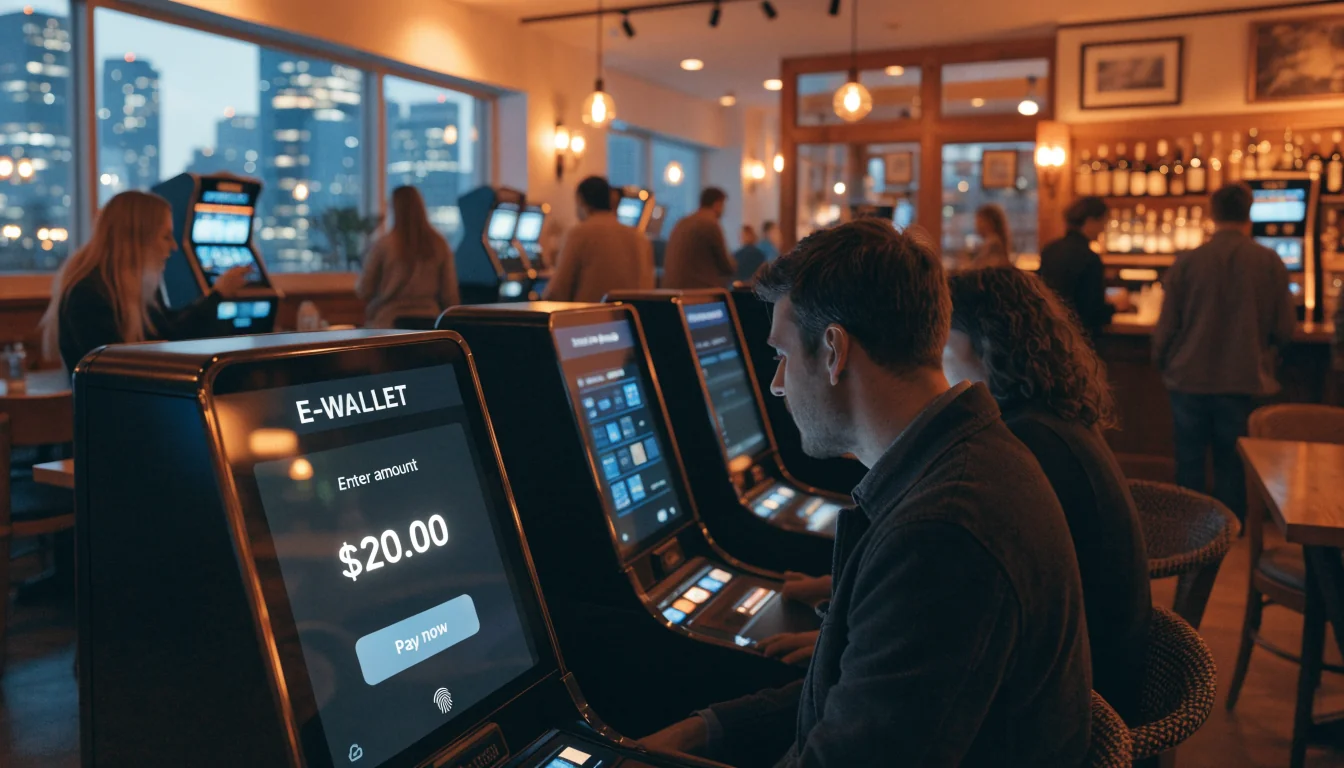
The logic behind the push isn’t really about convenience. Cash is the thing that makes a pokie floor hard to monitor — money goes in, minimal play happens, money comes back out, and there’s no name attached to any of it. Account-based, cashless systems change that. A transparent, account-based machine ties every deposit, every spin, and every withdrawal to an identifiable account. Regulators have been explicit that this kind of traceability is the direction they want the industry to move: tighter customer due diligence, ongoing transaction monitoring, and cashless gaming systems replacing note acceptors over time.
"Cashless" gets marketed as a player convenience — tap your card, skip the coin tray. That’s true as far as it goes. What it doesn’t advertise is that the same system that makes your session smoother also makes it fully visible to whoever’s watching the account. Both things are true at once.
High limits, big payouts, and the fine that changed the incentive
Casinos sit in a different regulatory bracket to pubs and clubs, and NSW tightened it further with an amendment to the Casino Control Act 1992 that allows casino operators to be fined up to AUD 100 million for compliance failures. That’s not a rounding-error penalty — it’s large enough to change how a casino’s compliance team is resourced and how seriously a flagged transaction gets treated internally.
For a player chasing higher limits or a maximum payout, the practical effect is this: the bigger the venue and the bigger the machine’s ceiling, the more scrutiny sits behind the transaction. A high-limit room isn’t just a room with bigger stakes — it’s a room where the operator has more to lose from getting the compliance side wrong. Casino floors, precisely because a AUD 100 million fine is hanging over them, tend to run identity checks and cash-transaction reporting more tightly than a suburban club with fifteen machines and one compliance person doing three jobs.
None of this changes what a machine pays out — that’s a separate question, covered on its own terms elsewhere. What it changes is how closely the money moving through the machine gets tracked, and who’s watching.
What this means walking onto a floor at midnight
Practically, none of the above is visible from the player’s side of the machine. Nobody hands over a compliance disclosure before you feed in a note. But the framework explains a few things that otherwise look arbitrary:
- Why some venues ask for ID more readily than others — it tracks with how close they are to that 15-machine threshold, or how large the transaction is.
- Why cashless play is being rolled out gradually rather than everywhere at once — it’s a 2028 target from one report, not a switch flipped overnight.
- Why casino floors, especially in high-limit sections, feel more procedural than a local club — the fine exposure behind the counter is a different order of magnitude.
The shift toward cashless isn’t being sold to players as an anti-money-laundering measure, even though that’s precisely what it is. It gets framed as modernisation, as convenience, as "the future of gaming." Underneath that language, it’s a traceability project. Worth knowing which one you’re actually looking at.
Online Pokies and Crown Casinos: Legal Landscape
Ask around a pub floor whether "Crown casino pokies online" exist as a real product in NSW, and the honest answer disappoints most people asking it. They don’t. The Interactive Gambling Act 2001 makes it an offence for an operator to offer real-money online gambling to residents of Australia, and that applies to slots, roulette, blackjack and every other casino-style game delivered over the internet. It doesn’t matter whether the brand attached to the site is a name people trust from a physical floor. The law addresses the operator, not the venue’s reputation.
This is worth stating plainly because the confusion is common and understandable. A land-based venue can run a card room, a gaming floor, hundreds of machines under one roof — and none of that translates into a legal online pokies product for NSW players. No domestic licence for that kind of online offering exists. Any site presenting one, regardless of branding, is operating outside the framework the law sets for this market.
What the Act doesn’t touch is the player’s own winnings. Money taken off a machine, wherever it was legally played, isn’t taxed in the hands of the gambler. That rule sits separately from the licensing question — it’s about the tax office’s treatment of gambling proceeds, not a comment on whether the platform that paid out was operating lawfully in the first place.
"No deposit bonus" is the other phrase worth pausing on. It’s an offshore marketing device, not a feature of a regulated NSW product — because there is no regulated NSW product it could belong to. Nothing wrong with the phrase itself. Just nothing behind it, locally, that the law recognises.
NSW Pokies Payout Percentages: What Players Can Expect
Ask a venue manager what a machine pays back and you’ll get a smile and a non-answer. Not because they’re hiding a scandal — payout percentage is a return calculated over the machine’s full life cycle, across thousands of players, not something that resolves in one session or even one night.
Regulators require machines to operate within set return ranges, but published, verified figures for what specific NSW pokies actually return aren’t something I’ve found in any official disclosure I’d stand behind. No register lists individual machine RTPs for public checking. Venues aren’t required to display them on the cabinet, and they don’t.
So the honest answer is: nobody outside the operator and the regulator has the exact number, and neither is publishing it.
What that means practically: a "high payout" claim about a specific machine or venue is marketing language, not a verified figure.
Treat any session as short-term variance, not a return guaranteed by contract.
Published by the Casino iPad Info team.