Best Casino Hotels in Tasmania: What to Know for 2026
 Available in US
Table of Contents
- Casino Hotels in Tasmania
- Poker Rooms and Gaming Areas
- Parking and Accessibility
- Nearby Accommodation Options
- Contact Channels and Customer Service
- Buffet, Dining and Employment Opportunities
- Opening Hours and Operational Policies
- Casino Restaurants and Culinary Experiences
- Spa, Wellness and Dress Code
- Food Courts and Pool Areas
Casino Hotels in Tasmania
A room attached to a casino floor is sold differently to a room in an ordinary hotel, and the difference shows up before you even check in. Standard lodging prices a bed. A casino hotel prices proximity — to the tables, to the late checkout that assumes you’ll be up past midnight, to a front desk that has seen every version of a good or bad night and doesn’t react to either.
I’ve booked both kinds for the same trip more than once, comparing what the extra cost actually buys. It isn’t always obvious on the listing page. The room itself might be identical in square metres to something three suburbs away. What’s different is the service layer wrapped around it: keyless entry that syncs with loyalty tiers, in-room dining menus that mirror what’s downstairs, and staff briefed on gaming floor hours so they don’t schedule housekeeping around a guest who checked in at 4am and is sleeping through what most hotels call morning.
Since online casinos serving Tasmania operate under offshore licenses rather than local ones, it pays to compare what each site actually offers in terms of bonuses, deposit requirements, and payout handling before signing up.
License: Curacao – Antillephone N.V. (Versus Odds B.V.) · Bonus: up to EUR 2,000 across 5 deposits + 200 free spins · Min. deposit: EUR 20 Licensed by Curacao’s Antillephone N.V., this casino offers a multi-deposit welcome package worth up to EUR 2,000 plus 200 free spins, with a modest EUR 20 minimum deposit to get started.
Bonus: up to A$750 + 50 jackpot spins, 35x wagering · Payout speed: crypto ~90 minutes, fiat 1-5 days · Min. deposit: A$30 This casino pairs a welcome bonus of up to A$750 with 50 jackpot spins under 35x wagering, and stands out for fast crypto payouts of around 90 minutes alongside a low A$30 minimum deposit.
License: Curacao eGaming (Hollycorn N.V., since 2017) · Bonus: 225% up to A$1,540 + 600 free spins across 4 deposits, 20x wagering · Min. deposit: A$20-30 (depends on the offer) Operating under a Curacao eGaming license held by Hollycorn N.V. since 2017, this casino offers a substantial 225% bonus up to A$1,540 with 600 free spins spread across four deposits at 20x wagering.
Bonus: up to A$7,500 + 550 free spins across 10 deposits, 50x wagering · Payout speed: crypto under 1 hour, PayID 1-3 business days · Min. deposit: A$20 (A$30 to qualify for the bonus) With a generous bonus reaching up to A$7,500 plus 550 free spins across ten deposits, this casino also offers quick crypto withdrawals under an hour and PayID processing within a few business days.
License: Curacao Gaming Control Board · Bonus: up to A$5,000 + 400 free spins Licensed under the Curacao Gaming Control Board, this casino offers a sizeable welcome bonus of up to A$5,000 along with 400 free spins.
License: Curacao Gaming Control Board OGL/2023/174/0082 (Dama N.V.) · Bonus: up to A$5,000 + 300 free spins across 4 deposits Holding a Curacao Gaming Control Board license via Dama N.V., this casino provides a bonus package worth up to A$5,000 and 300 free spins spread over four deposits.
License: Curacao · Bonus: 100% up to A$500 + 200 free spins, 10x wagering · Payout speed: crypto 30-60 minutes, fiat 1-5 days · Min. deposit: A$10 This Curacao-licensed casino keeps entry accessible with a A$10 minimum deposit and a 100% bonus up to A$500 plus 200 free spins at a low 10x wagering requirement, backed by fast crypto payout times.
License: Curacao eGaming OGL/2023/174/0082 (Dama N.V.) · Bonus: up to A$10,000 + 500 free spins across 4 deposits · Min. deposit: A$15 Licensed under Curacao eGaming through Dama N.V., this casino offers one of the larger bonus packages at up to A$10,000 with 500 free spins across four deposits, with a low A$15 minimum deposit.
License: Curacao OGL/2024/1335/0780 · Bonus: up to A$1,000 + 150 free spins, wager-free · Min. deposit: EUR 20 Licensed under a recent Curacao permit, this casino features a wager-free bonus up to A$1,000 with 150 free spins, appealing to players who prefer straightforward bonus terms.
License: Curacao Gaming Control Board OGL/2023/176/0095 (Hollycorn N.V.) · Bonus: up to A$11,000 + 300 free spins (code NEO100) Licensed by the Curacao Gaming Control Board via Hollycorn N.V., this casino offers one of the largest bonuses on this list, up to A$11,000 plus 300 free spins, redeemable with a promo code.
What actually changes with a casino-attached room
The floor plan tells part of the story. Rooms closer to the gaming areas or the elevators that lead to them tend to carry a premium, marketed as "convenience" — which is accurate, if noise insulation and lighting design have been done properly. Where they haven’t, that same convenience becomes the reason a stay feels shorter than it should. I’ve had both. The better properties treat sound isolation as part of the room spec, not an afterthought fixed by a "do not disturb" sign.
Loyalty programs are the other structural difference. A points system tied to gaming activity can extend into room upgrades, late checkout, or complimentary nights — but the mechanics of how points convert to stays are set by each property and aren’t standardised across Tasmania the way, say, minimum age requirements are. Anyone accessing gaming offers on-site needs to be 18 or older; that part doesn’t vary. What does vary, property to property, is whether accommodation perks are bundled with gaming activity or sold as a separate line item. I haven’t found a single public standard governing that split, and no casino I’ve stayed at volunteers it upfront — it comes out when you ask the desk directly or read the loyalty terms in full.
Booking direct versus third-party
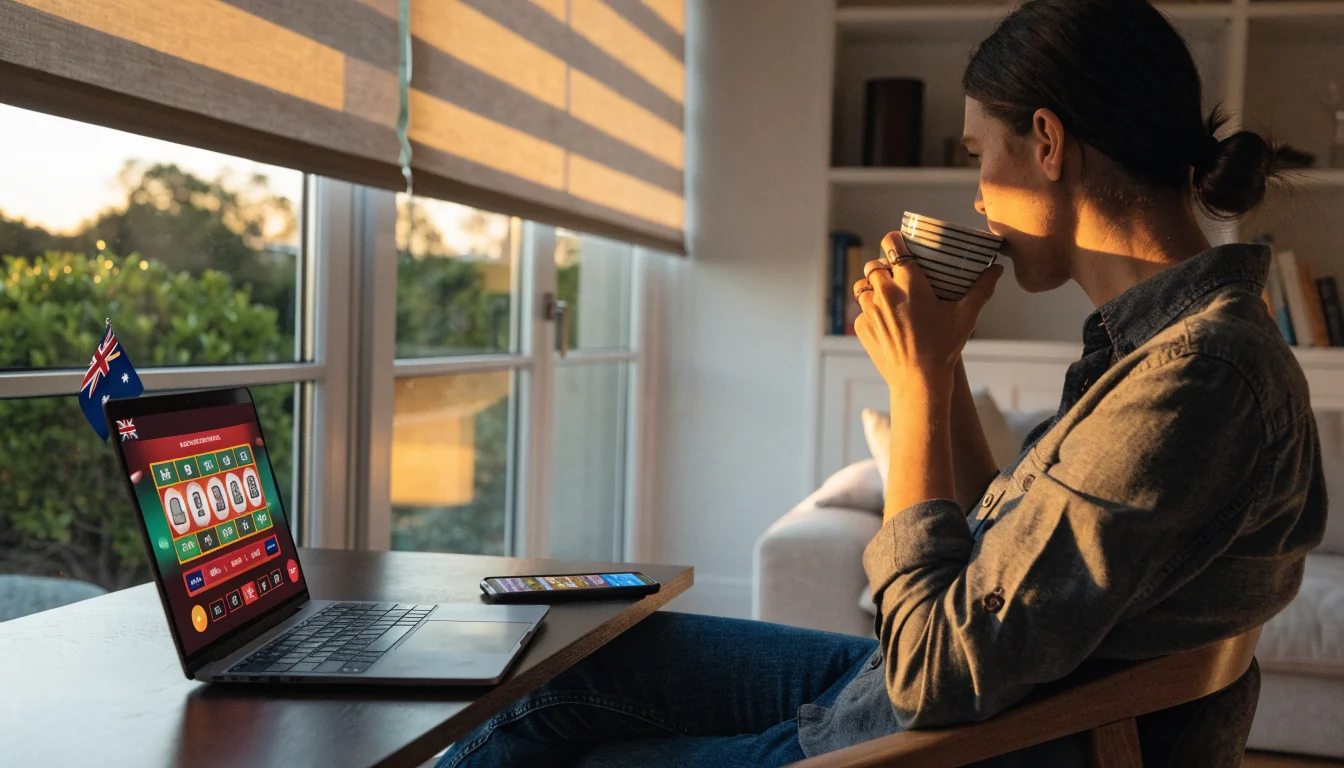
Booking through the casino’s own reservation line rather than a general travel site sometimes surfaces room categories that don’t appear elsewhere — not always cheaper, but occasionally including access tied to gaming tier status. Third-party sites are still useful for comparing base rates, but they don’t reliably show whether a "resort view" room actually faces the gaming floor’s service entrance or the water. I’ve been caught by that once and now call ahead regardless of which channel I book through.
Amenities worth checking before you commit
- Check-in flexibility — some properties run 24-hour desks to match gaming floor hours; others revert to standard hotel hours despite the casino downstairs running later.
- Room service scope — menus can extend well past midnight on-site, unlike most standalone hotels in the same town.
- Noise and light control — worth asking about directly rather than assuming from marketing photos.
- Loyalty tier crossover — whether gaming activity earns accommodation credit, and whether that credit expires.
- Distance from the gaming floor — closer isn’t automatically better; it depends what you’re there for.
None of this is regulated the way advertising content is. Tasmania’s casino operators aren’t required to publish a standard amenities matrix, and I haven’t seen one that’s genuinely comparable across properties — each markets its own version of "premium," and the word means whatever the property decides it means until you’ve stayed there once and checked for yourself.
The honest comparison isn’t casino hotel versus regular hotel. It’s asking what you’re actually paying the premium for — quieter nights, faster service, or just the address. Sometimes it’s all three. Often it’s one, dressed up as all three.
Worth the difference. Not always worth the markup.
Poker Rooms and Gaming Areas
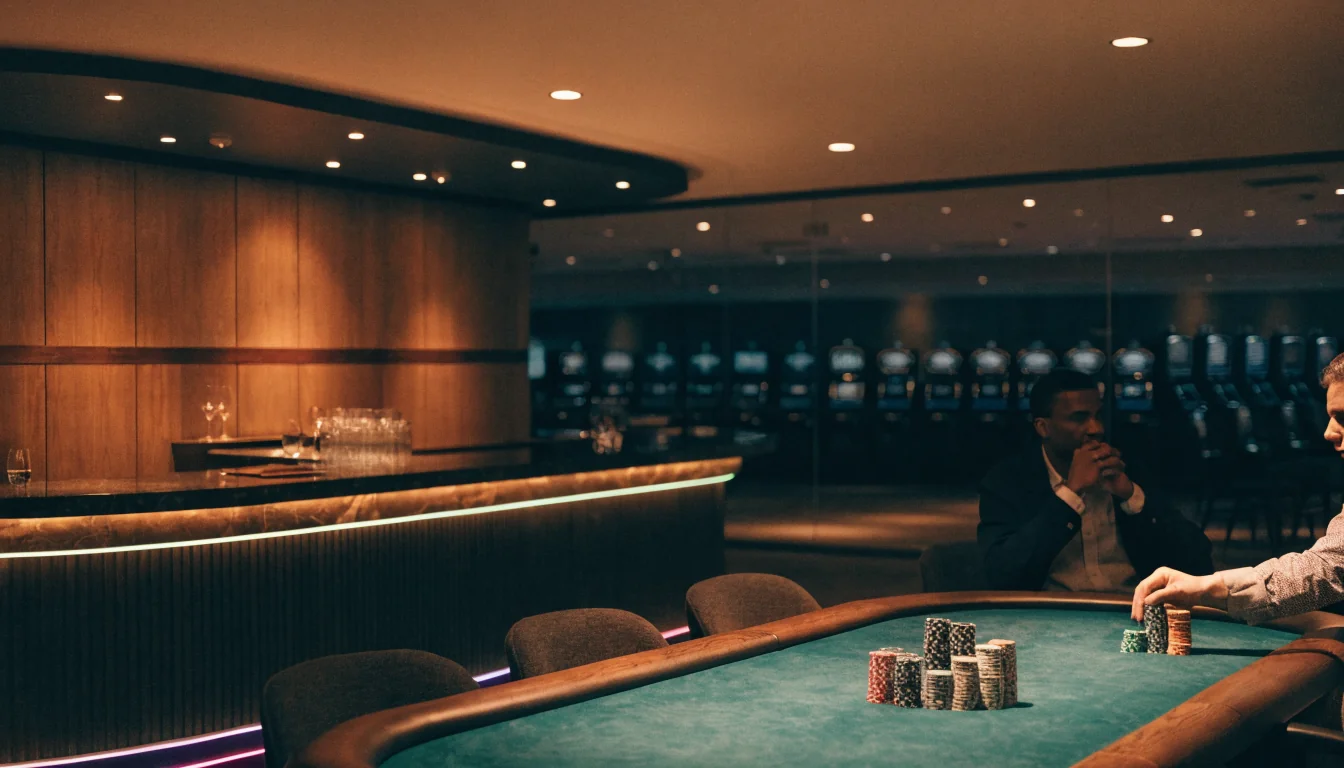
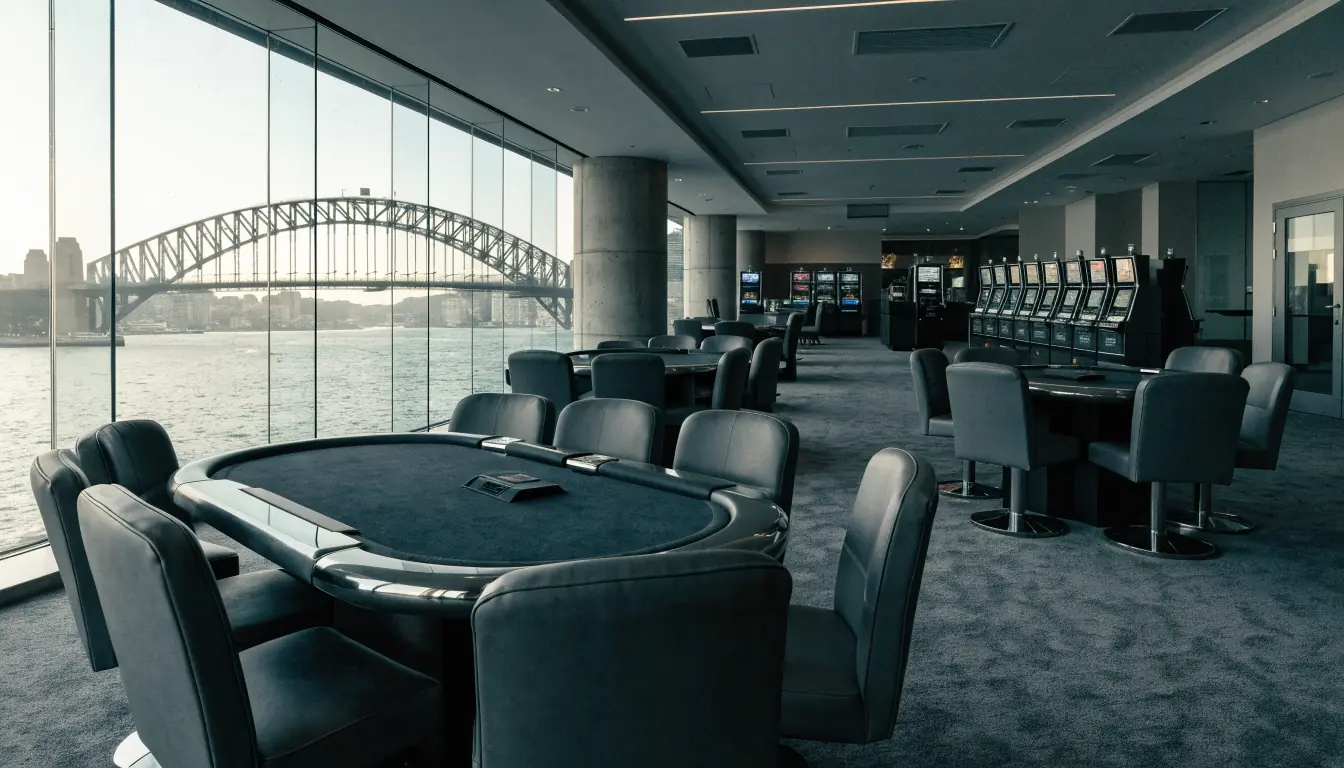
Walk onto a gaming floor in Tasmania and the poker room is usually set apart before you even reach it — a change in carpet, a lower ceiling, sometimes a half-wall of glass. That separation isn’t decorative. Poker runs on a different rhythm than the rest of the floor. Pokies pay out on their own schedule regardless of who’s standing next to you; poker tables need quiet, dealers who know the rake structure cold, and players who don’t want a slot machine’s jingle bleeding into a decision on the river.
Location Tasmania, Australia
Year covered 2026
Main focus Casino hotels, poker rooms and related facilities
Regulatory note Physical venues are regulated by state authorities; online casino gambling is prohibited for Australian residents.
The dedicated room is where tournament schedules get posted, where buy-ins are handled by staff who do only that job, and where the pit boss watching the room is trained specifically on table games rather than machine floors. Ask a poker dealer to explain a pokies bonus round and most will shrug — different training track entirely. That’s the real distinction between "gaming areas": not the carpet, but who’s qualified to run what.
What separates the poker room from the main floor
- Table games run on skill and table etiquette, which means staff enforce different rules — string bets, verbal declarations, one-player-per-hand — that don’t exist anywhere else on the floor.
- Tournament structures post blind levels and re-entry windows on boards near the room, information a slots player never needs.
- Noise and lighting are usually dialled down compared to the pokies floor, which runs bright and loud by design to keep attention on the machines.
- Dealer rotation happens more frequently at poker tables than at other table games, partly to keep play honest and partly because reading a table for six hours straight is a different job than resetting a roulette wheel.
I’ve sat at tables in three states now, and the tournament crowd is its own subculture — regulars who know each other, staff who know the regulars, and a scoreboard mentality that doesn’t exist on the pokies side. The "tournament" branding gets used loosely elsewhere in hospitality, but here it means an actual structure: starting stacks, levels, a payout table for whoever’s left standing. Worth checking the posted schedule before assuming a seat is guaranteed — cash games and tournament tables often share the same physical room but not the same buy-in rules.
Gaming floor beyond the poker tables
The broader gaming floor is a different animal — rows of pokies, roulette, blackjack, baccarat, laid out for volume rather than concentration. This is where most casino traffic actually sits. Nearly four in ten Australian adults gamble weekly, and the pokies floor is built around exactly that habit: fast sessions, low friction, machines spaced for turnover rather than lingering conversation. The poker room, by contrast, rewards sitting still for hours.
Age verification applies uniformly across both zones — nobody under 18 gets past the door, gaming floor or poker room alike, and that’s not a house preference, it’s the law. Worth stating plainly given how differently the two age brackets below that threshold behave: roughly three in ten Australians aged 12 to 17 report having gambled in some form, and that figure jumps to nearly half among 18-19 year-olds once it becomes legal. Casinos don’t get to relax that line for either room.
One thing worth being honest about: none of this — poker rooms, tournament boards, gaming floors — has anything to do with online casino products. The Interactive Gambling Act prohibits offering online casino games to Australian residents; sources disagree on whether the operative legislation is the 1997 or 2001 version, and neither the venues nor this article are going to guess which citation a regulator would use in a hearing. What’s certain is the floor. A physical poker room in Tasmania operates under state gaming licensing, in person, with a dealer across the table — not a screen. That distinction matters more than the carpet.
Parking and Accessibility
Ask anyone who’s spent a weekend at a Tasmanian property what they remember about arrival, and it’s rarely the gaming floor. It’s whether the car park had a spot near the door, whether the drop-off zone was clear, whether someone actually walked them through the entrance instead of pointing vaguely down a corridor. Parking and access are the parts of a visit nobody markets but everyone judges.
What’s actually on site
The larger Tasmanian venues tend to run tiered arrangements: uncovered general parking for day visitors, a smaller covered section closer to the entrance for hotel guests, and a dedicated drop-off lane for taxis, rideshares and coaches. The drop-off lane is the detail worth knowing before you arrive, not after — it’s usually separate from the main car park loop, and venues that get this wrong end up with a queue of cars blocking each other at the door on a Saturday night. Whether a stay is worth it, in my experience, has more to do with how well this loop is managed than with anything printed on a bonus flyer.
Staffed valet service exists at some properties but not all, and it’s not consistent enough across the state to describe as a given. Where it’s offered, it’s positioned for hotel guests first and casual visitors second — worth confirming directly with the property rather than assuming it extends to a quick pokies session.
Accessibility services
Accessible parking bays sit closer to entrances than general bays, as required, and the venues I’ve walked through generally extend that logic indoors — ramped access, wider doorways into gaming areas, lifts positioned near accessible parking rather than at the far end of a lobby. What varies is staffing: some venues have someone stationed near the entrance who can assist immediately, others expect a request at the front desk first. Neither approach is wrong, but only one of them works if you turn up without calling ahead.
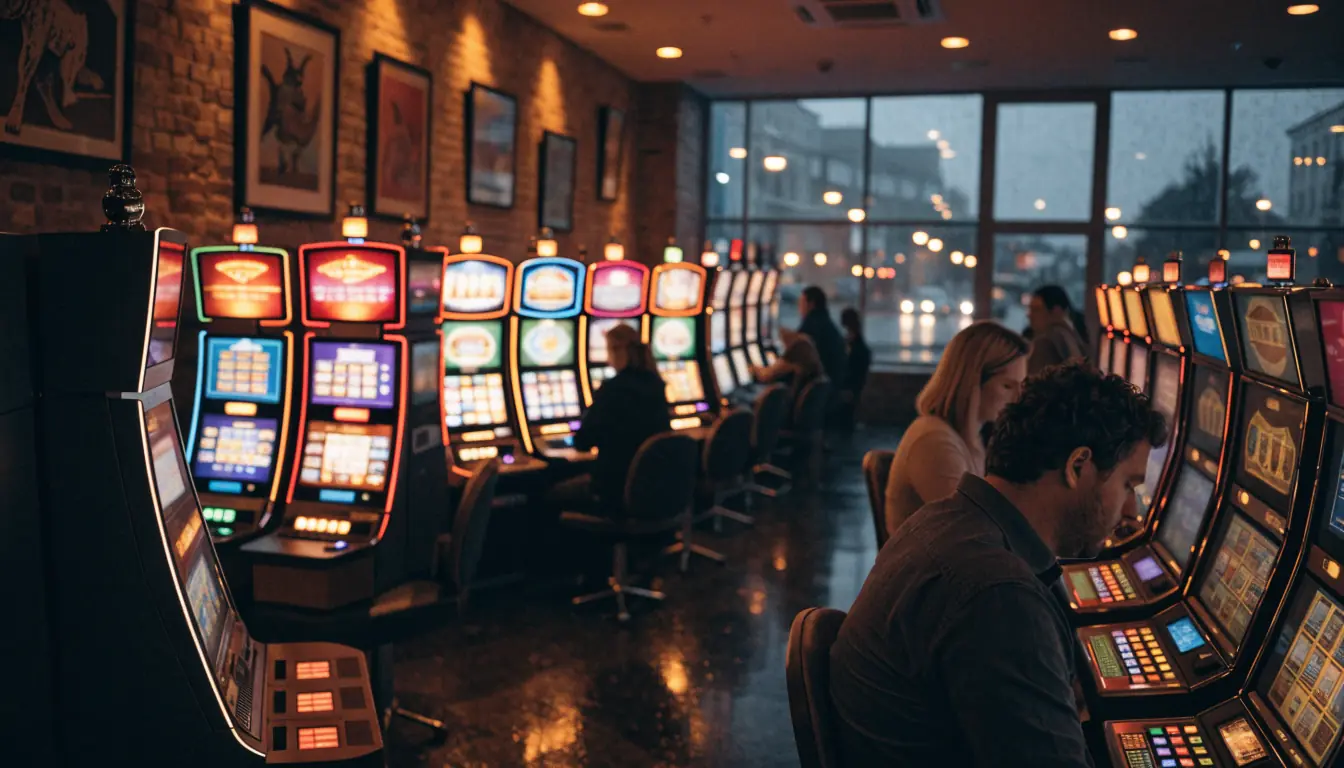
None of this shows up in casino listings comparisons, which score properties on things like bonus transparency, cashout speed, customer care and licensing integrity — useful for judging an online offer, irrelevant to whether you can get a wheelchair from the car park to the gaming floor without doubling back through a service corridor. That’s the gap between the marketing layer and the physical one. One tells you about the product; the other tells you about the building.
Where this connects to the money side
It’s tempting to treat parking as trivial next to the numbers that actually move — Australians lost $31.5 billion to gambling in 2022–23, and gambling revenue made up 7.7% of state and territory taxation in 2015–16. Access facilities don’t touch those figures directly. But they’re part of the same operational reality: a venue that invests in a properly staffed drop-off zone and genuine accessibility support is usually the same venue that’s invested in the parts of the business regulators actually check. Regulation here sits with state and territory bodies rather than one national authority, and physical accessibility compliance is one of the more visible signs that a property takes its licensing obligations seriously rather than treating them as paperwork.
The practical takeaway
If a visit involves mobility needs, calling ahead beats guessing. Ask specifically about the drop-off lane, accessible bay proximity to the entrance actually used for gaming areas, and whether staff assistance needs to be booked. Venues answer these questions plainly when asked directly.
No app for that. Just a phone call.
Nearby Accommodation Options
Not every visit fits inside a hotel tower attached to the gaming floor. Once the on-site rooms are booked out, or someone just wants distance between the pokies and the pillow, the surrounding area fills the gap — and it fills it in ways worth knowing about before arriving.
What sits within reach
Short-stay rentals cluster around the main tourist corridors, and they tend to fill fast around long weekends when both leisure travellers and gaming crowds converge on the same streets. Guesthouses in the older parts of town lean into character over convenience — think converted colonial buildings rather than lift access — which suits people who see the casino as one stop on a longer Tasmanian itinerary rather than the whole trip.
Independent hotels a short drive out typically undercut the resort’s own room rates, especially outside peak periods, but they don’t carry the same walk-downstairs-to-the-floor convenience. That trade-off is the whole decision: pay for proximity, or pay less and drive.
How this differs from booking on-site
On-site accommodation, covered elsewhere, bundles the room into the casino’s own ecosystem — loyalty points, direct lift access, room charges tied to a player account. Nearby options don’t offer any of that. They’re booked, paid, and managed entirely outside the casino’s systems, through ordinary hospitality channels rather than a gaming operator’s booking desk. That’s not a downside so much as a different kind of arrangement — nobody’s tracking your stay against a rewards tier, and nobody’s bundling breakfast into a resort fee you didn’t ask for.
A practical note on choosing
A few things worth checking before locking in a nearby stay:
- Distance from the gaming floor — some “nearby” listings are a genuine walk, others need a taxi or rideshare, particularly late at night when foot traffic thins out.
- Cancellation terms — short-stay rentals often have stricter cut-offs than hotel chains, which matters if plans shift around a weekend trip.
- Parking arrangements — covered in more detail separately, but worth confirming with the property directly, since not every guesthouse or rental has its own bay.
Why this matters beyond convenience
I’ve watched people treat the accommodation choice as an afterthought, then spend the first hour of a trip figuring out transport instead of settling in. It’s a small thing that shapes the whole stay.
There’s a broader point worth sitting with here too. Nationally, somewhere between 80,000 and 160,000 Australian adults deal with significant gambling problems — a small share of the population, but not a trivial one. Choosing to stay further from the gaming floor, rather than inside it, is sometimes a deliberate move rather than a budget one. Distance creates a pause between the room and the tables that on-site guests don’t get by default.
None of this touches on what happens once someone’s back in front of a screen after the trip. Offshore online casinos remain outside Australian law’s reach as far as individual players go — the Interactive Gambling Act targets operators, not the people using them, and the ACMA enforces that framework at the federal level. Sports betting, by contrast, runs on proper state and territory licences. Different systems, different rules, and worth knowing which one applies to whichever screen someone’s looking at once the physical trip is over.
Booking nearby isn’t a lesser option. It’s a different relationship with the same destination.
Contact Channels and Customer Service
Calling a physical casino in Tasmania is a different exercise from anything you’d try with an offshore gambling site, and it’s worth spelling out why. A land-based property has a switchboard, a duty manager, and staff standing at a desk who have to deal with you in person if the phone doesn’t work. That accountability doesn’t exist in the same way once you’re dealing with an operator sitting outside Australian jurisdiction, which is where most online "casino" contact actually leads.
What a front desk actually covers
The on-site help desk handles the things tied to the building itself: table reservations, function bookings, questions about the gaming floor, lost property, general directions around the venue. Staff there are trained on that property and nothing else. If a query falls outside hotel or gaming-floor operations, it gets redirected — usually to a specific department line rather than resolved on the spot.
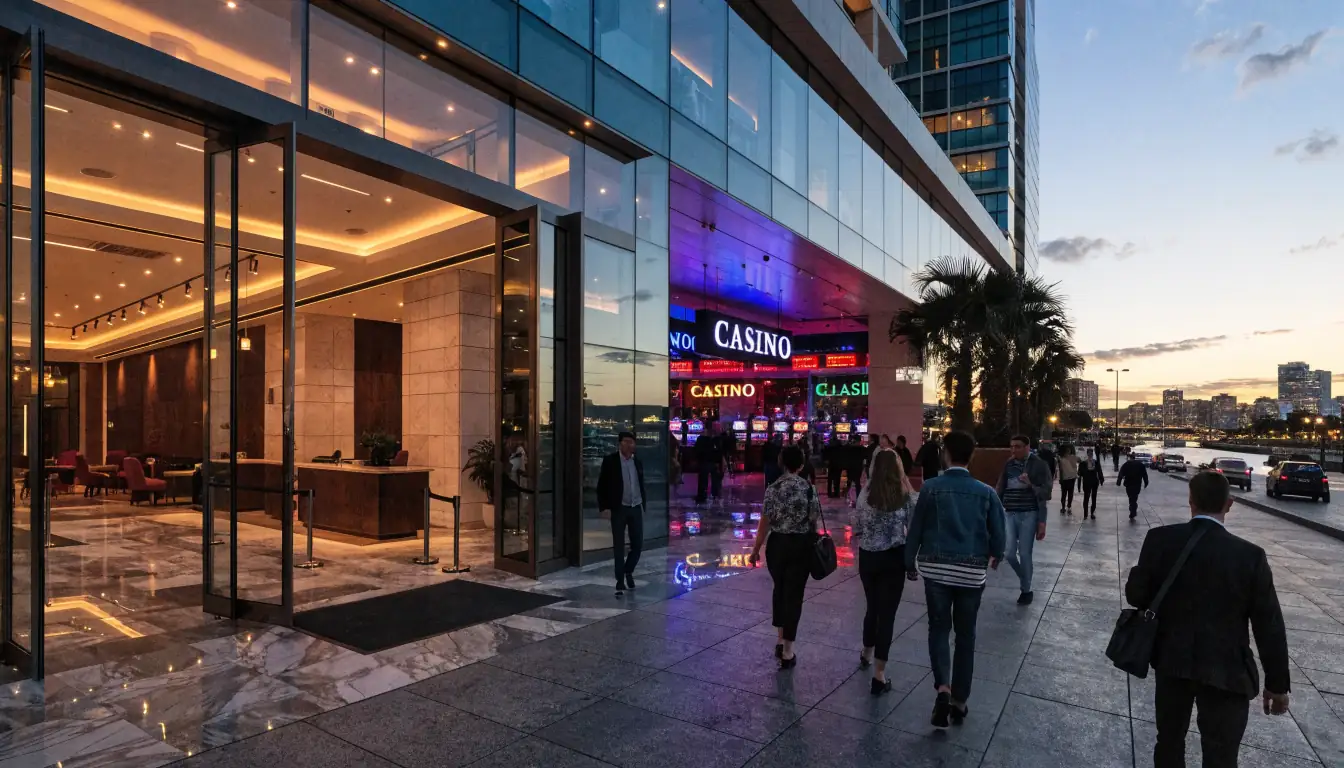
Phone lines follow a similar split. A general enquiries number gets you the front desk. Anything about a stay, a booking, or an event usually has a separate extension, and reception will transfer rather than try to answer from memory. Email exists mostly for non-urgent matters — function enquiries, feedback, documentation requests — and the turnaround is measured in business days, not minutes. If something needs an answer the same day, phone or in-person beats email every time. That’s not a policy quirk, it’s just how any hospitality venue triages volume.
Where "customer service" stops meaning the same thing
Here’s the part that trips people up. None of this — the desk, the switchboard, the concierge — has anything to do with online casino support, because there’s no such thing as a licensed Australian online casino to contact. Online casino, poker, and in-play betting are prohibited federally under the Interactive Gambling Act 2001, and there are no domestically licensed real-money online casino operators available to Australian players. So when someone searches for a "casino contact number" expecting to reach a 24/7 live-chat team behind an online gaming account, that expectation belongs to a different market — one that doesn’t legally exist here.
It’s also illegal to offer online casino gambling in Australia at all, and there’s no path to licensing one domestically, which is why the support structure around a Tasmanian casino is built entirely around the physical venue: rooms, tables, dining, events. Nothing about deposits, withdrawals, or account verification, because none of that infrastructure is meant to exist on this side of the law.
One detail worth knowing, since it confuses people: live betting by phone is legal even though live in-play betting online is not. That’s a sports-wagering distinction, not a casino one, and it sits with the Northern Territory Racing Commission, which functions as the country’s de-facto regulator for the online bookmakers it licenses. It has no bearing on how a Tasmanian casino answers its phones.
Practical takeaway
- General enquiries — front desk or main switchboard, fastest for anything immediate.
- Bookings and events — dedicated line or email, response measured in days.
- Gaming floor questions — handled in person, by staff on shift.
- “Online support” — not applicable to a licensed casino contact in this context; treat any site offering it to Australian residents as outside the law, not as a shortcut around it.
The gap between "call the hotel" and "chat with a casino support agent online" isn’t a technicality. It’s the whole regulatory line.
Buffet, Dining and Employment Opportunities
A casino buffet gets marketed as an "experience" — the word does a lot of work when what’s actually being sold is a fixed-price spread designed to keep people on the floor longer than a sit-down meal would. That’s not a criticism of the food. It’s just worth naming the mechanism: a buffet is a retention tool wearing a hospitality hat. Breakfast service tends to be the version least dressed up for effect — it’s aimed at guests staying on-site or locals passing through before work, not at holding anyone at a table. That distinction, between the breakfast crowd and the evening buffet crowd, tells you which meal was designed for turnover and which one wasn’t.
None of this connects to gaming rewards programs the way people assume. A resort’s loyalty scheme might comp a meal or discount a room, but the buffet itself sits under food and beverage management, a separate operational line from the gaming floor. Anyone expecting the two to blend into one seamless "resort" package will find the seams. They’re run, priced and staffed differently, and the staff is where this gets more interesting than the food.
What a casino actually employs people to do
Casino resorts in Tasmania function as some of the larger hospitality employers in their regions, and the roles on offer go well beyond dealing cards. A typical property is running:
- Food and beverage staff — buffet attendants, à la carte servers, kitchen brigades, baristas for the breakfast trade.
- Gaming floor roles — dealers, pit supervisors, cashiers; these require separate certification and sit under different compliance obligations than F&B.
- Hotel operations — front desk, housekeeping, concierge, none of which report through the same manager as the restaurants.
- Facilities and support — maintenance, security, parking attendants.
- Corporate and compliance — responsible-gambling officers, HR, finance.
I’ve seen job listings that lump all of this under one "casino resort" heading, which is convenient for a careers page and misleading for anyone applying. A buffet supervisor role has nothing to do with dealer training, age verification protocols on the gaming floor, or the compliance paperwork tied to running licensed table games. They’re advertised together because they’re under one roof, not because the jobs resemble each other.
Age matters here in two unconnected ways. Staff working anywhere near the gaming floor are handling an environment where the minimum age to gamble is 18, and verifying that isn’t a casual checkbox — it’s part of the job. Kitchen and floor staff, meanwhile, are subject to the standard workplace age rules that apply to any hospitality employer, which is a separate matter entirely.
One thing worth saying plainly: none of this — the buffet, the dining rooms, the staffing structure — has any bearing on Australia’s online gambling framework. The Interactive Gambling Act 2001 bans online casino games like slots, blackjack and roulette for Australian residents, enforced federally by the Australian Communications and Media Authority, while the Northern Territory Racing Commission licenses most of the online bookmakers operating nationally. A physical resort’s restaurant division sits entirely outside that regulatory conversation. It’s easy to conflate the two when a property brands itself a "resort" with dining, gaming and accommodation all under one name.
Different departments. Different rules.
Opening Hours and Operational Policies
A physical casino floor in Tasmania runs on posted hours, seasonal adjustments, and house rules set by whoever holds the venue’s licence. That’s a different animal from what this site actually covers. We don’t track when a specific gaming floor opens its doors, staffs a shift, or closes for a public holiday — that’s operational detail owned by the venue itself, and it changes without much notice. What we track is something narrower: how licensed operators perform once a player is already in, and that scoring runs on a fixed schedule, not a seasonal one.
The ranking behind every listing here gets recalculated on a set weekly cycle. Bonus generosity carries the heaviest weight at 30%, payout reliability follows at 25%, game library breadth at 20%, customer support responsiveness at 15%, and user-submitted feedback rounds it out at 10%. Every entry also gets scored individually on bonus transparency, cashout speed, customer care, and licensing integrity. None of that touches "opening hours" in the way a venue would use the term — there’s no gate that swings open at a fixed time, no seasonal roster change. The review clock just resets, quietly, every week.
Why "operational policy" means something different here
Ask someone who’s worked inside an operator what "policy" actually governs, and it’s rarely the clock on the wall. It’s withdrawal thresholds, verification steps, which support channel actually gets staffed on weekends. Those are the rules that decide whether a player’s experience matches the marketing. A venue’s seasonal trading hours don’t move that needle at all.
There’s also a structural point worth being upfront about, because it explains why nobody can hand a Tasmanian visitor one tidy set of rules. Australia has no single overarching statute or single regulator covering gambling — oversight splits between state/territory bodies and federal law. The Australian Communications and Media Authority enforces the Interactive Gambling Act 2001 at the federal level, but day-to-day licensing and operating conditions for venues sit elsewhere, at state and territory level. That split is exactly why "policy" can’t be summarised in one paragraph and printed on a sign. It’s several signs, several authorities, none of them talking about the same thing.
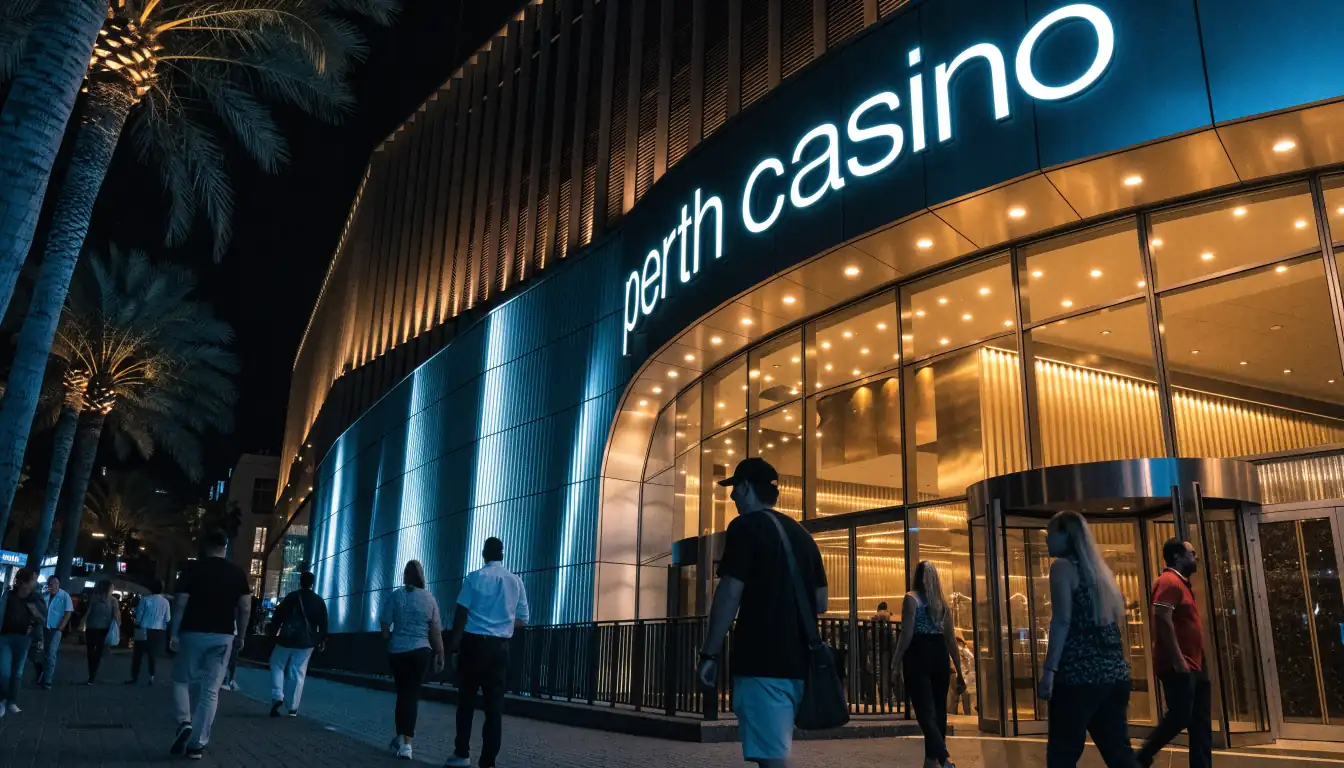
What a Tasmanian trip actually depends on
For anyone planning around a physical venue’s calendar — trading hours, event nights, seasonal closures — that information sits with the property, not with a ranking built on bonus terms and payout speed. Official venue channels are the only reliable source for that; this page doesn’t attempt to publish it, because it goes stale the moment it’s printed and we’d rather say that plainly than guess.
What stays constant, week over week, is the review cycle itself — the same five weighted criteria, applied the same way, whether it’s a quiet Tuesday or a long weekend. That consistency is the point. A casino floor’s roster is somebody else’s schedule to keep.
Casino Restaurants and Culinary Experiences
A casino restaurant sells more than food. It sells proximity — the idea that you never have to leave the building, that the night stays contained inside one address. That’s the pitch, and it’s worth separating from what’s actually on the plate.
What I noticed working near hospitality operations tied to gaming floors: the restaurant tier structure exists to move different budgets through different rooms without anyone feeling misplaced. A fine-dining space with table service and a wine list sits upstairs or off to one side, quiet, deliberately slower than the floor below it. A casual grill or bistro handles the volume — walk-ins, groups killing time before a show, people who want a meal without a reservation. Neither is described as "the casino restaurant" in marketing copy, because that phrase undersells both. They’re pitched as destinations in their own right, with their own name, their own chef credit, sometimes their own separate entrance. That’s a hospitality decision, not an accident — it lets the venue claim it has "restaurants," plural, distinct from whatever happens at the tables.
Menu diversity is the real differentiator against dining outside the building. An external restaurant in the same city commits to one cuisine and builds a reputation on it. Inside a casino complex, the calculation is different: the operator wants a guest who’s been at a machine or a table for a few hours to find something without leaving the property, whatever mood they’re in. So the spread tends to run wide — a steakhouse-style room, something lighter and faster, occasionally a specialty concept built around a single ingredient or regional style. The width is the selling point, not the depth in any one direction. A guest chasing a genuinely specialised dining experience — a tasting menu built by a name chef with a real reputation outside the casino ecosystem — is more likely to find it at a standalone restaurant that doesn’t have a gaming floor’s operating hours and staffing patterns to answer to.
What doesn’t change between the two: the money spent at either table — restaurant or gaming — sits inside the same broader picture. Australians placed bets totalling $244.3 billion in 2022–23, with losses of $31.5 billion over the same period, and gambling revenue made up 7.7% of state and territory taxation revenue in 2015–16. None of that touches the dinner bill directly, but it explains why the dining side of a casino property gets built out at all — a full slate of restaurants keeps people on site, and time on site is the only metric that actually matters to the operator.

One detail worth stating plainly, since it comes up: winnings from a night at the tables aren’t taxed in Australia. Whatever’s left over after dinner is genuinely left over.
Reviews of specific menus, pricing, or seasonal changes sit outside what’s verified here — property websites and direct enquiry remain the only reliable source for that level of detail.
Spa, Wellness and Dress Code
The spa sits far enough from the gaming floor that you stop hearing slot chimes before you reach reception. That distance is deliberate. A "wellness offering" attached to a casino only works if guests forget where they are for an hour, and piping in the sound of pokies through the wall would defeat the purpose.
Treatment menus follow the standard resort-spa pattern — massage, facials, body treatments — booked separately from any gaming account. Nobody at the front desk asks how the tables treated you. The two operations share a building and, mostly, a marketing brochure; day to day they run as if they were unrelated businesses.
Dress code, and why it exists
Casino floors enforce a dress code that has less to do with elegance than with control. "Smart casual" is the phrase used, and in practice it screens out beachwear, work boots, and anything that reads as a safety-vest crowd straight off a shift. The unstated logic: a dress code slows down impulse visits and keeps the floor looking like the photos in the ads, which matters more to the operator than to the player.
Wellness areas run a looser version of the same rule. Robes and spa-issued footwear are fine within the spa itself, but guests are expected to change before crossing back into the gaming or dining zones. It’s less about modesty than about not mixing the two atmospheres the property is trying to sell — one calm, one adrenaline.
Age checks apply everywhere
Access to gaming offers is restricted to those 18 and over, and that age line runs straight through the wellness precinct too — treatments booked as part of a package tied to casino membership or promotional credit require the same verification. A spa day itself isn’t gambling, but the moment it’s bundled with casino perks, the same ID checks that apply on the floor apply at the spa desk.
Who actually uses the spa
Worth noting: with close to three-quarters of Australian adults having gambled in the past year, and over a third playing weekly, wellness facilities inside casinos aren’t a niche add-on for the rare non-gambler in the group — they’re built for the majority of visitors, who gamble occasionally, and for the accompanying guest who has no interest in the tables at all. The spa exists as much for that second person as for anyone stepping away from a losing session.
None of this is complicated once you see the separation for what it is. Two revenue streams, one dress code, one age check. The wellness floor is quiet by design.
Food Courts and Pool Areas
Not every visit needs a reservation. Food courts sit apart from the sit-down restaurants covered earlier — quicker service, casual seating, no dress code beyond what the casino floor already requires. It’s the option people take between sessions at the tables, not the destination itself.
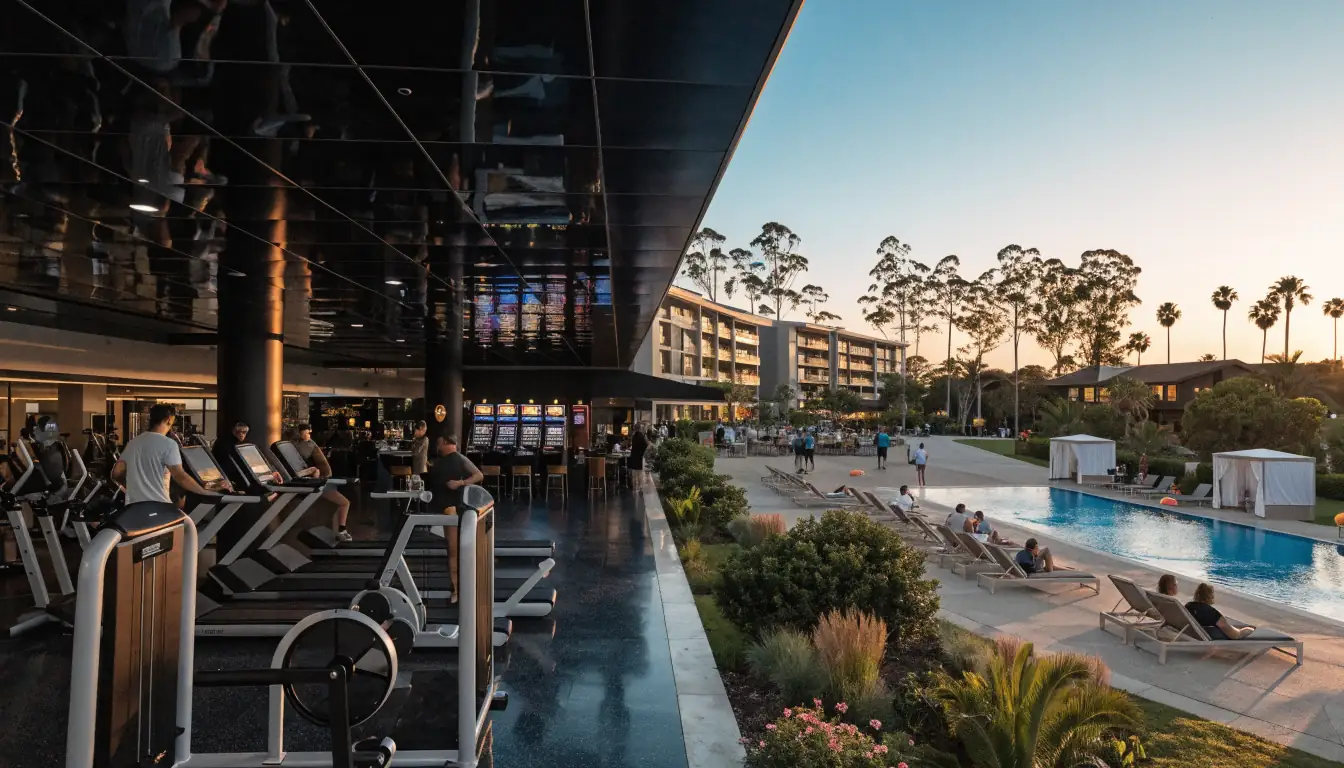
Pool areas work the same way relative to the spa. Where the spa is booked and treated as an experience, the pool is closer to a hotel amenity — something guests use on their own schedule, without staff guiding them through it. Towel service and sun loungers, nothing structured beyond that.
Worth separating these from what’s already been covered: buffet dining is its own section, restaurant concepts are their own section. Food courts and pools are the low-commitment layer underneath both — places to reset, not places to plan an evening around.
One thing I’d flag from time spent around casino floors: the physical spread of a property — pool, food court, gaming area, all a short walk apart — makes it easy to lose track of time and spend. Per-capita gambling losses in Australia have run into four figures annually. That’s not a reason to avoid the pool deck. It’s a reason to treat it as a break, not a lap around the machines.
A small number of Australian adults — estimates put it under one percent — develop serious gambling problems. Casual spaces like these exist for everyone else, and they work best used exactly as intended: downtime, not detour.
Written by the editors at Casino iPad Info.